
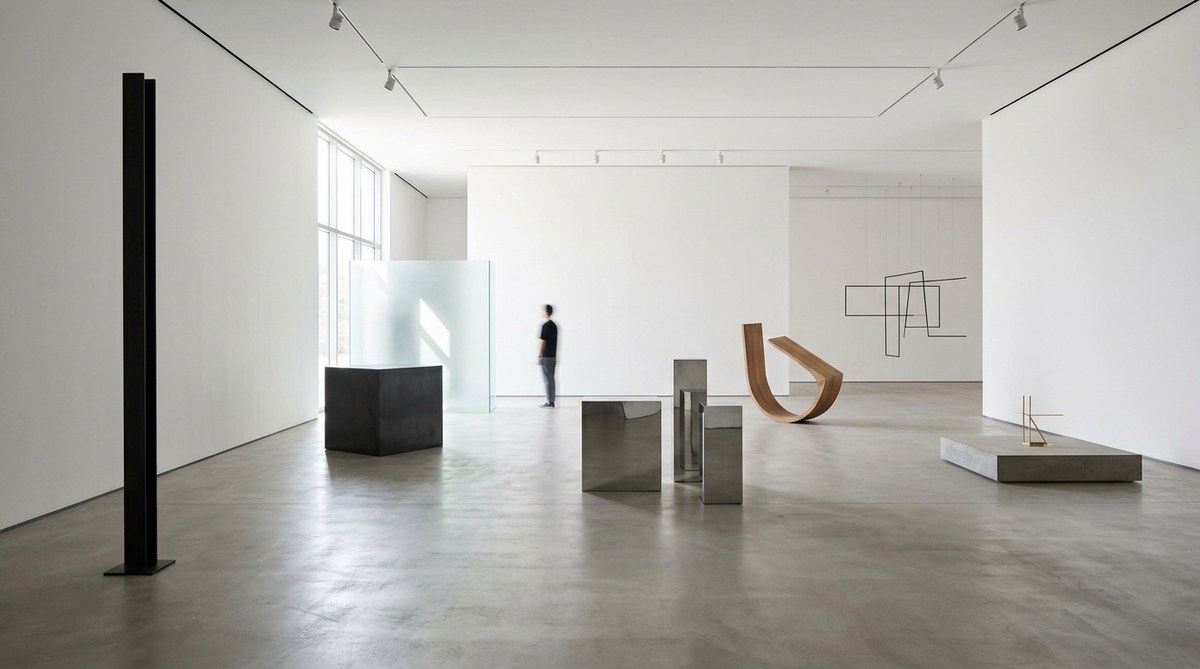
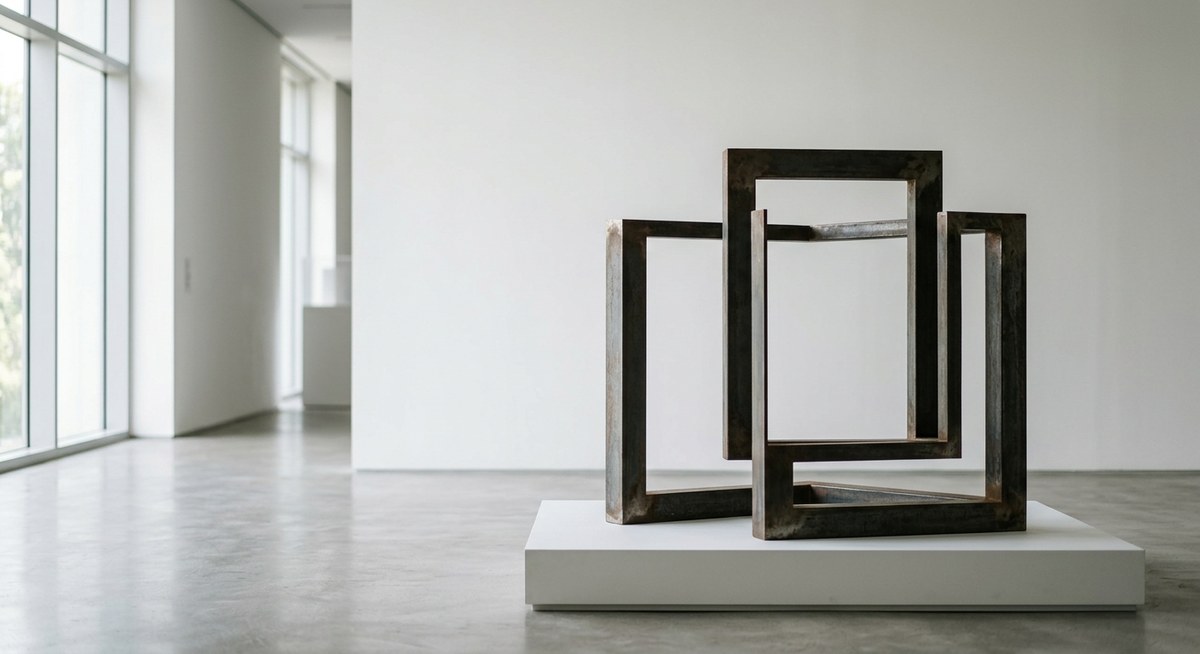
A polished slab of Corten steel sits in a sunlit gallery. It does nothing. It represents nothing. And yet, the room feels different. Visitors slow down. They walk around it, not past it. Their breathing changes. That is the quiet power of minimalist sculpture. It does not demand attention. It commands space.
Minimalist sculpture shifts the focus from the object itself to the area around it. When you remove ornament, narrative, and gesture, what remains is a pure conversation between form and emptiness. For art enthusiasts, interior designers, and architecture students, understanding this relationship is essential. In 2026, the principles of minimalist sculpture space are influencing everything from residential lofts to large-scale public installations.
Minimalist sculpture redefines space by making the void as active as the object. It forces the viewer to become aware of their own position, scale, and movement. By stripping away narrative, it creates a direct, physical experience. This guide covers seven ways this happens and how you can apply these ideas to your own projects.
How Minimalist Sculpture Alters Your Sense of Place
Minimalist sculpture does not sit quietly in a room. It activates the room. The relationship between the viewer and the object becomes a performance. Here are the core ways this transformation occurs.
1. Shifting Focus from Object to Environment
Traditional sculpture asks you to look at it. Minimalist sculpture asks you to look around it. When Donald Judd placed a row of brass boxes on the floor, he was not showing off the boxes. He was showing off the wall behind them, the floor beneath them, and the air between them.
This shift is profound. The sculpture becomes a tool for seeing the room more clearly. It defines the edges of the space. It makes the volume of the room tangible.
2. Activating Negative Space
Negative space is not empty. It is full of potential. In minimalist sculpture, the gaps between forms are as important as the forms themselves. Consider the work of Henry Moore. His reclining figures are full of holes. Those holes are not absences. They are shapes.
When you design a space, think about the air around the sculpture. Does it push outward? Does it create a pocket of stillness? The most successful minimalist sculpture space uses negative space to create a sense of breath.
3. Controlling Scale and Proportion
A small sculpture on a pedestal is an object. A sculpture on the floor is an event. Minimalist artists like Carl Andre placed flat metal plates directly on the ground. Suddenly, the viewer had to decide: Do I step on it? Do I walk around it? This choice makes the viewer part of the piece.
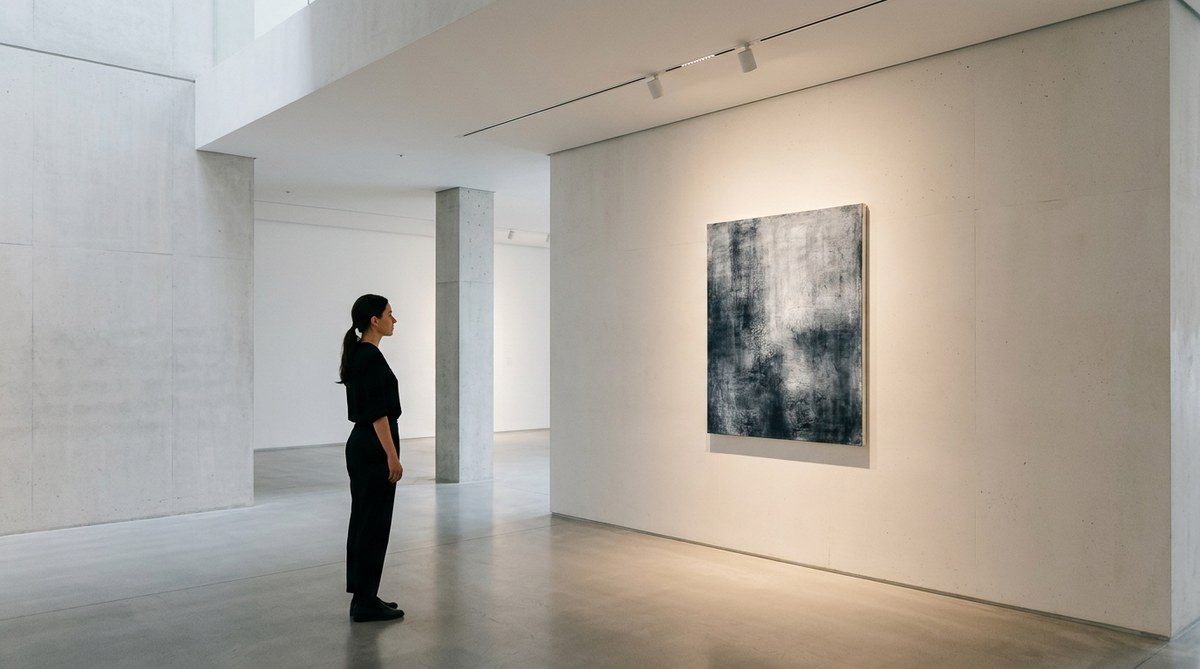
Scale in minimalist sculpture space is about the body. A piece that is waist high feels different from one that is ankle high. A piece that spans ten feet feels different from one that fits in your hand. Always consider the human body as the unit of measurement.
4. Using Industrial Materials to Ground the Work
Minimalist sculpture often uses raw materials: steel, plywood, concrete, fluorescent lights. These materials do not pretend to be anything else. They are honest. This honesty creates a direct connection to the space.
A polished stainless steel cube reflects the room around it. A rough concrete block absorbs light and feels heavy. The material tells you how to feel about the space. When choosing materials for a minimalist sculpture space, ask what the material will say about the room.
5. Creating a Dialogue with Light
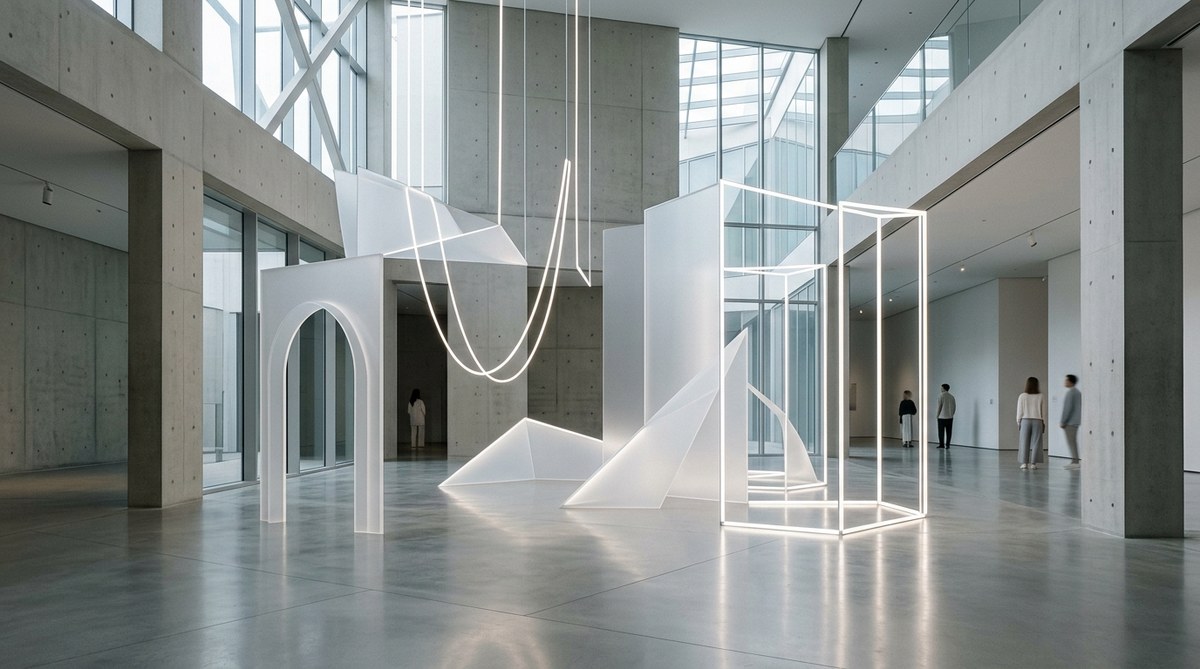
Light is the invisible medium of minimalist sculpture. Dan Flavin built entire works from standard fluorescent tubes. He did not sculpt the tubes. He sculpted the light they cast.
The way light hits a surface changes the perception of space. A matte surface soaks up light and makes a room feel smaller. A glossy surface reflects light and expands the room. Shadows become part of the composition. When you place a minimalist sculpture, watch how light moves across it over the course of a day.
6. Encouraging Movement and Participation
You cannot understand a minimalist sculpture from one angle. You have to walk around it. You have to approach it, back away, and see it from the corner of your eye. This movement makes the viewer an active participant.
In a gallery, this turns the viewing experience into a choreography. In a home, it changes how people move through a room. A well-placed minimalist sculpture can create a path or a pause.
7. Reducing Visual Noise
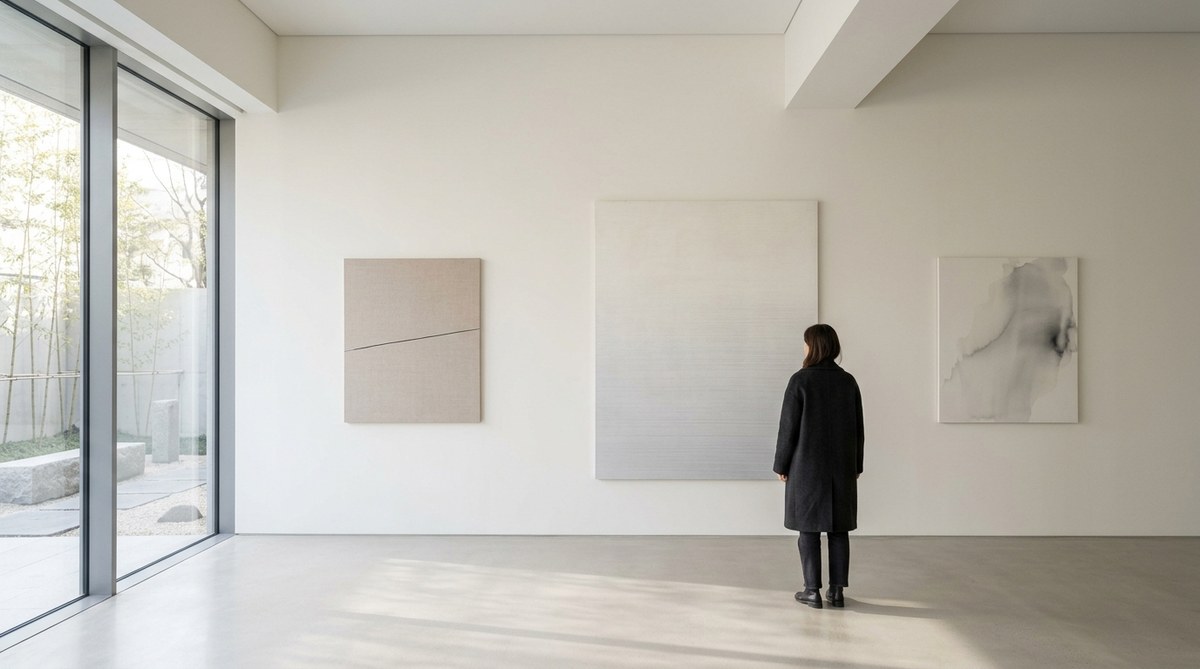
Minimalist sculpture is a cure for visual clutter. In a world full of screens, signs, and distractions, a single pure form is a rest for the eyes. It gives the brain a moment of silence.
This is why minimalist sculpture space works so well in modern interiors. It acts as a visual anchor. It stops the eye from wandering. It creates a point of calm.
A Practical Process for Placing Minimalist Sculpture
If you want to use minimalist sculpture to change a space, follow this numbered process. It works for galleries, homes, and public areas.
- Clear the room. Remove everything that is not essential. You need to see the empty space first.
- Measure the volume. Note the ceiling height, the floor area, and the light sources.
- Choose one focal point. Select a single sculpture or a simple series. Do not crowd the space.
- Place the sculpture on the floor. Pedestals create distance. Floor placement creates intimacy.
- Walk the perimeter. Move around the piece. Adjust its position until it feels like it belongs.
- Observe the light. Check the piece at different times of day. Move it if the shadows are wrong.
- Live with it. Leave the piece in place for a few days. See how it feels during daily use.
Common Mistakes When Working with Minimalist Sculpture
Even experienced designers make errors. Here is a table of common mistakes and how to fix them.
| Mistake | Why It Happens | The Fix |
|---|---|---|
| Overcrowding the space | Fear of emptiness | Trust the void. One strong piece is better than three weak ones. |
| Using the wrong scale | Forgetting the viewer’s body | The piece should relate to human height and reach. |
| Ignoring the floor | Placing everything on a pedestal | Let the sculpture touch the ground for a grounded feel. |
| Bad lighting | Harsh or uneven illumination | Use soft, diffuse light. Let shadows be part of the piece. |
| Choosing busy materials | Pattern or texture that distracts | Stick to raw, honest materials like steel, stone, or concrete. |
“The space itself is the material. The sculpture is just a tool to make you see it.” This advice from a curator I know sums up the entire philosophy. Do not look at the object. Look at what the object reveals.
The Tools and Materials You Will Need
If you are building or commissioning a minimalist sculpture, here is a list of common materials and their effects.
- Corten steel: Rusts to a warm orange brown. Feels heavy and permanent.
- Polished stainless steel: Reflects the room. Feels cool and modern.
- Raw concrete: Absorbs light. Feels solid and quiet.
- Plywood or birch: Warm and natural. Feels approachable.
- Fluorescent or LED tubes: Creates light as form. Feels ethereal.
- Stone (granite, marble): Timeless and heavy. Feels ancient.
Each material changes the minimalist sculpture space in a different way. Choose based on the feeling you want to create.
How to Apply This to Your Own Projects
Whether you are an interior designer, an architecture student, or an art enthusiast, you can use these principles today.
- For interior designers: Use a single large form to anchor an open plan living area. Let it define the flow of traffic.
- For architecture students: Study how a simple cube changes the experience of a courtyard. The space around the cube is your design.
- For art enthusiasts: Visit a gallery with a new perspective. Walk around each piece. Notice how your body feels in relation to the work.
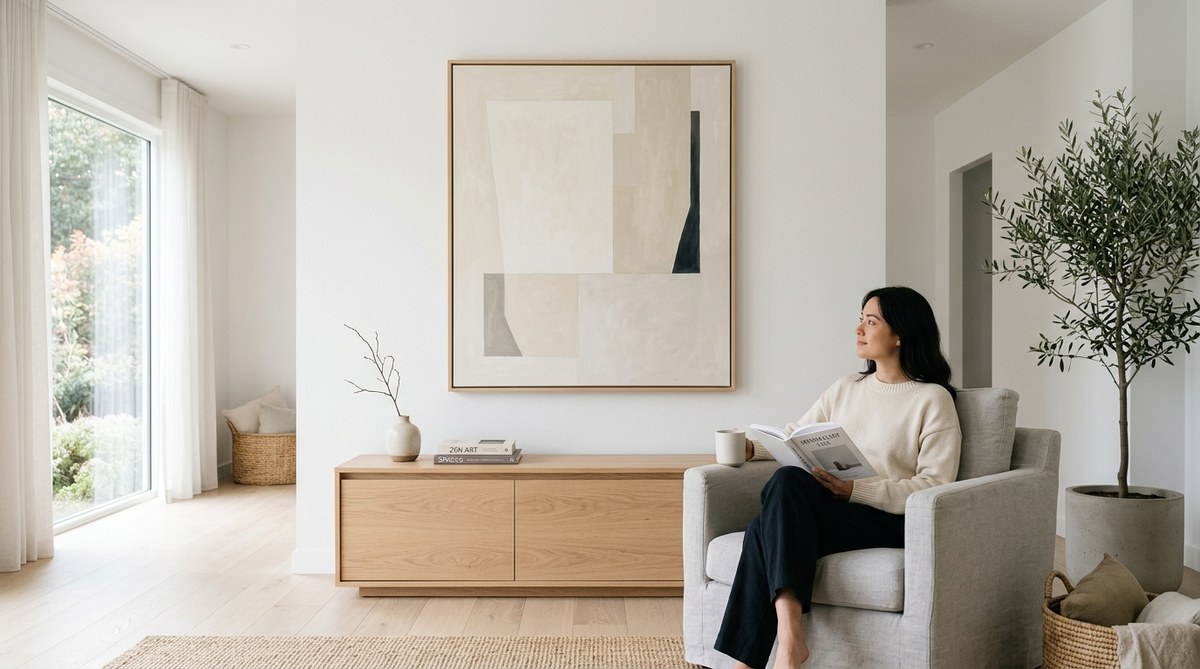
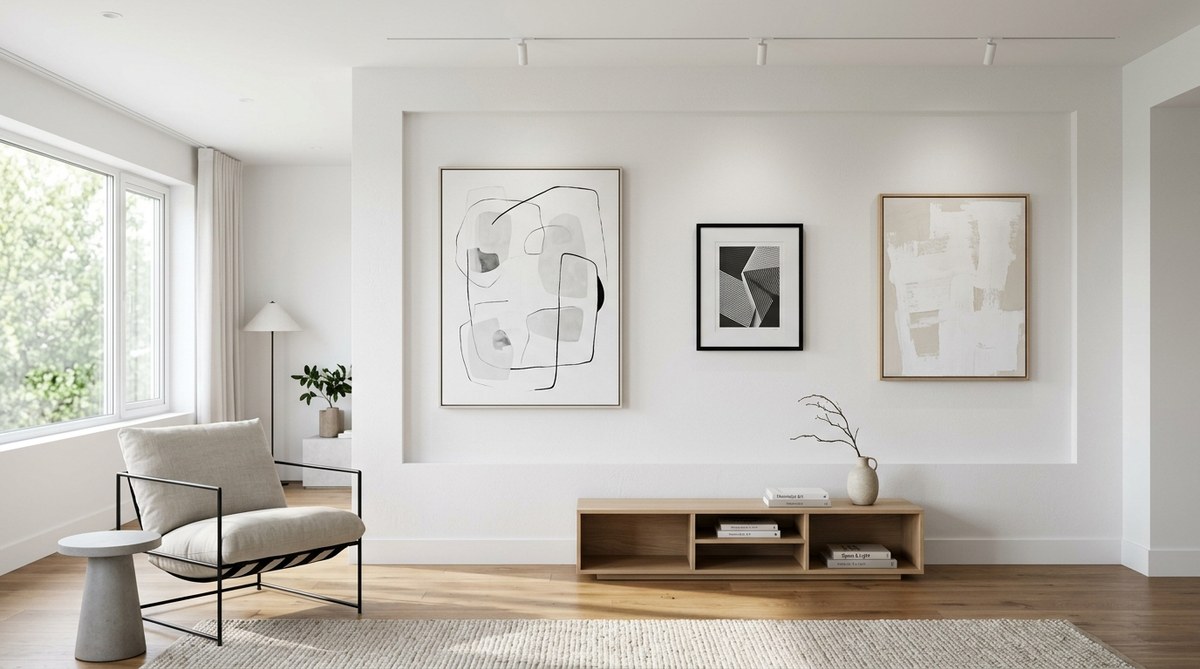
For more on how to use these ideas in your own home, check out our guide on how to create a minimalist art gallery experience at home. You can also learn about the art of light and space in minimalist interior design to deepen your understanding.
The Lasting Impact of Minimalist Sculpture on Space
Minimalist sculpture does not decorate a room. It defines a room. It teaches us that less is not empty. Less is full of meaning. The space around an object is not background. It is the main event.
In 2026, as our lives become more cluttered with digital noise, the need for physical calm grows. Minimalist sculpture space offers a remedy. It is a place to breathe, to see clearly, and to feel present.
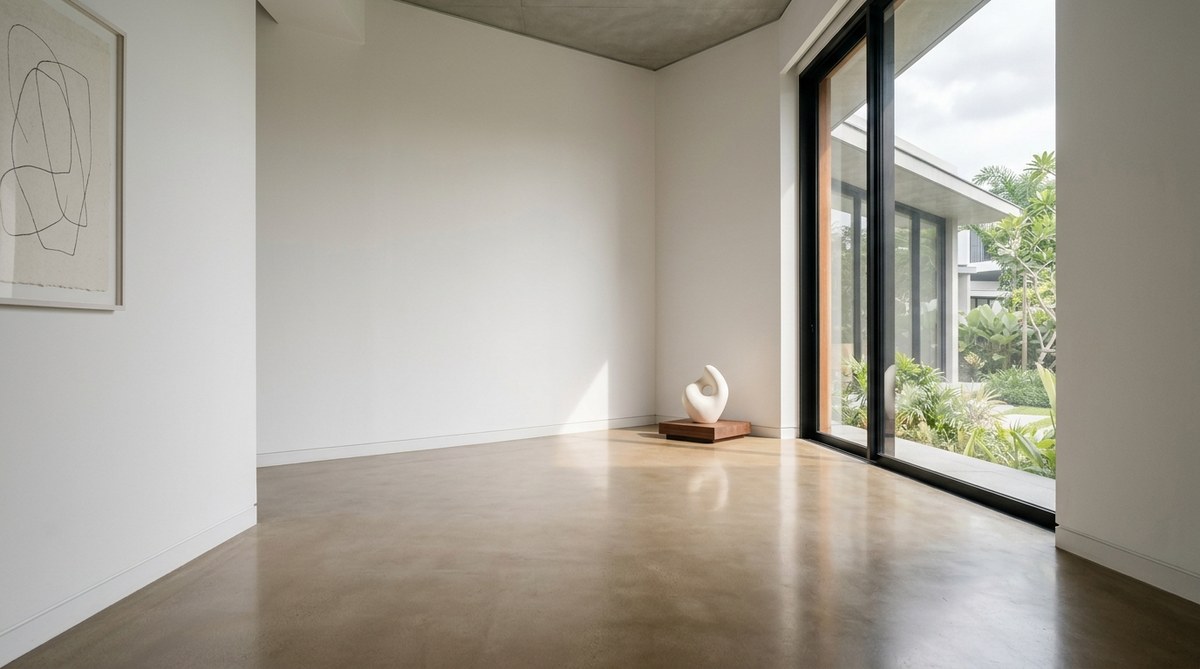
The next time you walk into a room, stop. Look at the empty corners. Look at the floor. Look at the air. Then imagine a single form sitting there. That is where the magic begins. Start with one piece. Place it with intention. Let the space do the rest. Your eyes, and your guests, will thank you.

Leave a Reply