
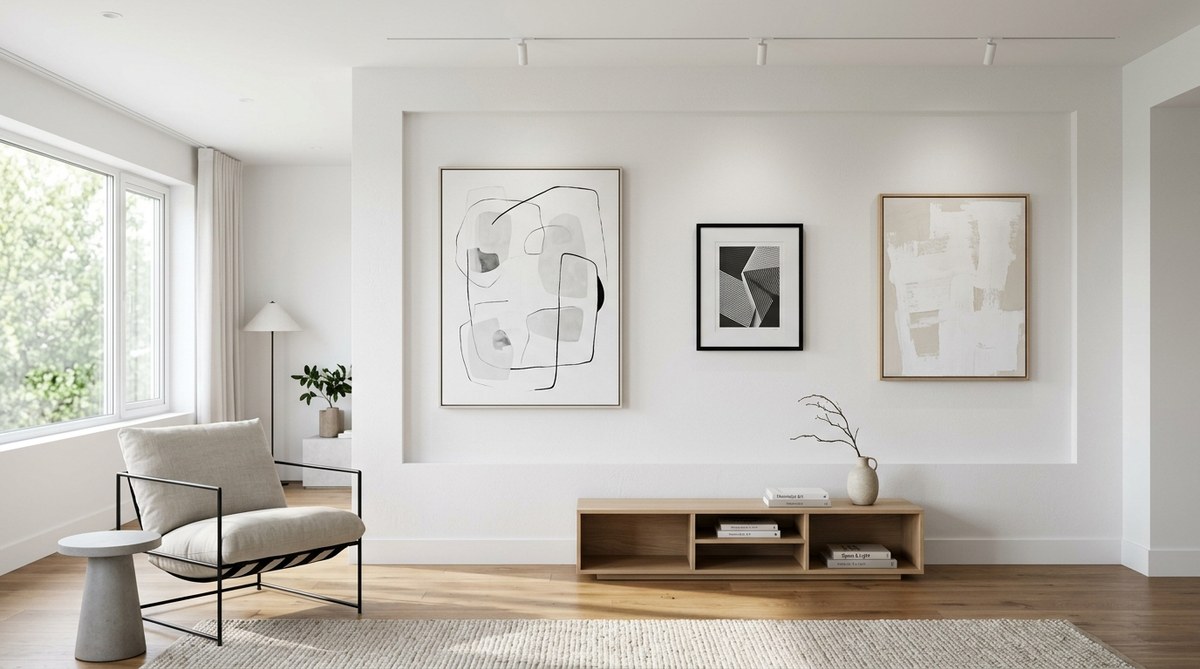
Picture this: you walk into a room and your shoulders drop. The space feels open, intentional, and quiet. That is the power of a home gallery. You do not need white walls or a Chelsea loft to make it happen. You just need a clear eye and a few purposeful choices. A minimalist art gallery at home is not about owning less for the sake of it. It is about letting each piece of art breathe. When you strip away the visual noise, the art itself becomes the event.
Creating a minimalist art gallery at home relies on three pillars: intentional wall placement, controlled lighting, and generous negative space. Start by selecting one focal wall or a small corner. Choose 1 to 3 pieces that share a visual language. Use warm, adjustable lighting to highlight texture and form. Leave at least 6 inches of empty wall around each frame. Avoid clutter from furniture, cables, or decor that competes with the art. The result is a calm, curated space that feels like a personal retreat.
Why Your Home Deserves a Gallery Experience
Most of us hang art in a hurry. We nail a frame above the sofa and move on. But a minimalist art gallery at home asks for more attention. It asks you to treat your living room like a museum. That shift in mindset changes everything.
Museums control every variable. They control the light, the distance between works, and the color of the walls. You can do the same at home. The payoff is real. A well curated wall can change how you feel in a room. It can slow your breathing and sharpen your focus. In 2026, more people are turning their homes into sanctuaries. A home gallery is part of that trend.
“The best galleries feel empty until you notice the art. That emptiness is not a lack of things. It is a presence of space.” — interior designer and minimalist art curator Lena Hartwell
Start with the Right Wall
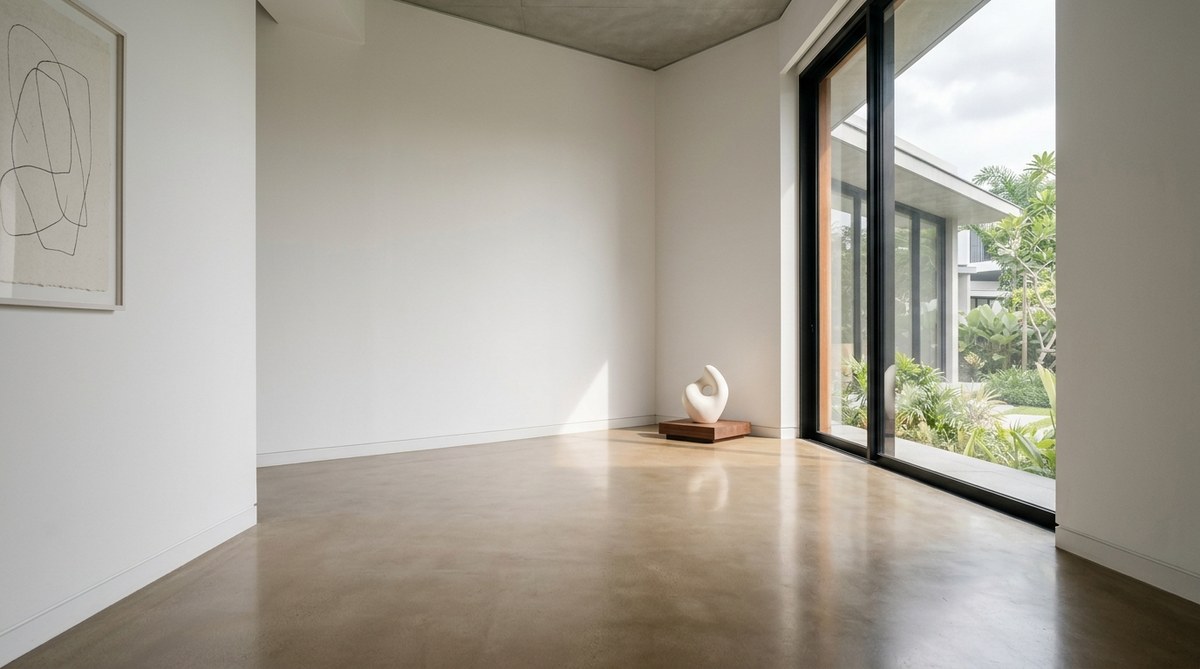
You do not need a huge wall. A small hallway or a corner by a window can work. Look for a wall that gets natural light but not direct sun. Direct sun can fade paper and canvas over time.
Here is how to choose your gallery wall:
- Pick a wall that you pass by often but do not use for storage.
- Avoid walls behind televisions or large furniture.
- Look for a wall with a single outlet or no outlets at all. Cords distract the eye.
- Choose a wall color that is neutral. Soft white, warm gray, or light beige works best.
If your wall has a window nearby, use that to your advantage. Natural light changes the mood of the art throughout the day. Just be sure to use UV protective glass on framed pieces.
Choose Art That Speaks the Same Language
A minimalist art gallery at home works best when the pieces share a common thread. That thread could be color palette, material, or subject matter. You do not need to match frames exactly. But the frames should feel like they belong in the same family.
Consider these options:
- Black and white photography with thin black frames
- Abstract oil paintings in earth tones
- Monochrome prints with wide matting
- Sculptural wall objects in metal or wood
Avoid mixing busy patterns with minimalist pieces. A single bold piece can anchor the room. The rest should support it, not compete.
The Rule of Three and the Power of One
You have two main layout options. Both work well for a minimalist art gallery at home.
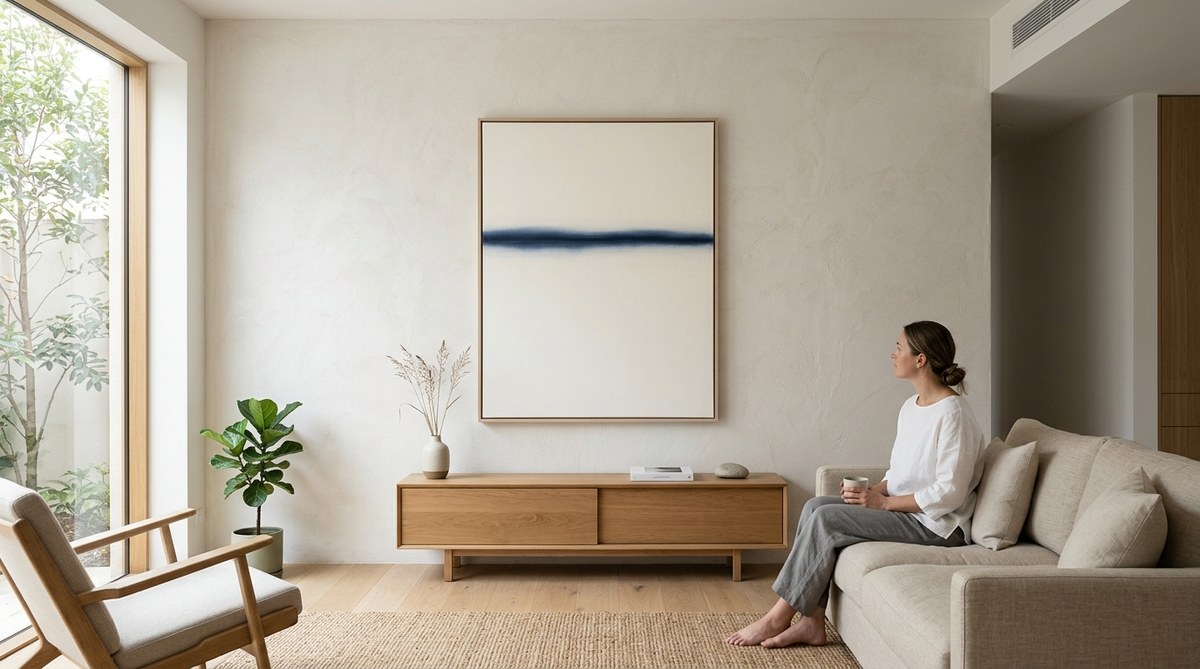
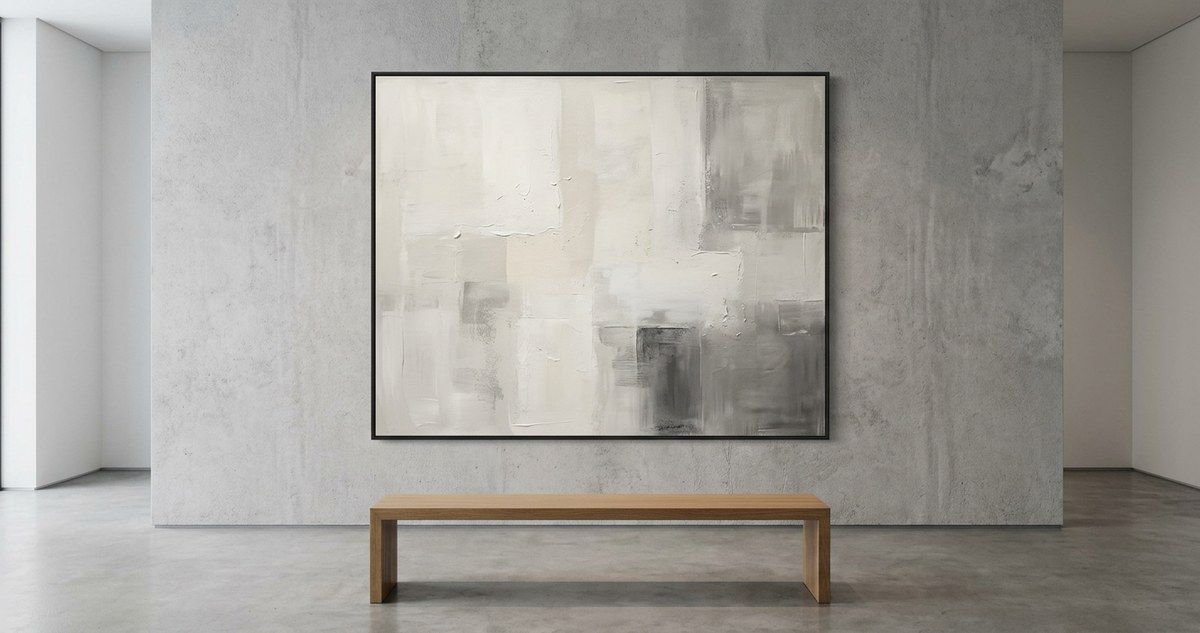
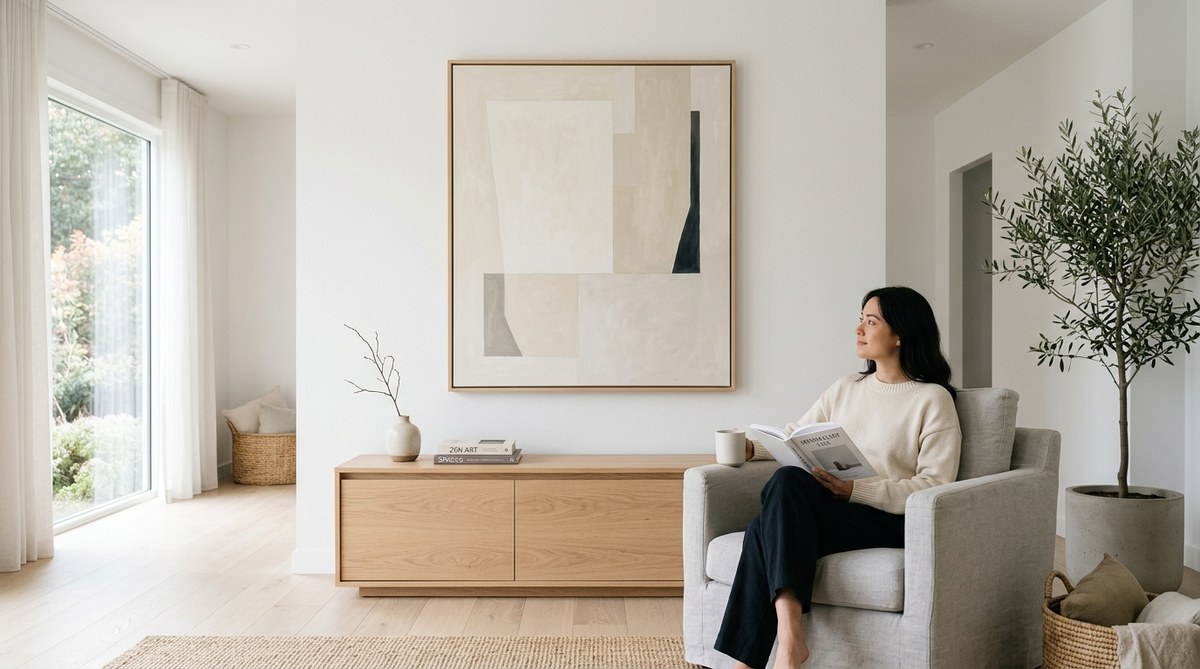
The single statement piece. One large artwork on a bare wall. This is the easiest way to create a gallery feel. Choose a piece that is at least half the width of the wall. Hang it at eye level (57 to 60 inches from the floor to the center of the piece).
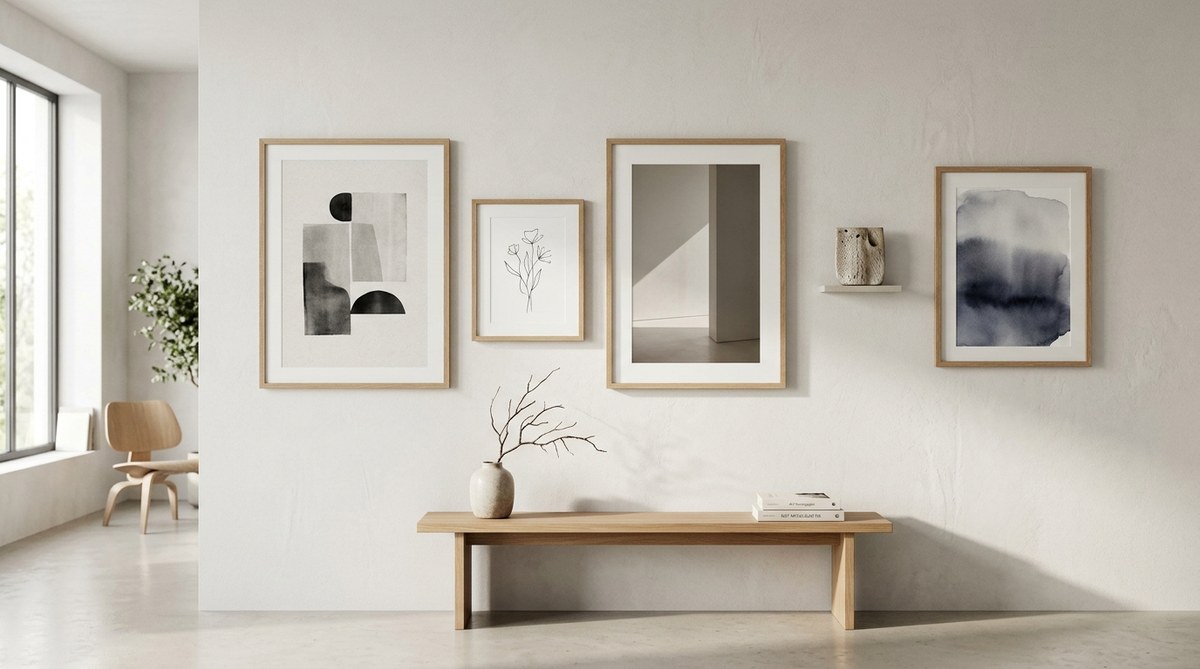
The triptych or trio. Three smaller pieces in a horizontal line. Leave 4 to 6 inches between each frame. Keep the spacing consistent. This layout works well above a console table or a low bench.
Do not overcrowd. If you are unsure, leave more space than you think you need. Empty wall is not wasted. It is part of the design.
Lighting Makes or Breaks the Mood
Gallery lighting is not optional. It is essential. Bad lighting can ruin the most beautiful painting. Good lighting can make a simple print feel like a masterpiece.
Here is a table to help you choose the right lighting approach:
| Lighting Type | Best For | What to Avoid |
|---|---|---|
| Picture lights (battery powered) | Single pieces, no wiring needed | Lights that cast shadows on the frame |
| Track lighting | Multiple pieces on one wall | Lights that are too bright or harsh |
| Recessed adjustable spots | A whole gallery wall | Fixed lights that cannot be angled |
| Floor lamps with directional heads | Renting, no permanent install | Lamps with colored shades |
Aim for warm white bulbs (2700K to 3000K). This temperature flatters most art and feels cozy. Avoid cool white or daylight bulbs. They can make the room feel clinical.
Negative Space Is Your Best Tool
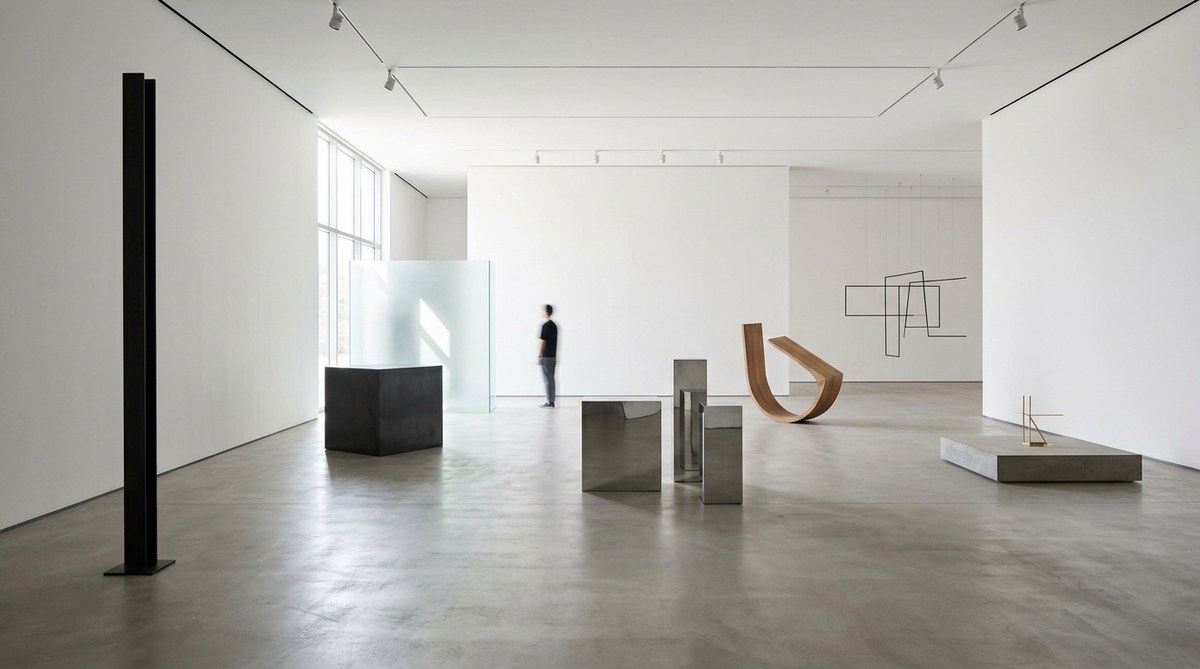
Negative space is the empty area around and between objects. In a minimalist art gallery at home, negative space is not a mistake. It is the main ingredient.
Think of negative space as a frame for the whole room. When you leave a wall mostly bare, the art you do hang becomes more important. The eye rests. The mind calms.
Here are three ways to use negative space well:
- Leave at least 6 inches of bare wall around every frame. More is better.
- Do not place furniture directly under a gallery wall. A low bench or a slim console is fine. Avoid tall cabinets or shelves.
- Keep the floor clean. No baskets, cords, or stacks of books near the art.
Common Mistakes to Avoid
Even with good intentions, it is easy to slip into clutter. Here are the most common mistakes people make when creating a minimalist art gallery at home.
- Hanging art too high. The center of the piece should be at eye level.
- Mixing too many frame colors. Stick to one or two finishes.
- Adding decorative objects near the art. Vases, candles, and small sculptures compete for attention.
- Using gallery walls as storage. No keys, hats, or bags should hang near the art.
- Ignoring the floor. A messy floor breaks the illusion of a curated space.
If you catch yourself making any of these mistakes, step back. Remove one thing. Then see how the room feels.
A Step by Step Process to Set Up Your Gallery
Follow these steps to create your own minimalist art gallery at home. Take your time. The process is part of the joy.
- Select your wall. Measure the width and height. Note any outlets or vents.
- Choose your art. Pick 1 to 3 pieces that share a visual theme. Lay them on the floor to test the arrangement.
- Mark the layout. Use painter’s tape on the wall to outline where each piece will go. Step back and look for three days before you commit.
- Install the hardware. Use picture hooks rated for the weight of your frames. Level each hook carefully.
- Add lighting. Install a picture light or adjust a floor lamp so it shines on the art without glare.
- Remove distractions. Clear the area below the art. Remove any small objects, cords, or furniture that does not support the gallery feel.
How to Maintain the Gallery Feel Over Time
A minimalist art gallery at home is not a one time project. It needs care. Dust the frames and the wall regularly. Check the lighting angle every few months. Swap out pieces when you feel ready for a change.
You can rotate art seasonally. In the summer, use lighter pieces with cool tones. In the winter, bring in warmer textures and deeper colors. This keeps the space feeling alive without adding clutter.
If you want to expand your collection, read our guide on how to curate a minimalist art collection that reflects your aesthetic. It will help you choose pieces that grow with you.
Bringing Calm into Every Room
You can apply the same principles to other rooms. A minimalist art gallery at home does not have to live in the living room. Try a small gallery in the hallway, the bedroom, or even the bathroom (if it has good ventilation).
In the bedroom, hang a single calming piece above the headboard. Use a picture light with a dimmer. In the hallway, line three small prints along the wall. Keep the spacing wide. In the bathroom, use a sealed frame and a small piece that adds color without overwhelming the space.
For more ideas on creating harmony with space and light, check out our article on mastering spatial harmony through minimalist art and design.
Make It Yours
The goal is not perfection. The goal is a space that feels like you. A minimalist art gallery at home should reflect your taste, your memories, and your sense of calm. Start small. Pick one wall. Hang one piece. Turn on a warm light. Then sit down and look at it. If it makes you breathe easier, you have done it right.

Leave a Reply