
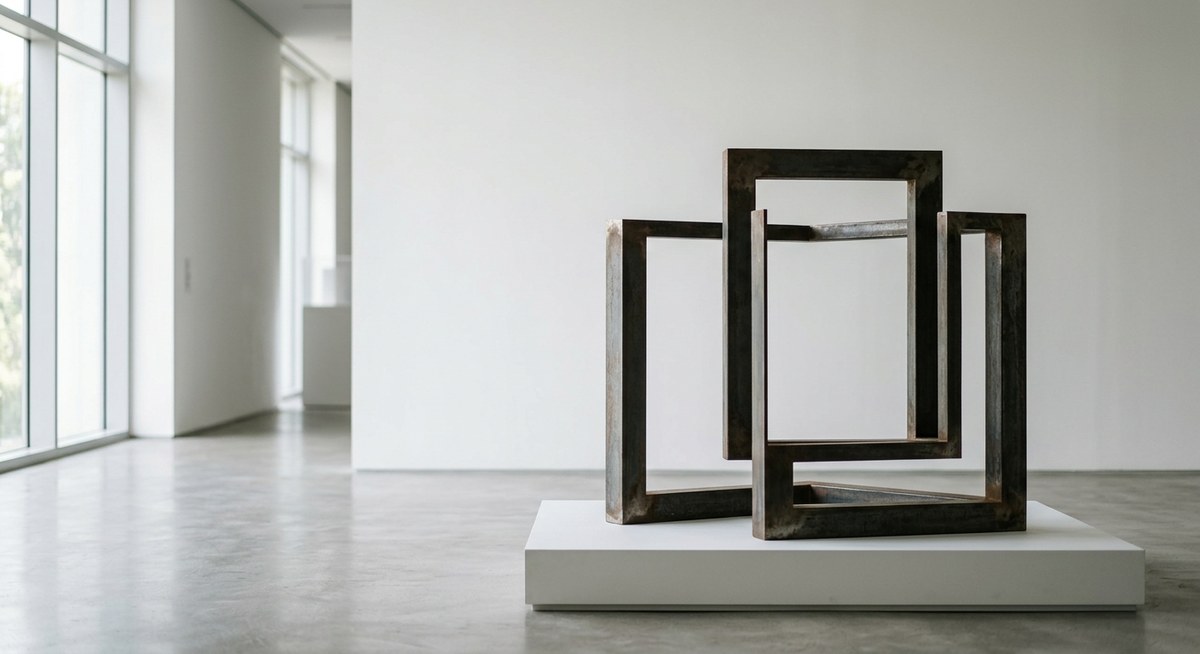
Walking into a gallery and seeing a minimalist sculpture, you might feel a strange pull. The object itself may be just a block of steel, a simple geometric shape, or a thin line of aluminum. Yet something about it feels complete. That feeling comes from the empty space around it. In minimalist sculpture, the absence of matter is just as important as the matter itself. The void is not a mistake. It is a deliberate tool that gives the object its weight, its presence, and its meaning. Understanding this relationship changes how you see not just sculpture, but all art.
Empty space in minimalist sculpture is an active participant, not a passive background. It defines form, amplifies perception, and invites viewers to complete the artwork mentally. By strategically using negative space, artists create tension, balance, and a sense of the infinite. This approach transforms sculpture into a dialogue between presence and absence, making emptiness the most powerful material of all.
The Sculpture Becomes the Frame
Think of a traditional sculpture. A figure carved from marble. The mass dominates. The space around it is just leftover. Now look at a minimalist piece: Donald Judd’s stacks of boxes, or Richard Serra’s leaning slabs. The form is simple. But the space between the boxes, or the gap under a tilted plane, holds your attention just as much. The artist has turned the sculpture into a frame for the void. The empty space becomes the subject.
This idea flips the usual relationship. In most art, the object is the star. In minimalist sculpture, the object creates boundaries that let the emptiness speak. The space is not empty at all. It is charged with potential. It makes you aware of your own position. You have to walk around, shift your gaze, and feel the volume of nothing. This is why empty space in minimalist sculpture is often called negative space. It is negative only in name. In practice, it is positive and active.
How Empty Space Shapes Perception
Empty space does not just sit there. It does work. Here are three concrete ways that negative space functions in minimalist sculpture:
-
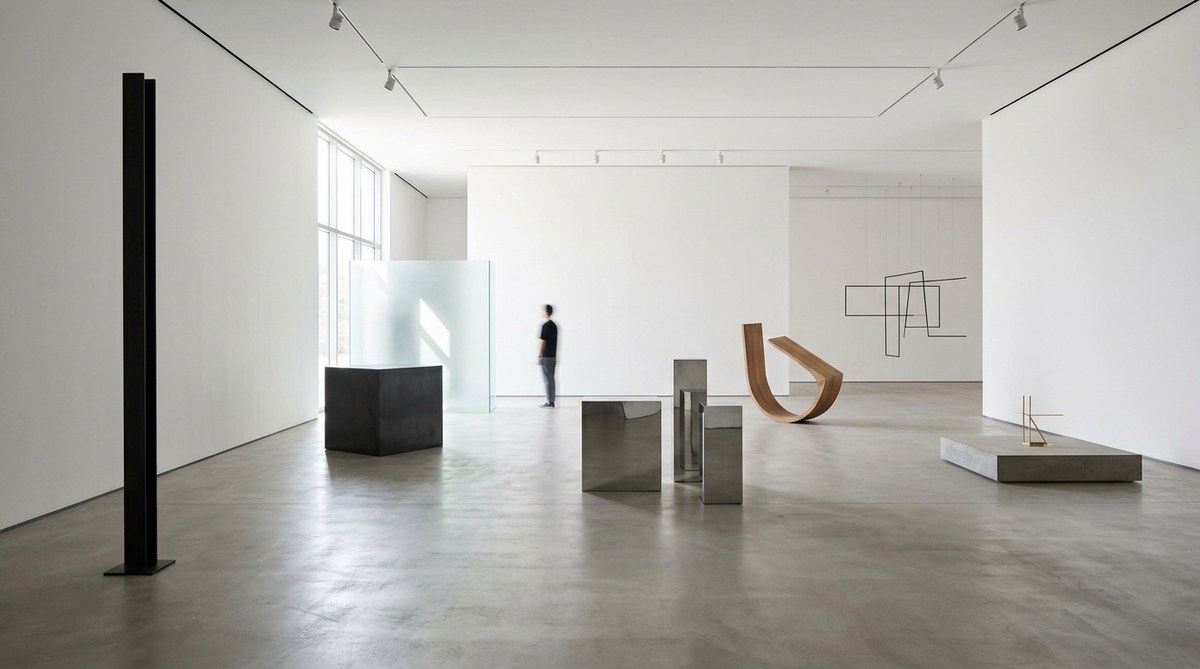
It defines scale. A thin column in a vast white room makes the room feel gigantic. The space around the object shows you the object’s size. Without the emptiness, you have no reference. This is why many minimalist artists place their works in large, open galleries. The relation between object and room is part of the piece.
-
It creates movement. When you stand in front of a minimalist sculpture, your eyes do not stop at the surface. They follow the edges. They trace the gaps. The empty space guides your gaze. A sculpture with a hole in the middle draws your eye through it. You feel the path of the void. This dynamic is central to works by artists like Barbara Hepworth, whose pierced forms invite you to look through them.
-
It introduces tension. Empty space can feel intimate or uncomfortable. A narrow gap between two large forms creates a squeeze. A vast emptiness around a small object creates isolation. Minimalist sculptors use these feelings to make you respond physically. The space is not neutral. It is a tool for emotion.
Common Missteps and How to Avoid Them
Working with empty space is tricky. Many beginners make mistakes that kill the effect. Here is a table of common errors and the smarter alternative.
| Mistake | Solution |
|---|---|
| Filling the space with too many objects | Leave at least two thirds of the area around the sculpture empty |
| Placing the work in a cluttered room | Use a plain, quiet background that does not compete with the void |
| Forgetting the viewer’s movement | Design the sculpture so it changes from every angle |
| Using empty space as an afterthought | Plan the negative space at the same time as the positive form |
| Making the void too symmetrical | Asymmetry in empty space creates more visual interest |
One of the best ways to learn is to study how established artists handle emptiness. If you are curating or making your own work, look at examples of discovering the power of negative space in minimalist art. That resource shows how artists from the 1960s onward have turned absence into presence.
Why Artists Rely on Negative Space
Minimalist sculptors do not use empty space just because it looks modern. They rely on it for deeper reasons:
- It forces engagement. You cannot just glance at a minimalist sculpture and move on. The emptiness pulls you in. You have to stop and think.
- It opens interpretation. A void does not have a fixed meaning. Each viewer fills it with their own ideas. The work stays alive.
- It respects the surroundings. Minimalist sculptures are rarely self-contained. They belong to the room. The empty space ties the object to the architecture.
- It creates a meditative quality. Large quiet spaces slow down your breathing. This is why many people say minimalist sculpture feels calming or spiritual.
For those interested in how this concept extends beyond sculpture into interiors, the principles of mastering spatial harmony through minimalist art and design offer practical guidance. The same empty space that makes a sculpture work can make a room feel balanced.
Expert Insight
“The void is not nothing. It is the most honest material. It asks nothing of you, yet it demands that you participate. In minimalist sculpture, what you do not see is what you truly see.”
– Eva Hesse (paraphrased from her notebooks)
Hesse understood that emptiness is not a lack. It is a presence. She worked with organic forms that floated in space. Her sculptures used gaps and openings to feel both fragile and strong. The empty space around her pieces was always part of the composition. She did not fill it. She let it breathe.
Practical Guide: Using Empty Space in Your Own Work
If you are an art student or a professional looking to incorporate empty space into your sculpture, follow this numbered process. It will help you make the void work for you.
-
Start with the volume you want to enclose. Draw the shape of the empty space first. Not the object. Imagine you are carving a hole out of the air. The object becomes the boundary of that hole.
-
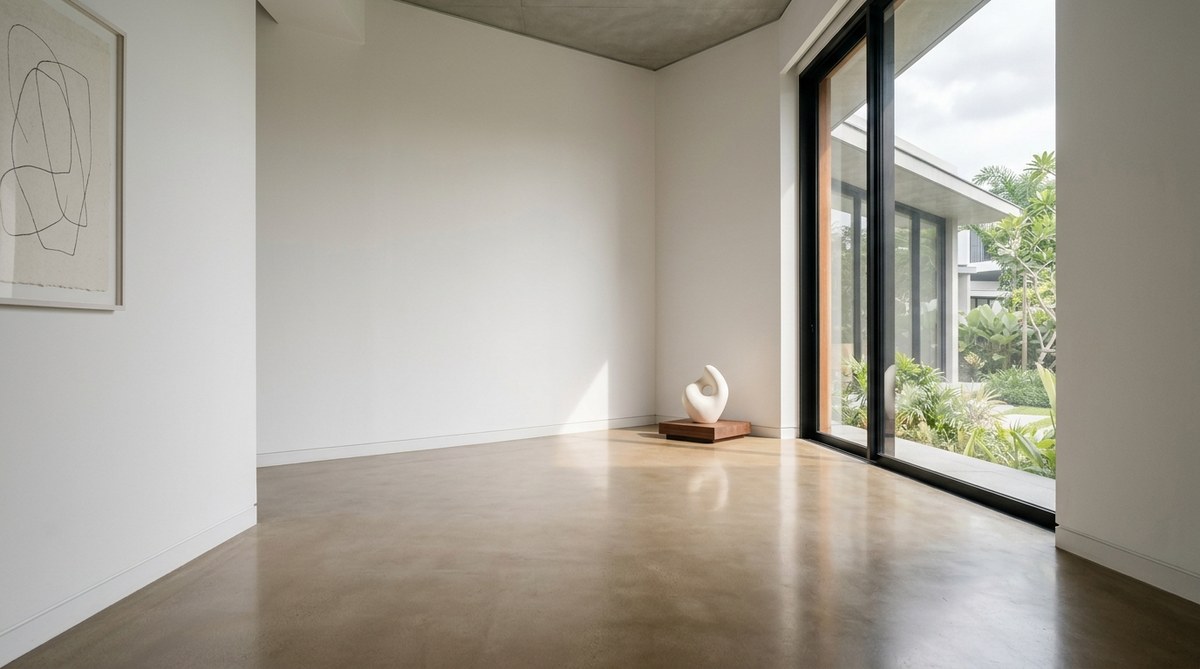
Place your piece in a room with at least 10 feet of clear space around it. This gives the emptiness room to act. A crowded shelf kills the effect.
-
Adjust the lighting. A single spotlight from above or from a low angle will cast shadows that define the void. The shadows are part of the negative space.
-
Walk around the sculpture at every angle. Mark where the emptiness feels weak or strong. Move the sculpture if needed.
-
Ask someone else to describe what they see. If they only talk about the object, the empty space is not working. If they mention the gap, the silence, or the air around it, you have succeeded.
For a deeper understanding of how light changes the perception of space, see how minimalist art transforms contemporary space through light and form. Light and shadow are the best friends of empty space.
The Unseen Presence
Empty space in minimalist sculpture is never a blank. It is a verb. It pushes, pulls, frames, and defines. It makes the solid parts of the sculpture meaningful. Without the void, the form would be just a lump. With it, the form becomes a statement.
Start paying attention to the air around objects, not just the objects themselves. Next time you see a minimalist sculpture, stand still for a minute. Look at the space between you and the piece. Look at the gap under it. Look at the emptiness above it. That is where the art truly lives. Let that awareness guide your own practice, whether you are making art or simply learning to see more clearly.

Leave a Reply