
You check your phone for the time and somehow end up scrolling for 20 minutes. A notification from Slack lights up your wrist, your email inbox shows 1,482 unread, and your desktop looks like a digital war zone of open tabs. You are not alone. The average person touches their phone over 2,600 times a day. That constant buzz of notifications, pings, and badges creates a low grade anxiety that saps your ability to think clearly. Digital minimalism offers a way out. It is not about throwing your laptop into the ocean. It is about intentionally cutting down your digital tools to the ones that truly serve you. Think of it as a mental decluttering that makes room for deeper focus, better ideas, and more peace.
Digital minimalism is the practice of reducing your digital tools and habits to only those that align with your core values. Instead of a quick detox, it is a permanent shift toward intentional use. By applying principles from minimalist art such as negative space and simplicity you can reclaim mental clarity, reduce anxiety, and focus on what actually matters. Start small with one change today.
What Is Digital Minimalism and Why It Matters in 2026
Digital minimalism is a philosophy first popularized by author Cal Newport. It asks you to step back from the constant barrage of apps, notifications, and social feeds and ask yourself: What do I actually need? It is not a quick fix or a 30 day challenge. It is a way of deciding which digital tools get a permanent spot in your life and which ones are just noise.
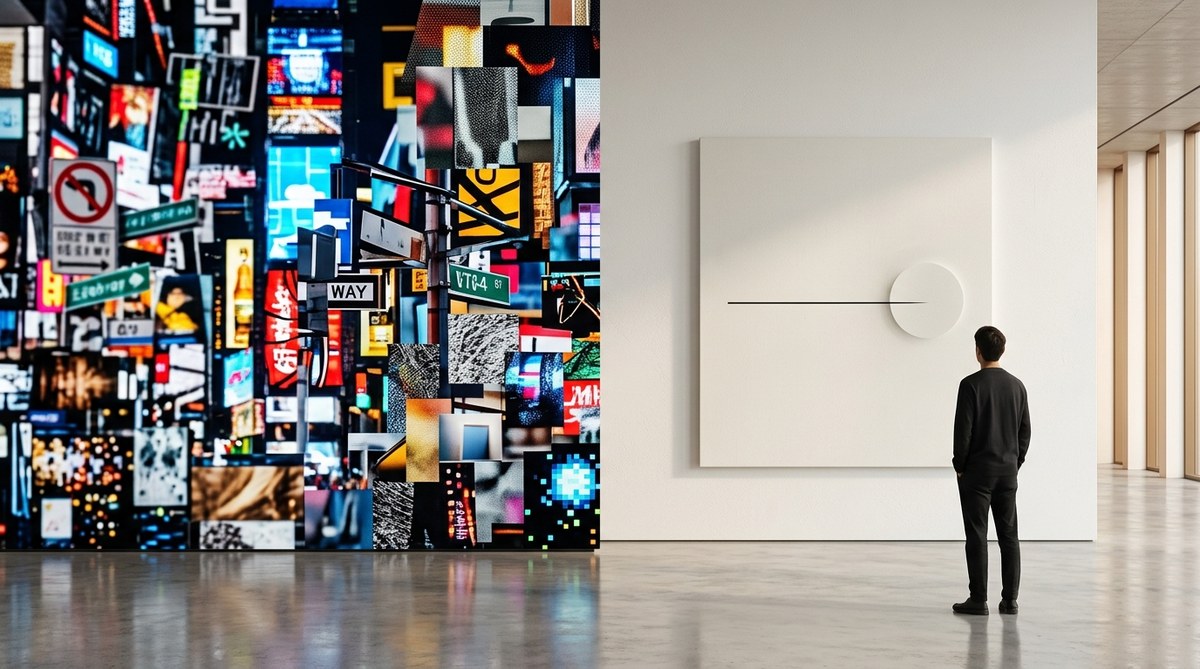
In 2026, the case for digital minimalism is stronger than ever. Remote work is still the norm for many creative professionals. AI assistants ping you with summaries you did not ask for. Group chats never sleep. The line between work and life has blurred into a single glowing rectangle. You cannot control the pace of technology, but you can control how you engage with it. That is where digital minimalism becomes a superpower.
The Hidden Cost of Digital Clutter on Your Mind
Your brain was not designed to process a firehose of information all day. When you switch between tasks, your brain leaves a trace of attention behind. Psychologists call this attention residue. Every time you glance at a notification, even if you ignore it, a little bit of your focus leaks away. The cost of digital clutter is not just lost time. It is lost quality of thought.
- Cognitive load skyrockets when you keep dozens of apps and browser tabs open.
- Decision fatigue sets in every time you choose which notification to respond to.
- Comparison anxiety spikes when you scroll through curated highlight reels.
- Sleep disruption happens when blue light and mindless scrolling replace wind down time.
Notice how physical clutter works the same way. A messy desk makes it harder to find your pen. A messy digital life makes it harder to find your focus. The connection is real.
| Physical Clutter | Digital Clutter | Shared Effect |
|---|---|---|
| Unused furniture taking up floor space | Unused apps taking up home screen real estate | Wasted space and mental energy |
| Piles of paper you will never read | 200 unread newsletters | Constant low level guilt |
| Broken gadgets you keep out of obligation | Apps you never use but keep “just in case” | Decision fatigue |
| Photos you cannot find because of clutter | Screenshots and saved posts you never revisit | Lost meaning and frustration |
How Minimalist Art Principles Can Guide Your Digital Life
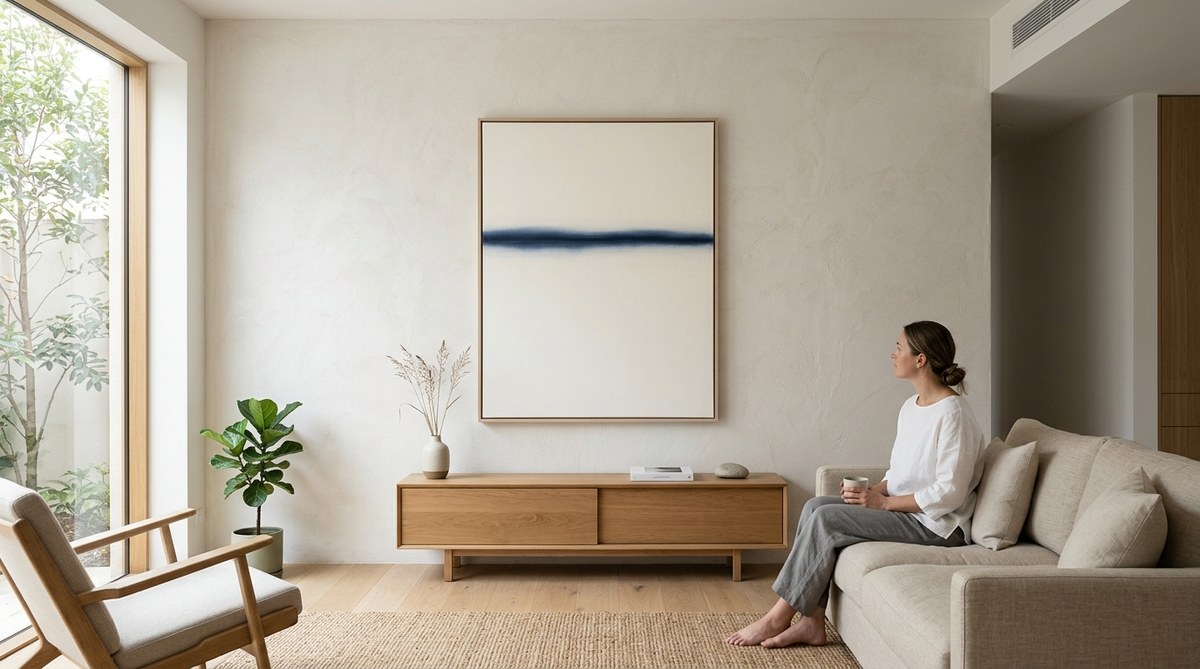
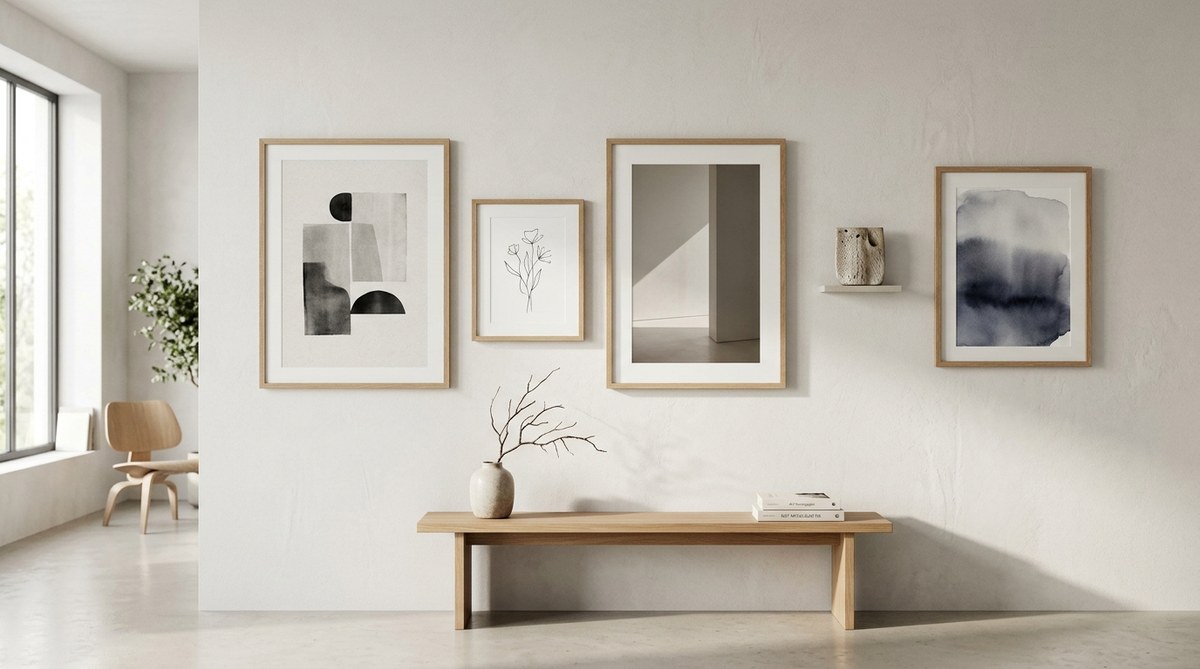
Minimalist art is not about having less for the sake of less. It is about removing everything that is not essential so that the essential can speak. A white canvas with a single black square forces you to pay attention to proportion, space, and light. That same philosophy can transform your digital life.
Think of your home screen as a minimalist art piece. It does not need to be packed with icons. It needs negative space. The blank areas on your phone screen are not wasted. They give your eyes a rest and your mind a moment to pause before you pick a tool. This is where the idea of negative space becomes your best friend. You can read more about it in our article on discovering the power of negative space in minimalist art.
The same goes for your browser bookmarks, your file folders, and your social feeds. Ask yourself: Does this tool bring value, or does it just fill space? If you cannot name a specific, positive use for an app or a subscription, it is likely digital clutter. The practice of intentionality mirrors the way a minimalist artist chooses every element deliberately. When you pair that mindset with practical steps, you get a life that feels lighter and clearer.
A Step-by-Step Process to Start Your Digital Minimalism Journey
You do not need to overhaul everything at once. Take it one step at a time. This numbered list gives you a sequence that works.
- Audit your digital inventory. Write down every app, subscription, social account, and notification you currently use. Be honest. If you have not opened an app in three months, put it on a delete list.
- Define your digital values. Why do you use technology? To create, connect with family, learn, or earn a living? Write down your top three reasons. Anything that does not serve those values is a candidate for removal.
- Apply the 80/20 rule. 80% of your digital value likely comes from only 20% of your apps. Identify that 20% and let the rest go. For example, you might keep a messaging app for close friends but delete the one from a conference you attended two years ago.
- Schedule intentional use periods. Instead of checking email and social media throughout the day, set two or three specific times. Outside of those windows, turn off notifications. Your brain will thank you for the uninterrupted blocks.
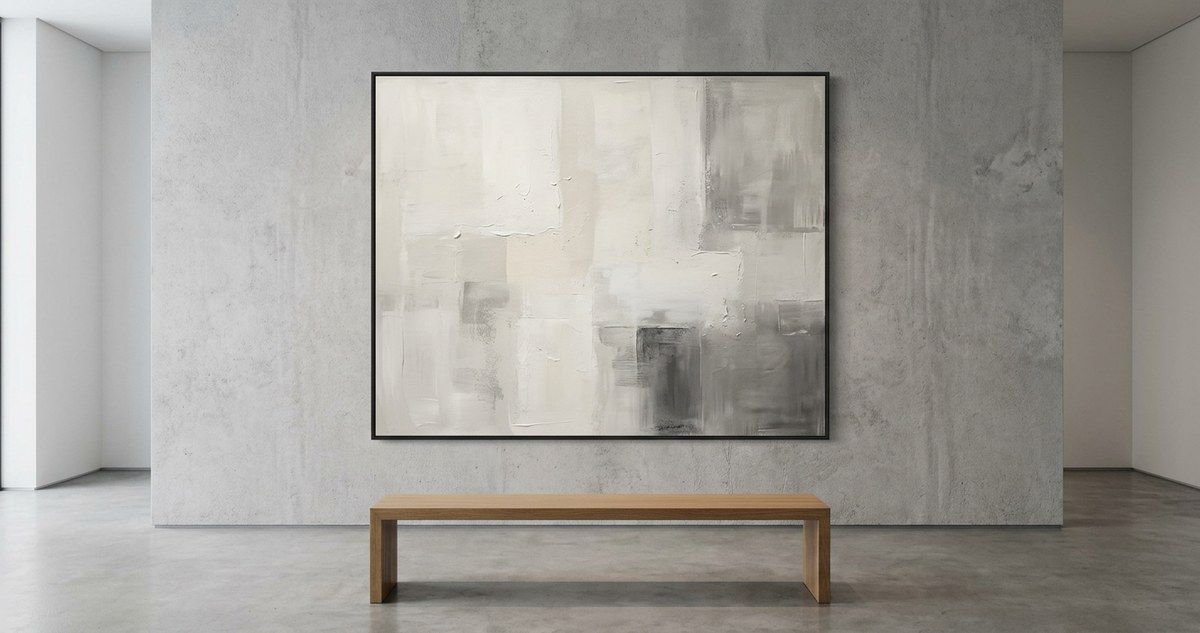
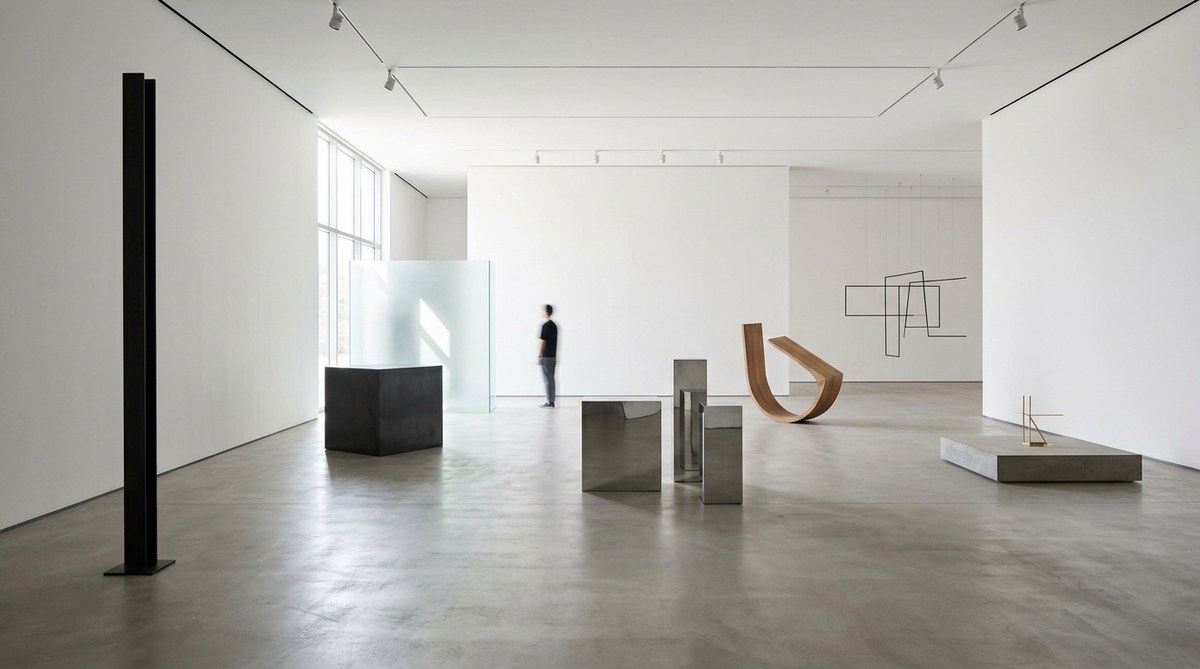
- Replace mindless scrolling with a low tech alternative. When you feel the urge to grab your phone, pick up a book or step outside. Or better, spend time in a space that embodies the calm you want. Visiting a gallery or browsing images of minimalist interiors can reset your visual palette. Our post on embracing minimalist aesthetics in contemporary art spaces offers inspiration for that kind of mindful experience.
Common Digital Minimalism Mistakes (and How to Avoid Them)
Even people who commit to digital minimalism can fall into traps. This table shows the three most common mistakes and how to fix them.
| Mistake | Why It Happens | Better Approach |
|---|---|---|
| Keeping all notifications on “just in case” | Fear of missing something important | Set up VIP lists for calls and messages from key people only. Everything else can wait. |
| Keeping unused apps because you paid for them | Sunk cost fallacy | The money is already spent. Keeping the app does not get it back. Delete it and free up mental space. |
| Trying to go cold turkey on everything | Over ambition leads to relapse | Pick one habit to change per week. Start with turning off email push notifications. Build from there. |
Expert Advice: A Principle from a Minimalist Thinker
“Simplicity is not an end in art, but we arrive at simplicity as we step closer to the true sense of things.”
* Agnes Martin, minimalist painter
Agnes Martin spent decades creating subtle, grid based paintings that seemed to contain nothing and everything at the same time. Her work teaches us that stripping away the extraneous does not leave you with emptiness. It leaves you with clarity. Apply that same mindset to your digital life. Remove the noise, and the signal becomes crystal clear.
Designing Your Digital Environment for Calm
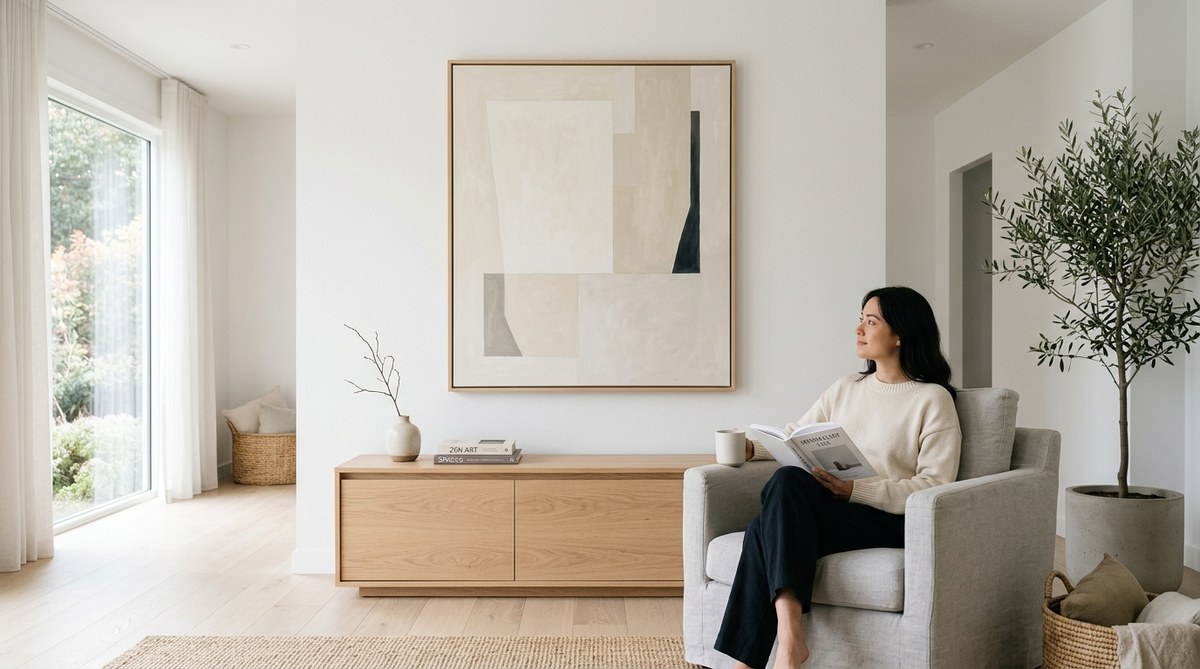
Your digital environment should feel as calming as a well designed room. That means curating the colors, sounds, and layouts you interact with every day. Here are a few practical changes that bring the principles of minimalist design into your daily tech use.
- Switch your phone to grayscale mode. Without bright colors, apps become less addictive because your brain does not get the same dopamine hit.
- Organize your home screen by purpose, not by app. Create one folder for work tools, one for communication, and one for creativity. Keep only one or two essential apps on the first screen.
- Use focus modes on your phone or computer to silence everything except what you need for a specific task.
- Choose a simple wallpaper, preferably a solid color or a subtle gradient. Avoid busy images that compete for your attention.
These changes may seem small, but they add up. They create what designers call visual quiet. And visual quiet leads to mental quiet. For more ideas on how to bring that philosophy into your physical spaces, take a look at the art of light and space in minimalist interior design. The same principles that make a room feel open can make your digital life feel spacious.
The Quiet Power of a Curated Digital Life
When you clear away the digital noise, something surprising happens. You get back your attention. That is the most valuable thing you own. Without it, you cannot do deep work, have a real conversation, or simply sit still and think. With it, you can create, connect, and rest in ways that feel genuinely fulfilling.
Digital minimalism is not about deprivation. It is about freedom. Freedom from the compulsion to check. Freedom from the anxiety of missing out. Freedom to choose what gets your time and energy.
Start today. Pick one app you have not used in a month. Delete it. Then notice how the absence of that tiny icon changes your day. It will not fix everything overnight. But it is a step toward a life where your tools serve you, not the other way around. And that is a life worth living.

Leave a Reply