
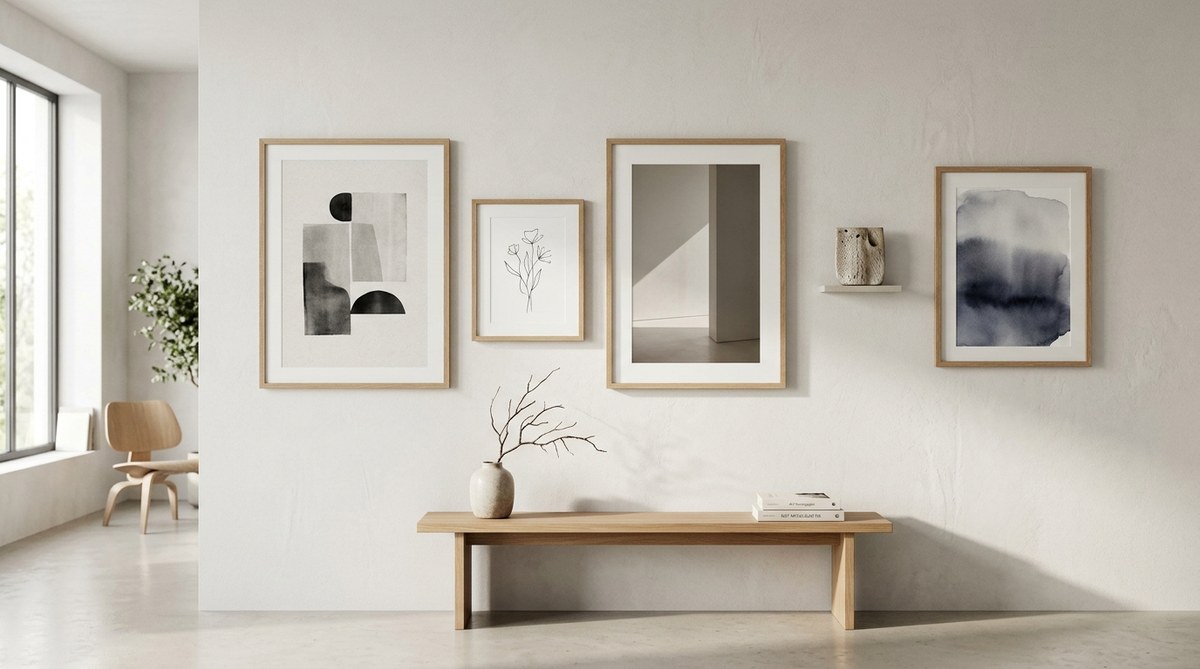
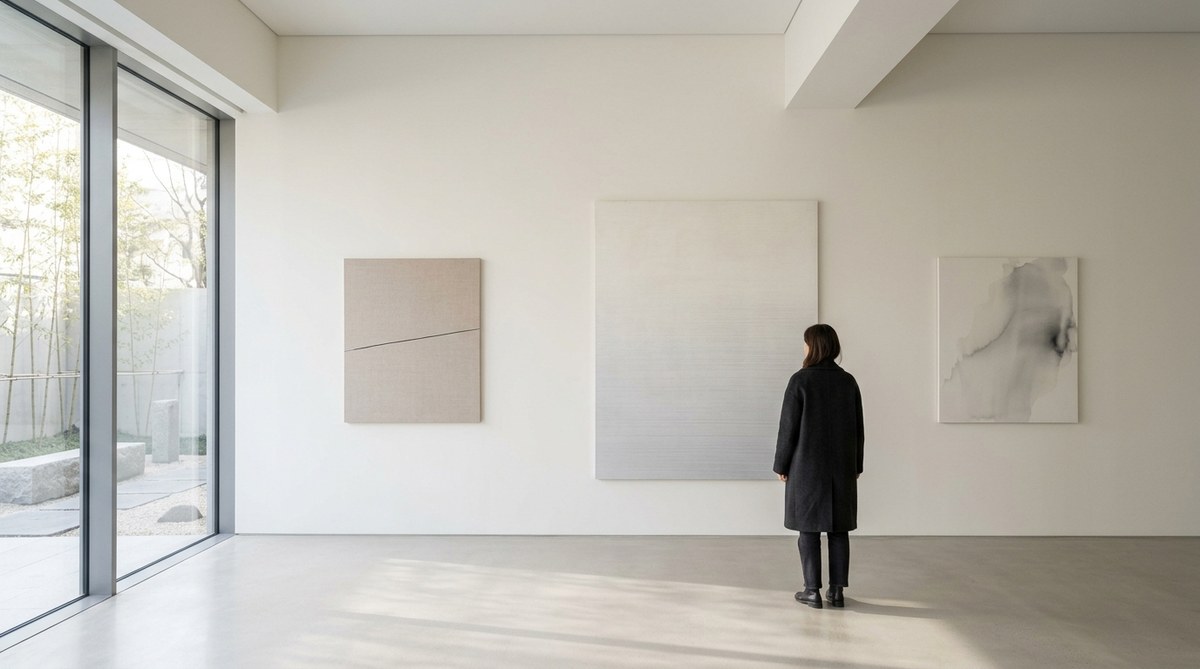
A single white canvas with a faint horizon line. A bronze sphere resting on a concrete floor. A photograph of a shadow cast by an empty chair. None of these pieces contain a single written word, yet each one hums with meaning. That is the quiet power of minimalist art collection storytelling. It is not about what you put on the wall. It is about what you leave out. The empty space, the texture, the way light falls across a simple form. These elements become your vocabulary. And when you arrange them with care, they speak a language that bypasses words entirely and goes straight to the gut.
A wordless narrative in minimalist art relies on three things: deliberate selection of pieces that share a visual thread, intentional placement within negative space, and a sequence that guides the viewer’s eye from one object to the next. You do not need a huge budget. You need a clear vision and the discipline to edit ruthlessly.
Why Minimalist Art Works Without Words
Think about the last time you stood in front of a Mark Rothko painting. There were no figures, no landscapes, no recognizable symbols. Yet you probably felt something. A shift in mood. A memory surfacing. That is because minimalist art strips away representation and leaves only the raw elements of visual language. Color, texture, scale, and proportion. These ingredients speak to your senses directly.
A minimalist art collection works the same way. When you group pieces that share a similar material, a repeated shape, or a consistent palette, your brain starts to connect them. It looks for patterns. It invents a thread. Suddenly, a slab of carved marble next to a black ink drawing feels like a conversation. The viewer becomes the narrator. They fill in the story themselves.
This is why minimalist art collection storytelling is so effective. It does not tell you what to think. It invites you to wonder.
The Three Pillars of a Wordless Narrative
To build a collection that tells a story, you need structure. Without words, the narrative relies on visual cues. Here are the three pillars that hold it all together.
1. A Unifying Visual Language
Every piece in your collection should feel like it belongs to the same family. That does not mean they have to match. They just need to share a common thread.
- Material consistency: Stick to a narrow range of materials such as raw wood, matte ceramic, brushed steel, or linen canvas.
- Shape repetition: Use circles, lines, or rectangular forms across different mediums.
- Color restraint: Limit your palette to two or three hues. Neutrals work very well. So do monochrome palettes with a single accent tone.
- Texture contrast: Pair smooth surfaces with rough ones. A polished stone next to a rough clay piece creates tension and interest.
When you apply these rules, your collection starts to feel intentional. It looks curated, not cluttered.
2. The Rhythm of Negative Space
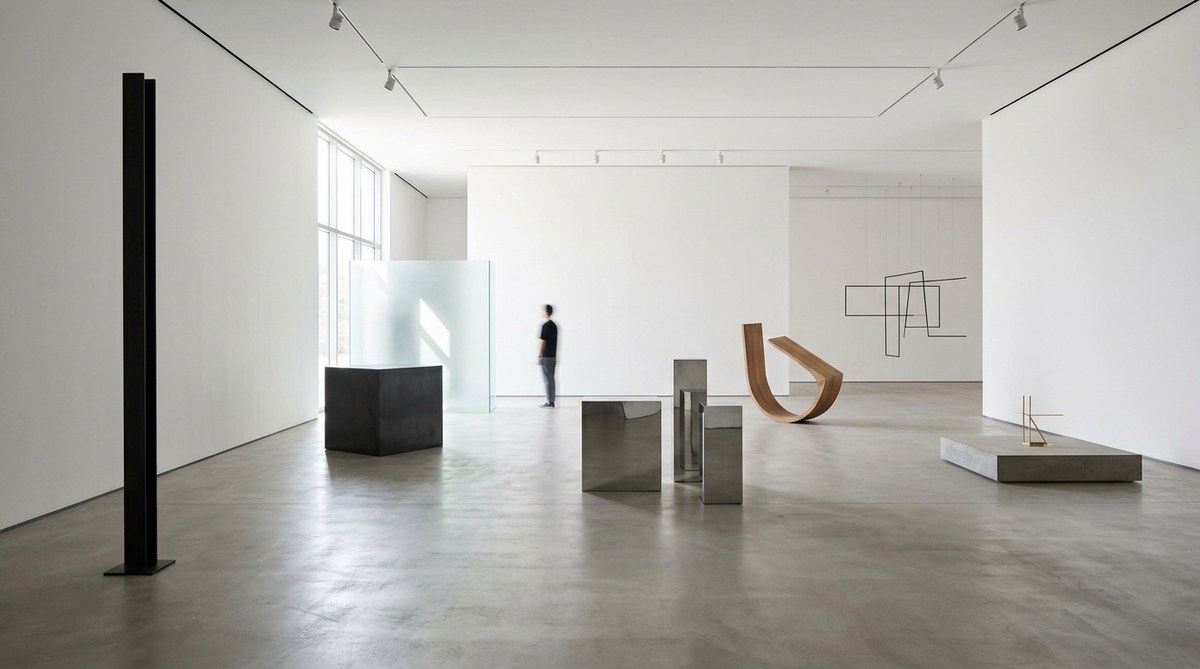
Space is not empty. It is active. In minimalist art collection storytelling, the gaps between pieces are just as important as the pieces themselves.
Think of your wall or shelf as a musical score. Each artwork is a note. The space around it is the silence that gives the note meaning. If you crowd your pieces, the story becomes noise. If you spread them too far apart, the narrative loses its flow.
A good rule of thumb is to leave at least six to eight inches between small pieces and twelve to eighteen inches between larger works. For sculptural objects on a shelf, give each piece room to breathe. Let the eye rest before moving to the next object.
You can learn more about this principle in our guide to discovering the power of negative space in minimalist art.
3. A Clear Sequence
A story has a beginning, a middle, and an end. Your collection should too.
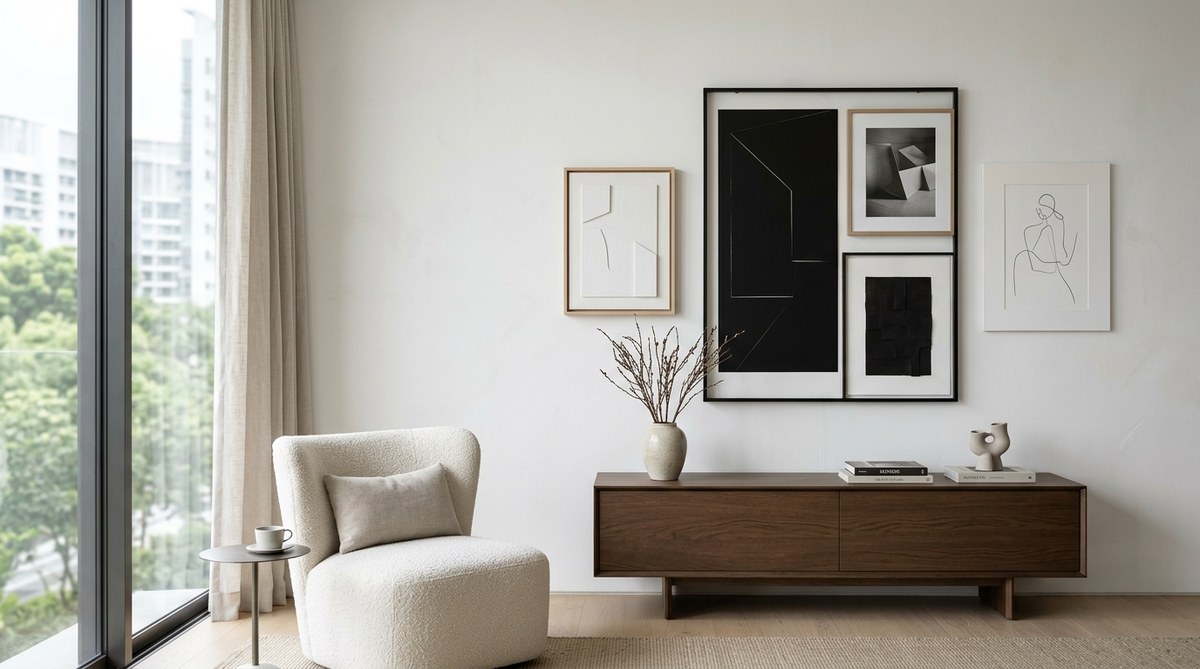
For a wall arrangement:
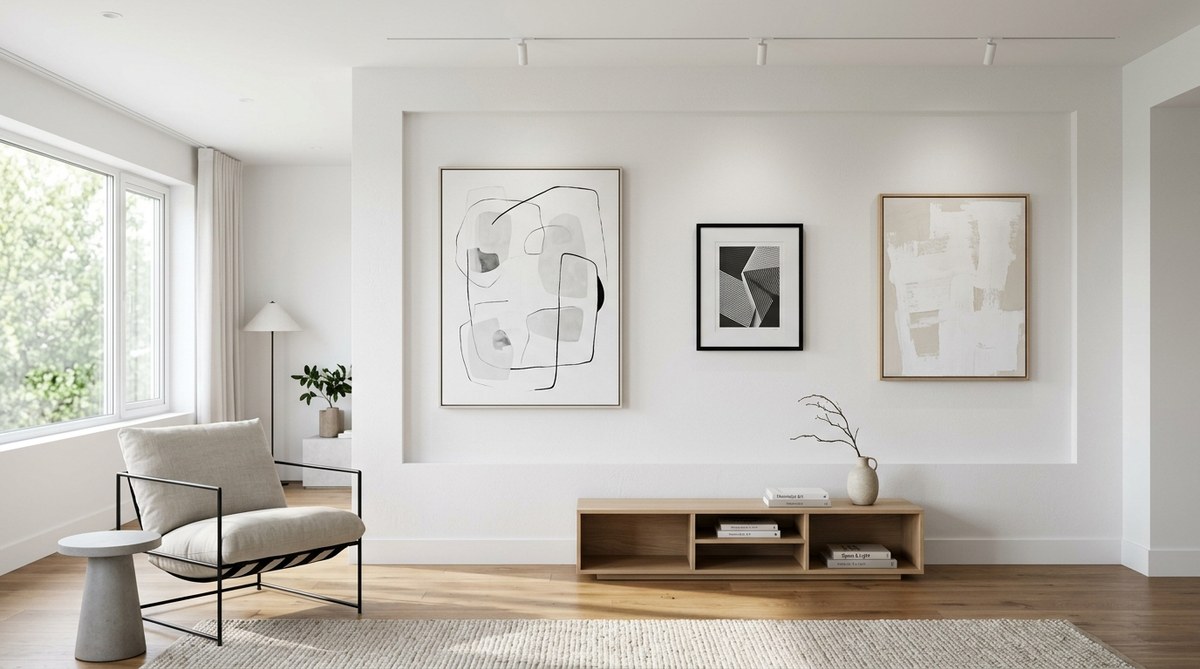
– Start with a larger anchor piece on the left or center.
– Move the eye to a medium sized piece that echoes a shape or color from the first.
– End with a smaller, quieter piece that feels like a resolution.
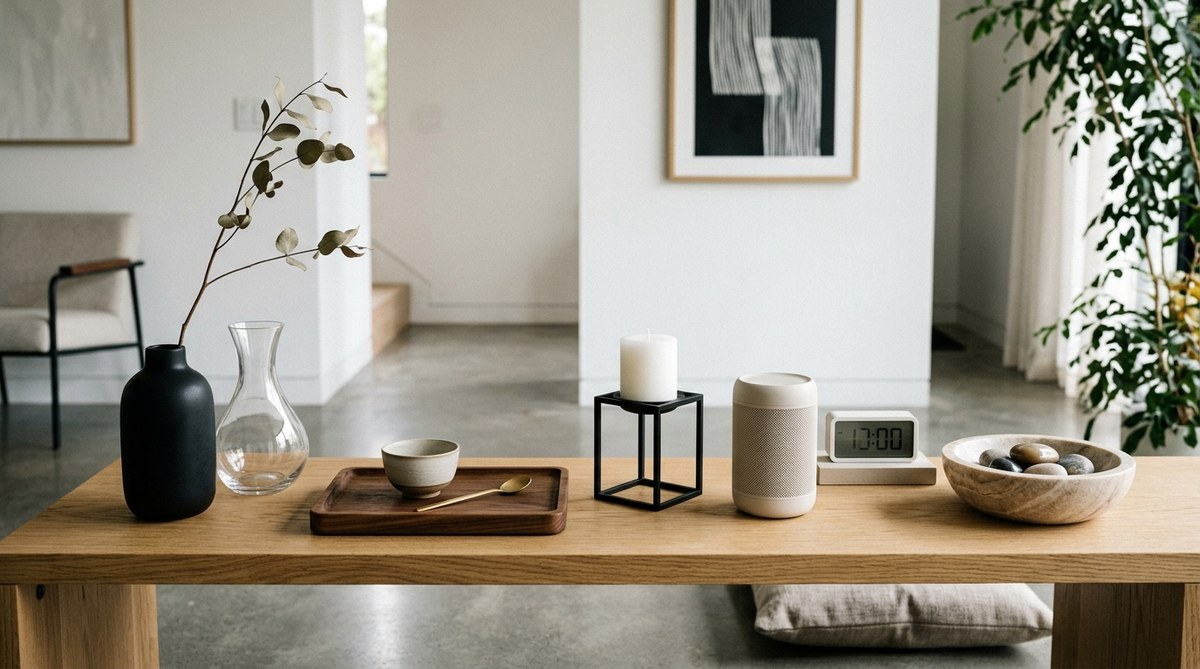
For a shelf or pedestal display:
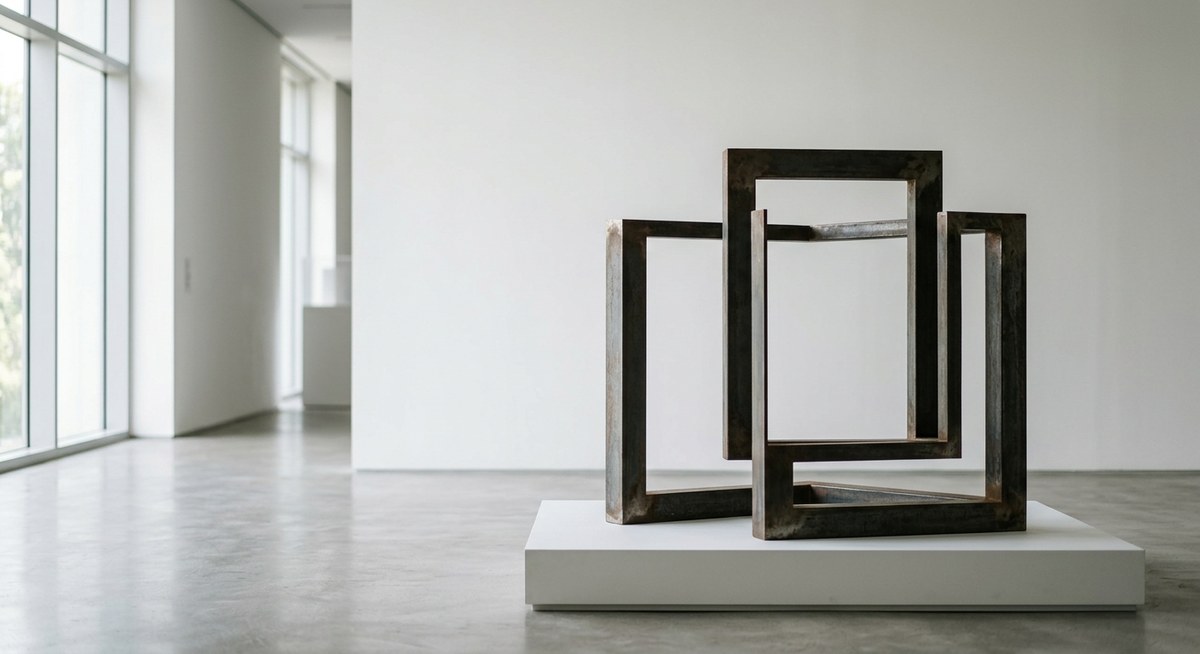
– Place the tallest or most dominant object first.
– Let the viewer’s gaze travel left to right across lower, subtler forms.
– Finish with a piece that feels like a closing note. A small ceramic vessel. A flat stone. A shadow box.
This sequence does not need to be literal. It does not tell a specific story like a novel. Instead, it creates an emotional arc. Tension, release, calm. That is the rhythm you are after.
A Practical Process for Curating Your Collection
You can follow this numbered process to build your own wordless narrative from scratch.
-
Choose a theme word. Pick one word that captures the feeling you want your collection to evoke. Examples include: still, drift, weight, fold, hush, or shift. Use this word to guide every purchase. If a piece does not fit the word, leave it out.
-
Select a primary medium. Decide whether your collection will focus on two dimensional works, three dimensional objects, or a mix. A mix often works best because it adds depth. But keep the ratio balanced. For example, three wall pieces and two sculptural objects.
-
Find your anchor piece. This is the largest or most visually striking work in the collection. It sets the tone. Everything else should relate to it in some way. Color, material, or form.
-
Add supporting pieces. Choose two to four additional works that echo elements from the anchor piece. A similar line quality. A matching finish. A complementary texture.
-
Edit without mercy. Lay out all your pieces together. Then remove one. See if the story still holds. If it does, remove another. Keep only what is necessary. A minimalist collection is defined by what you leave out.
-
Install with intention. Place your pieces using the rhythm and sequence rules above. Step back. Look at the whole arrangement. Adjust until the visual flow feels natural.
For more guidance on arranging your space, read our article on how to curate a minimalist gallery at home.
Common Mistakes to Avoid
Here is a table that contrasts effective techniques with common pitfalls.
| Effective Technique | Common Mistake |
|---|---|
| Repeat a single shape across pieces | Use too many different shapes that compete |
| Limit your palette to 2-3 colors | Add multiple bright colors without a plan |
| Leave generous negative space | Fill every inch of wall or shelf |
| Choose pieces with similar finishes | Mix glossy, matte, and rough textures randomly |
| Use a clear left to right or top to bottom sequence | Place pieces without considering visual flow |
| Edit down to the essential few | Keep every piece you like, even if it does not fit |
The biggest mistake new collectors make is falling in love with individual pieces without considering how they work together. A minimalist art collection is not a trophy case. It is a conversation.
How to Spot a Piece That Will Fit Your Story
When you are shopping for new art, train your eye to look for these qualities.
- Does the piece have a clear relationship to your theme word?
- Does it share a material, color, or shape with at least one other piece you own?
- Does it leave room for interpretation? Minimalist art should feel open, not explained.
- Does it create a dialogue with the space around it? A piece that looks good alone might feel isolated in a group.
- Does it make you feel something without needing a title? Trust that instinct.
“The best minimalist art does not describe. It suggests. It gives you just enough to start a story, then steps back and lets you finish it.” – Tadao Ando (paraphrased from his writings on space and silence)
Bringing Your Collection to Life in Your Home
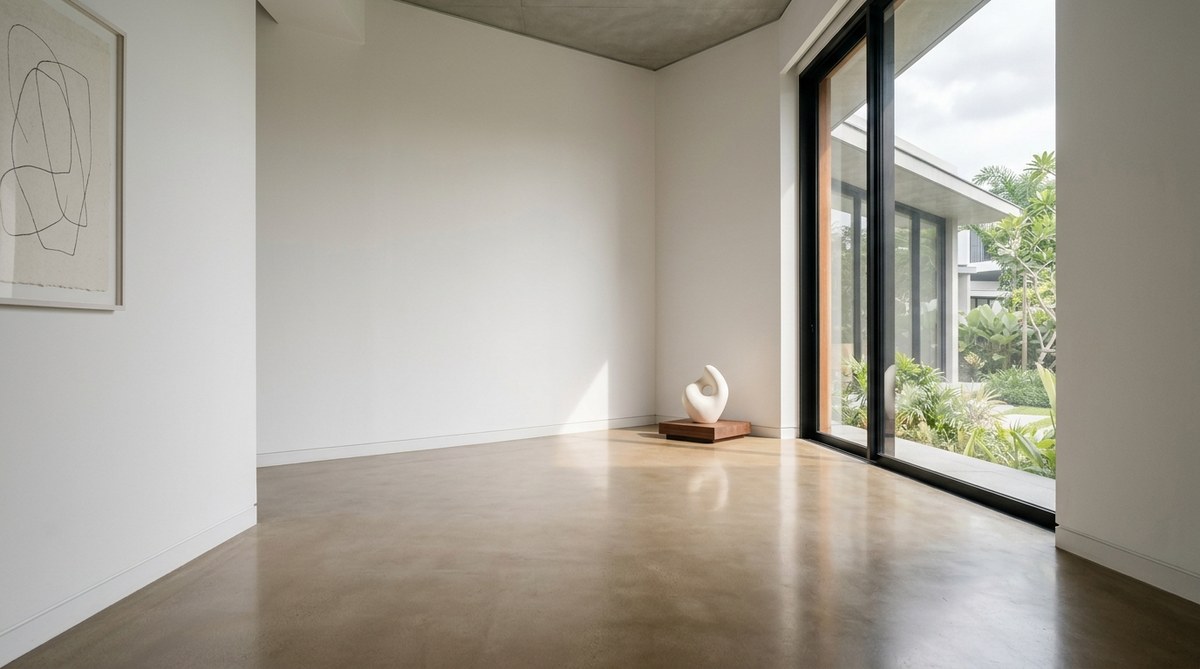
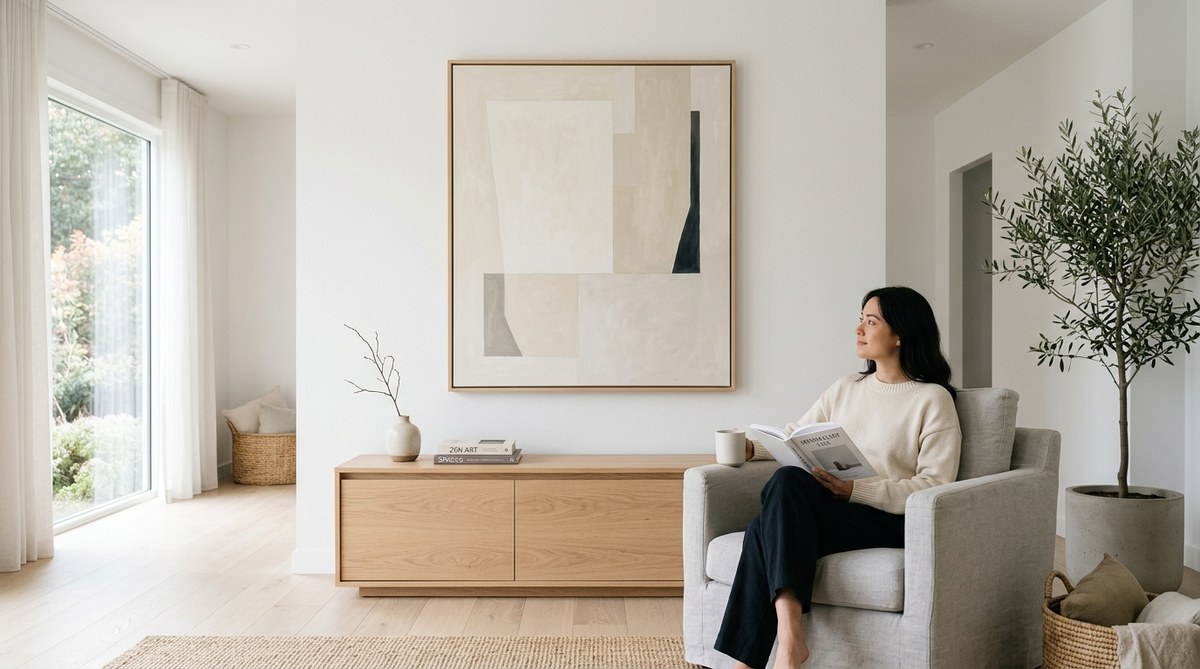
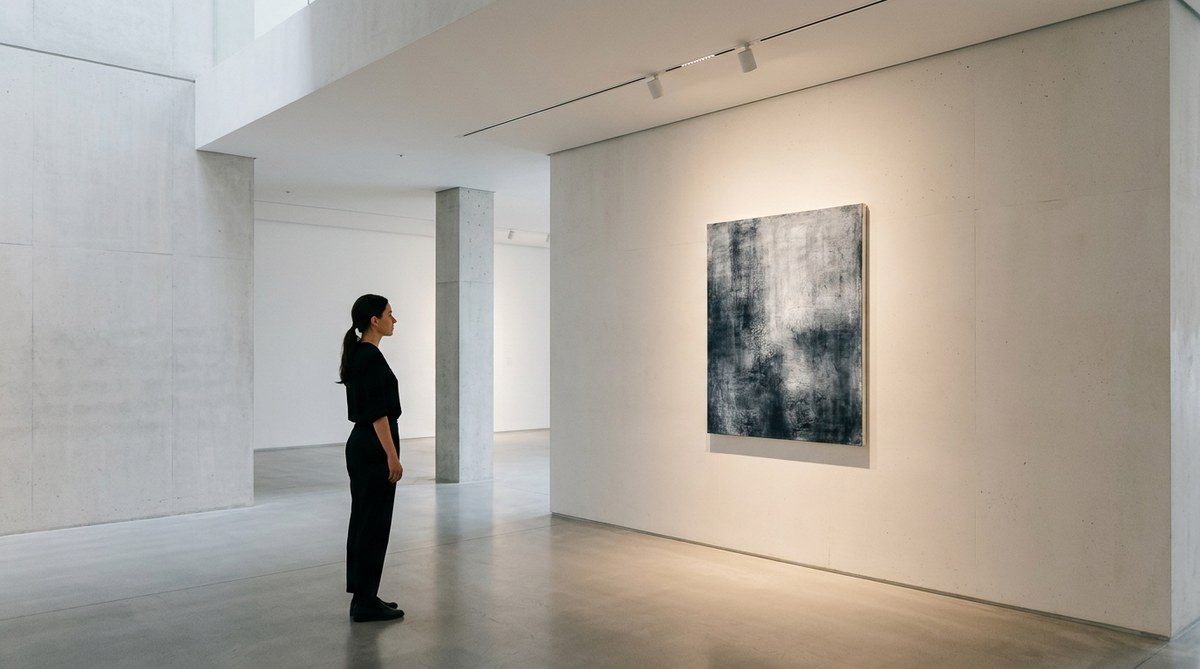
Once you have selected and arranged your pieces, the space itself becomes part of the narrative. Light plays a huge role. A single spotlight on a textured canvas can change its mood from morning to evening. A shadow cast by a sculptural piece becomes a temporary artwork that shifts throughout the day.
Consider how your collection interacts with the room. Does it feel calm? Does it invite touch? Does it make the air feel different? These are the questions that matter.
For ideas on using light to strengthen your collection, check out our guide on the art of light and space in minimalist interior design.
You can also think about rotation. A wordless story does not have to be permanent. Swap out a piece every season. Change the arrangement when you feel the need for a new chapter. Your collection can grow and shift with you.
The Quiet Art of Letting the Viewer Finish the Story
A minimalist art collection that tells a story without words is a gift. It gives the viewer permission to pause. To wonder. To bring their own experiences into the room. You are not dictating a narrative. You are building a framework for one.
Every piece you choose is a sentence. Every gap is a breath. Every arrangement is a paragraph. When you edit with care, the story writes itself in the mind of the person standing in front of it.
Start small. A single shelf. A corner wall. One anchor piece and two companions. Let the space guide you. And remember that the most powerful tool in your collection is the empty space you leave for the story to unfold.
For a deeper understanding of how these principles shape modern spaces, read about embracing minimalist aesthetics in contemporary art spaces.
The best time to begin is now. Look at the objects you already own. Find the one that feels the most still, the most quiet. Build around it. Let the silence speak.

Leave a Reply