
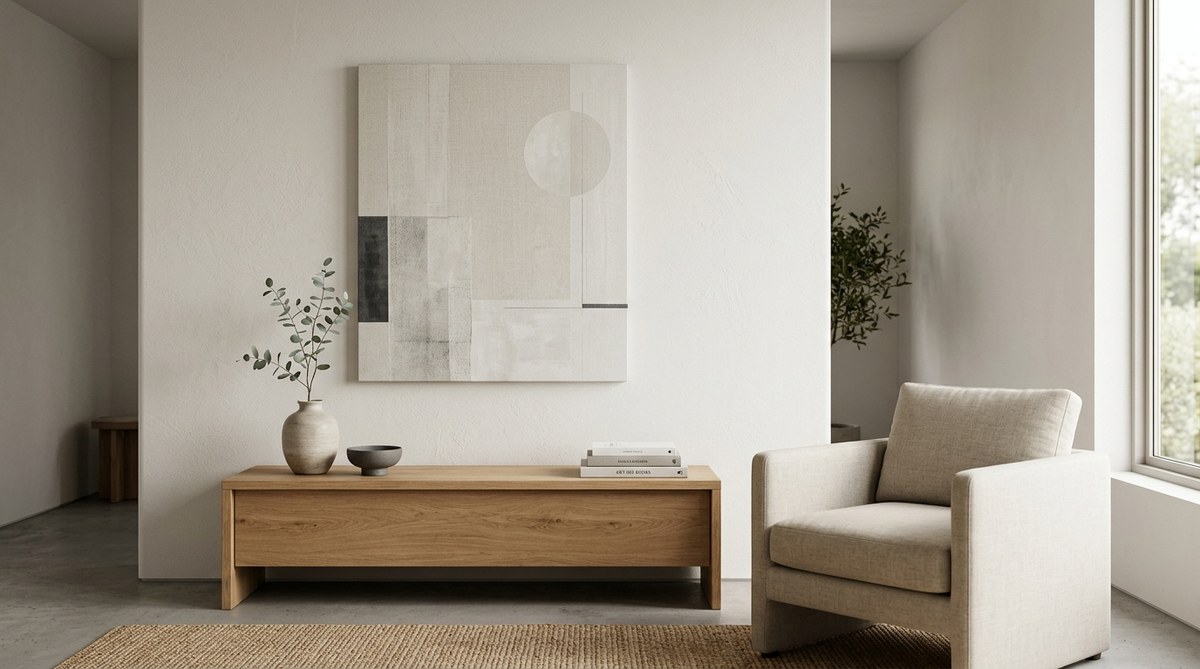
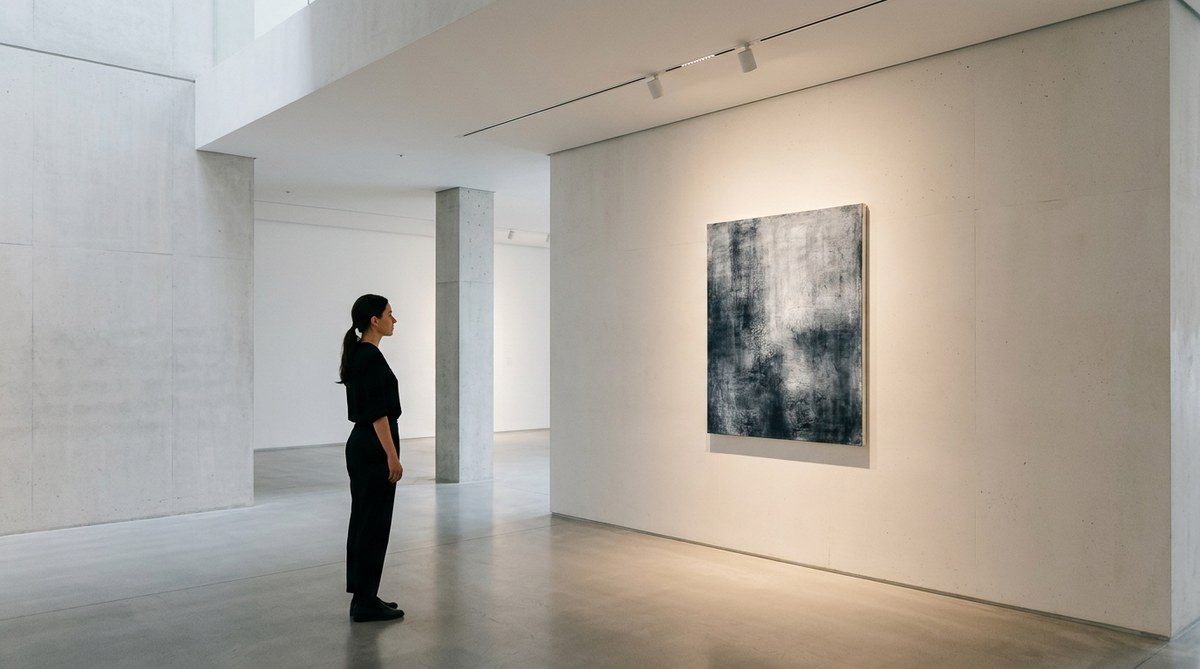
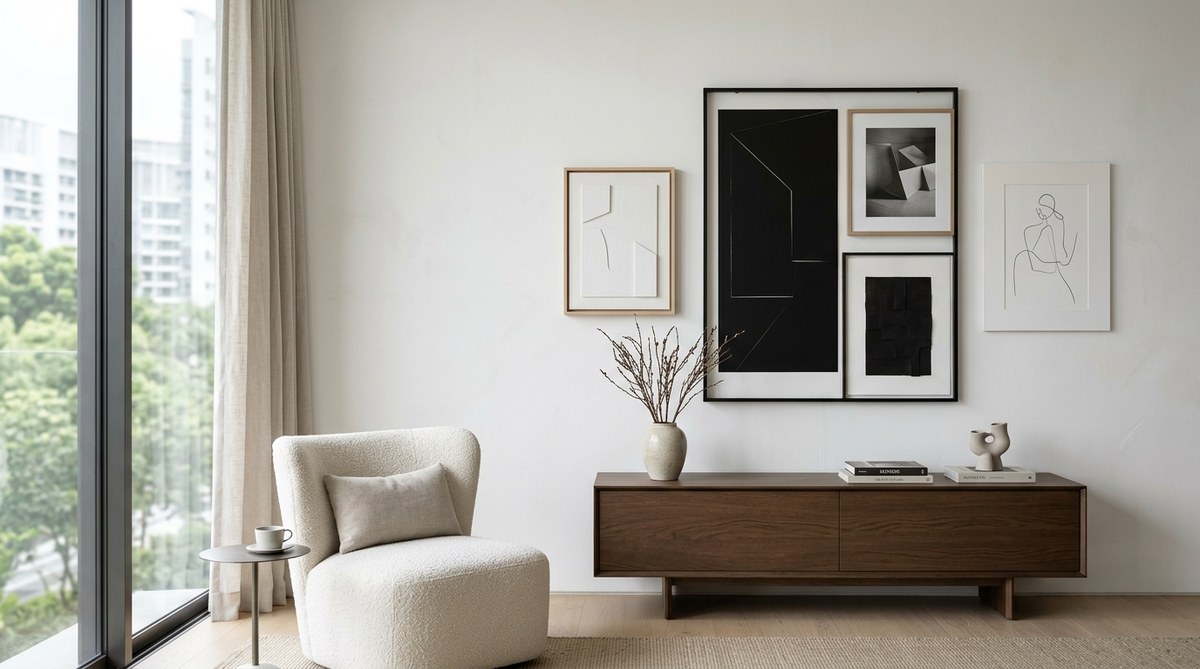
The afternoon sun cuts a sharp rectangle across your living room floor. Outside, the city hums with notifications and deadlines. But here, in this small slice of stillness, your eyes rest on a single piece of art. A pale canvas. One organic line. A breath of space around it. That is the moment when minimalist art stops being decoration and starts being a tool for mindfulness. You are not just looking at it. You are being with it.
Mindful minimalist art is more than a visual style. It is an invitation to slow down, breathe, and notice. By choosing pieces with simple forms, natural textures, and generous negative space, you create a home that supports quiet reflection. This article shows you how to select, place, and live with art that nurtures presence every single day.
What Is Mindful Minimalist Art?
Mindful minimalist art sits at the intersection of two practices. Minimalism strips away the nonessential. Mindfulness brings your attention to the present moment. Together, they produce artwork that does not shout. It whispers. A single brushstroke. A monochrome wash. A piece of raw wood suspended against a white wall.
This is not about owning less art. It is about choosing art that gives you room to think. The best mindful minimalist pieces act like visual meditation cushions. They invite your gaze to rest without rushing. They do not compete for your attention. They simply exist, and in that existence, they ask you to exist too.
Why Mindful Minimalist Art Supports a Peaceful Home
Your environment shapes your mental state. Every object in a room sends a signal. Cluttered walls send signals of chaos. Overly busy patterns demand constant processing. Mindful minimalist art does the opposite. It signals safety, openness, and calm.
When you bring a piece of mindful minimalist art into your space, you are reducing visual noise. You are telling your nervous system that it is okay to relax. That is why many people turn to this style when they are building a home sanctuary. They want a place where they can decompress after a long day, where the art does not add to the mental load but instead lightens it.
This principle is explored in depth in a piece on The connection between art and spatial peace is real.
How to Choose Art for Mindful Living
Finding the right piece takes intention. Here is a simple process that has worked for many people building a mindful home.
-
Start with stillness. Before you look at any art, sit in the room where you plan to place it. Close your eyes. Notice how the light moves. Notice where your gaze naturally falls. That spot is your anchor.
-
Focus on form. Mindful minimalist art often uses a single shape or a repeated gesture. Look for pieces where the form feels intentional, not accidental. A circle, a line, a soft curve. These shapes mirror natural rhythms.
-
Consider texture. Even in minimalism, texture matters. A piece of handmade paper. A linen canvas. A wood carving. These materials add a tactile layer that invites touch and slow looking. They ground you in the physical world.
-
Limit your palette. Neutrals, earth tones, and single colors work best. They do not overwhelm the eye. A piece with too many colors can scatter your focus. One color allows you to rest in its subtle variations.
-
Trust your gut. You will know a mindful piece when you see it. If your breath deepens and your shoulders drop, that is the one. Do not overthink it.
If you want to go deeper into the role of negative space, the article on https://minimalism.sg/discovering-the-power-of-negative-space-in-minimalist-art/ provides excellent guidance.
Practical Ways to Incorporate Mindful Minimalist Art
Once you have your piece, placement matters almost as much as the art itself. Use these tips to weave mindful minimalist art into your daily life.
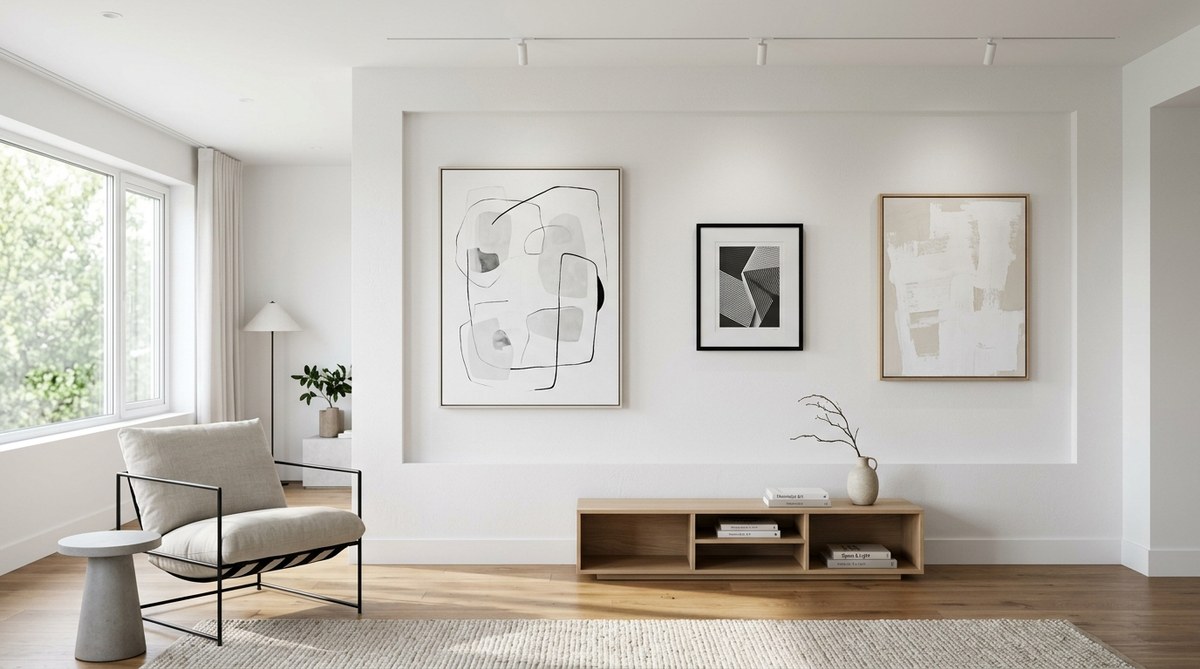
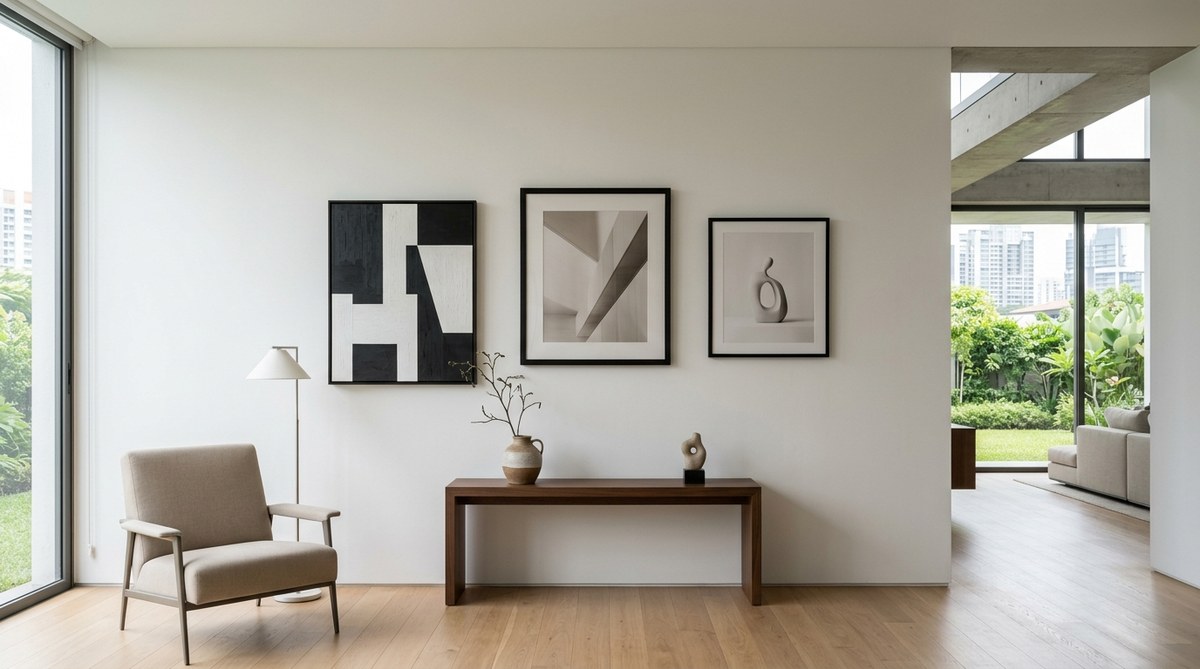
- Give it breathing room. Do not crowd your art with other objects. Let the wall around it stay empty. That emptiness is part of the experience.
- Hang it at eye level. You should not have to crane your neck or squat. The art meets you where you are.
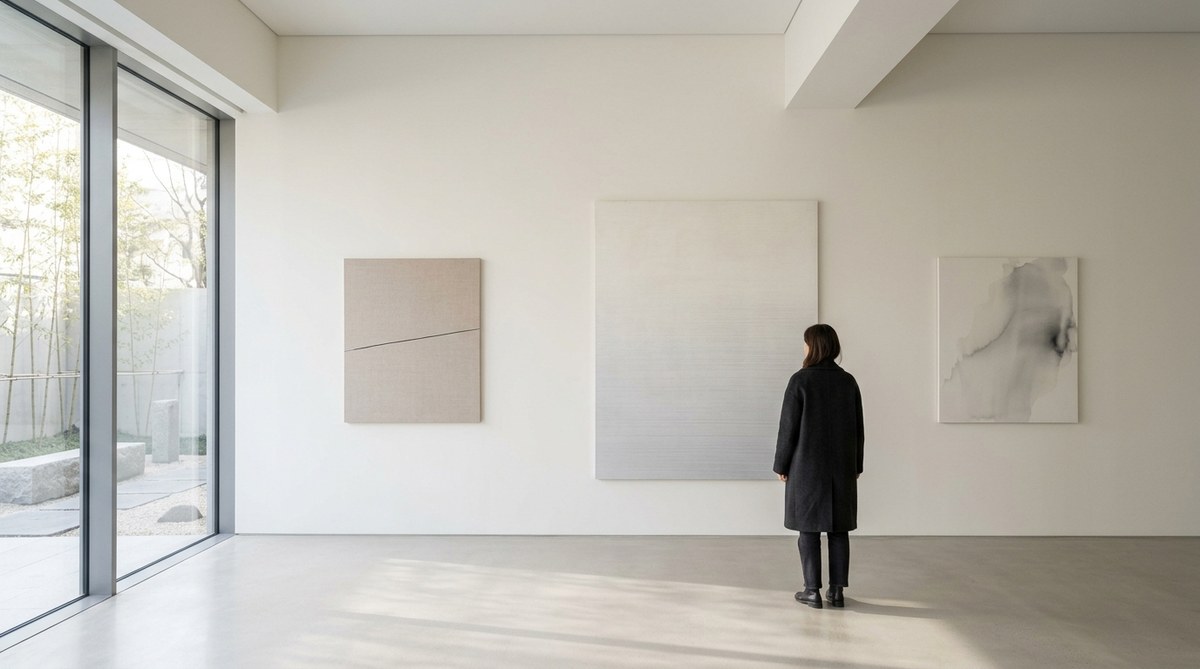
- Use natural light. Place the piece where it catches the morning or afternoon sun. The changing light keeps the art alive without being distracting.
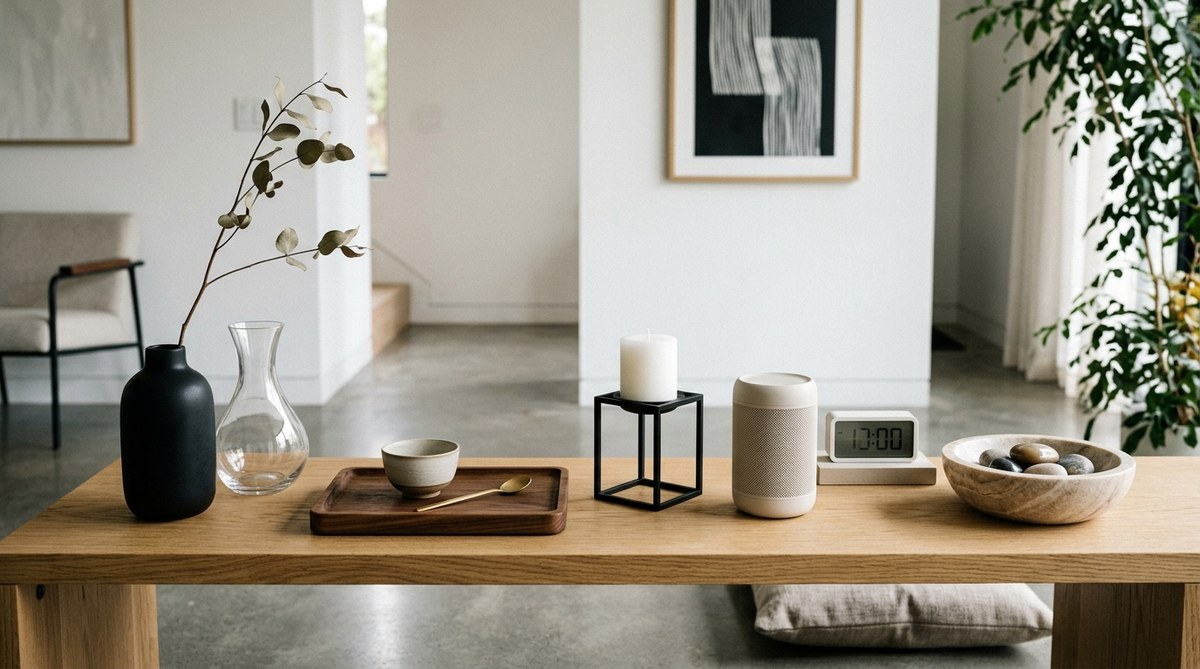
- Pair it with one natural element. A small plant nearby. A smooth stone on a shelf. These companions reinforce the connection to nature and simplicity.
- Keep the rest of the room uncluttered. A minimalist piece loses its power if surrounded by visual chaos. Edit your space before you install the art.
For more insights on how light interacts with minimalist forms, check out
Common Pitfalls to Avoid
Even with good intentions, it is easy to make mistakes. The table below shows the difference between a mindful approach and a mindless one.
| Technique for Mindfulness | Common Mistake |
|---|---|
| Choose one piece per wall | Cluttering a wall with multiple small frames |
| Use matte finishes for low glare | Buying glossy prints that reflect light |
| Keep frames simple and natural | Using ornate, heavy frames that distract |
| Select art with organic, soft edges | Choosing geometric art with harsh lines |
| Place art where you sit often | Hanging art in a hallway you rarely use |
| Rotate pieces seasonally | Leaving the same art up for years |
The mistake most people make is treating minimalist art as a style rather than a practice. They buy a black and white print just because it looks minimal. But if the print has no emotional resonance, it becomes another object, not a mindful anchor.
Expert Advice on Staying Mindful with Art
I spoke with interior designer and mindfulness practitioner Maria Chen, who has been helping clients create serene homes for over a decade. She shared this insight.
“Most of my clients are exhausted from constant visual input. When they bring in a piece of art that is truly minimal and intentional, I tell them to spend five minutes a day just looking at it. No phone. No music. Just looking. They are always surprised by how much they notice. The texture they missed. The way the light shifts. That practice changes how they inhabit their home.”
That five minute practice is simple. And it works. It turns art from a passive decoration into an active meditation tool.
Living with Art as a Daily Mindfulness Practice
Mindful minimalist art does not end when you hang it on the wall. It becomes part of your rhythm. Set a reminder to pause in front of it. Notice your breath. Let your eyes trace the lines. Let the negative space hold your attention. This is not a chore. It is a gift you give yourself.
When you start living this way, your relationship with your home changes. You stop running through rooms. You start staying in them. You begin to see art not as something to collect, but as something to be with. That shift is the whole point.
If you want to keep building on this foundation, the article on https://minimalism.sg/mastering-spatial-harmony-through-minimalist-art-and-design/ offers a next step for integrating art with your overall design philosophy.
Your home should be the place where you can finally exhale. Mindful minimalist art helps you do exactly that. Start with one piece. Give it space. Give it time. Give yourself permission to simply be with it. That is where the calm begins.

Leave a Reply