
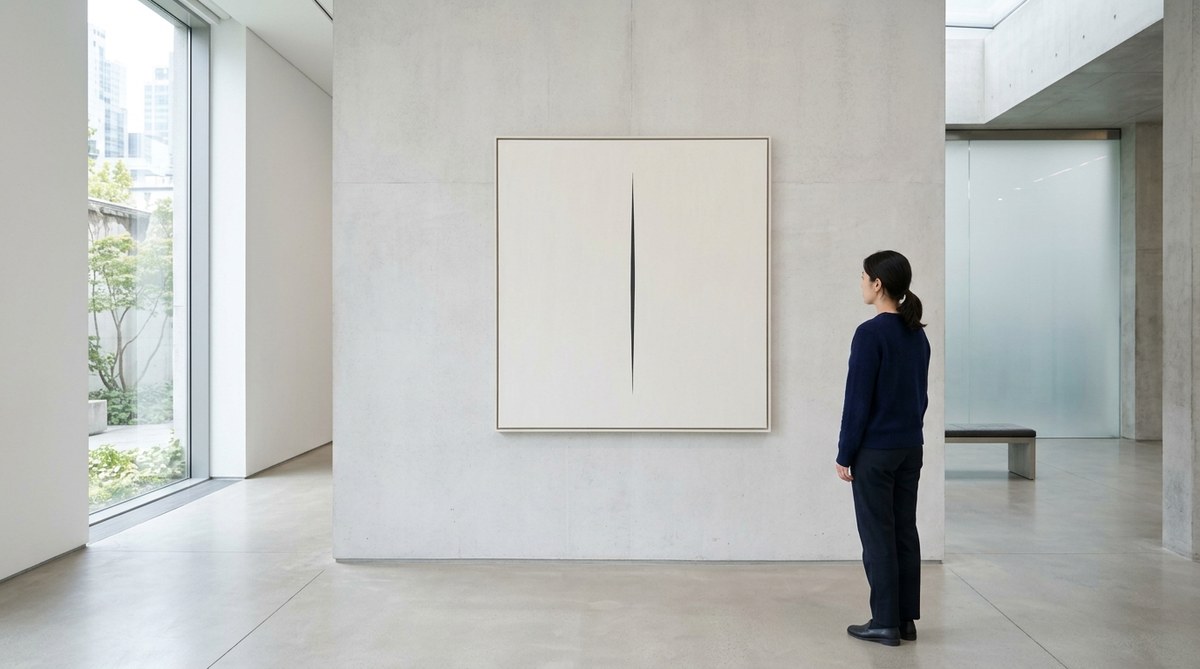
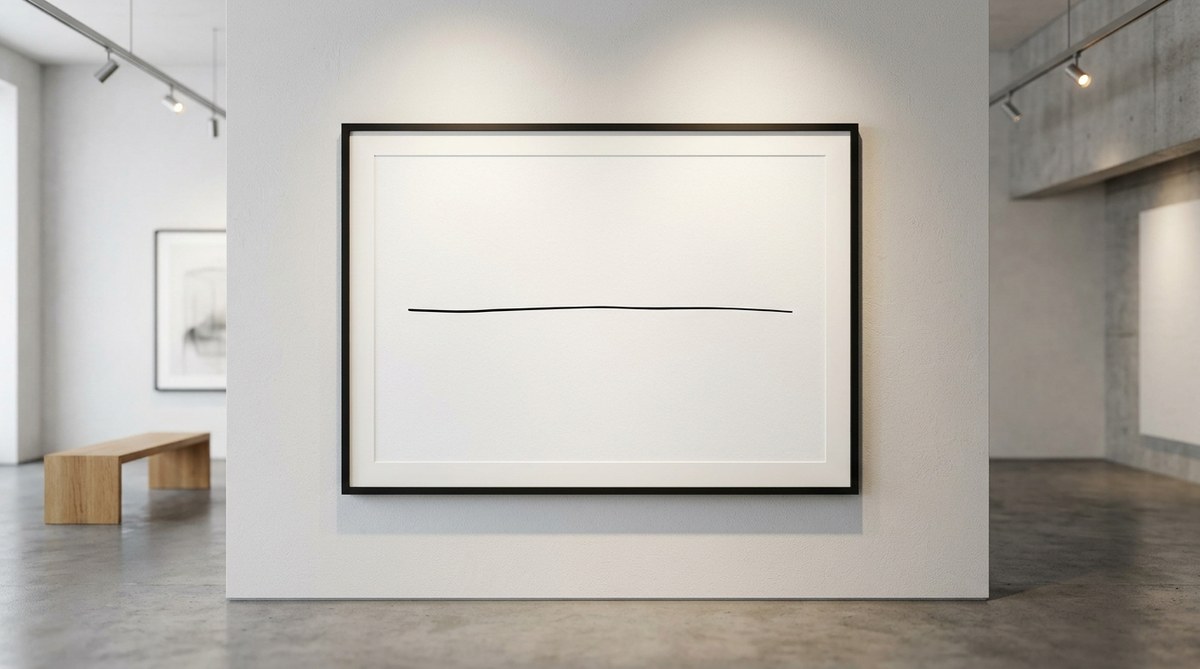
Minimalist art can feel like a locked door at first. You walk into a white room and see a single gray rectangle leaning against the wall. Or six identical metal boxes lined up on the floor. Your brain asks: Is that it? Am I missing something?
That feeling of searching is the whole point.
The artists who shaped this movement in the 1960s wanted to strip away storytelling, emotion, and personal expression. They removed the artist’s hand. They removed the brushstroke. They removed the narrative. What remained was pure form, pure material, and your direct experience with it. Minimalist art meaning is not hidden behind the object. It happens in the space between you and the work.
Minimalist art is not about empty simplicity. It is a deliberate method of subtraction that forces you to pay attention to what is actually there: light, texture, volume, and your own physical position. Once you understand this shift in perception, you stop asking “what does it mean?” and start noticing how the world looks when you truly look.
The Core Idea: Art That Refuses to Tell You What to Think
Most art gives you a hook. A portrait shows a face. A landscape shows a mountain. Abstract Expressionism throws paint at you with raw energy. You react to the drama.
Minimalist art takes that crutch away.
Donald Judd called his work “specific objects.” He did not want you to think about a story. He wanted you to notice that a box is twelve inches deep, that its surface reflects the light in the room, that the gap between two boxes creates a rhythm your eyes follow. The meaning is not symbolic. It is physical.
This is the first lesson minimalist art teaches us: things exist without needing to represent something else. A red square is red. It is square. That is enough.
How Minimalist Art Changes the Way You See
When you stop looking for hidden messages, your senses wake up. You start noticing details that normally slide past you.
Here are three shifts that happen when you spend time with minimalist work:
- You notice light as a material. The way a polished aluminum surface catches the afternoon sun becomes the event of the piece.
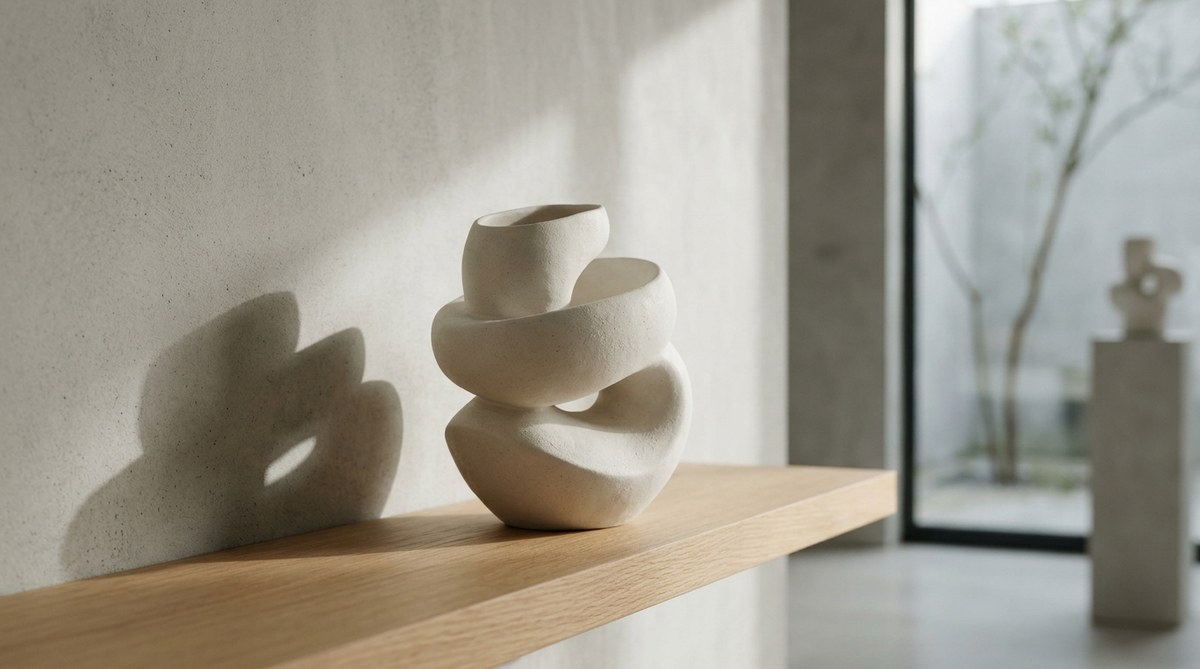
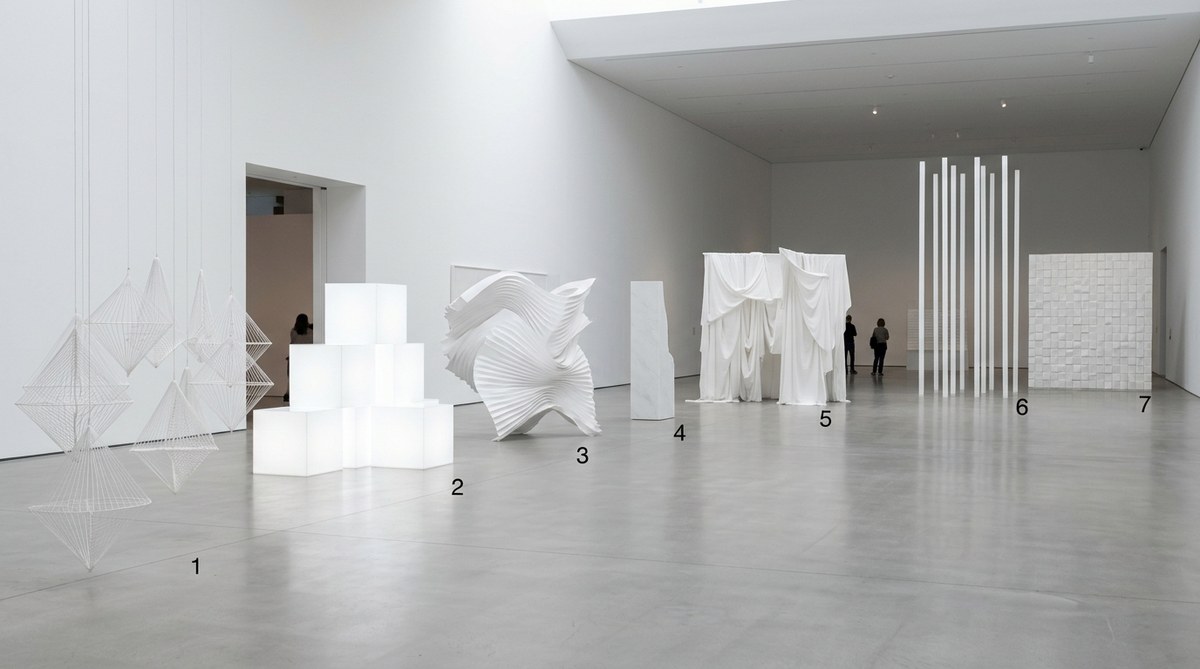
- You feel your own body in space. A large sculpture forces you to walk around it. You become aware of your distance, your angle, your shadow.
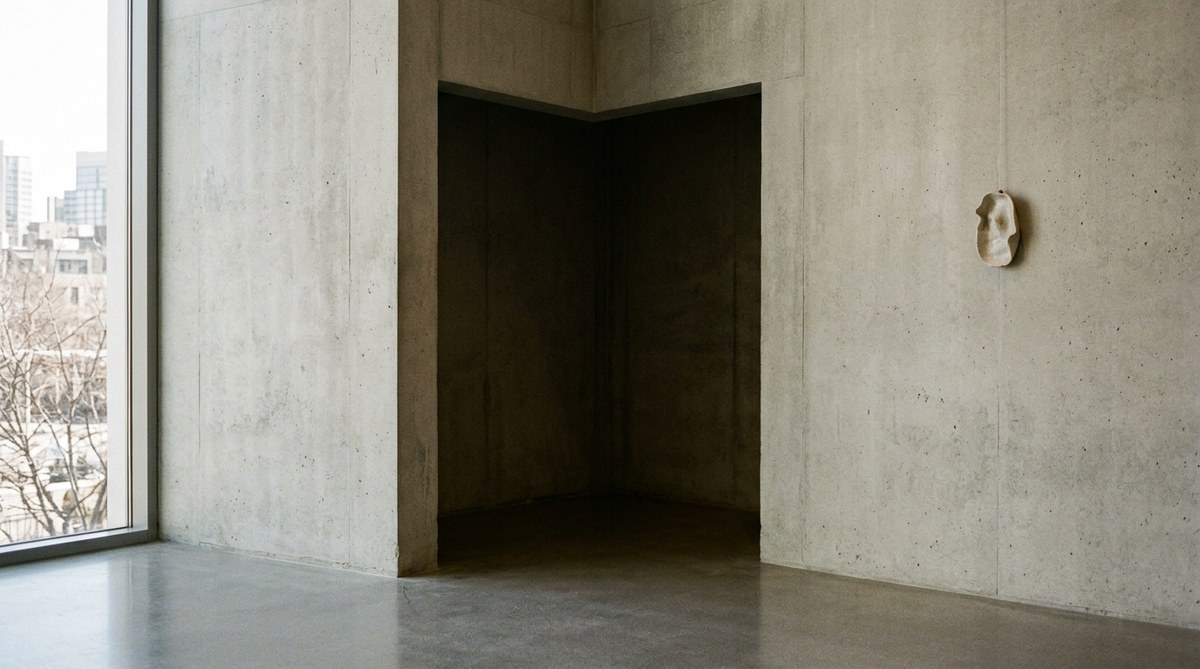
- You see the room itself. The wall, the floor, the empty corner. These are not background. They are part of the composition.
“Minimalism is not about the object. It is about the relationship between the object, the space, and the viewer.” — Donald Judd (paraphrased from his writings)
Once you train your eye this way, you carry it home. You start noticing how light falls across your kitchen counter. You see the shape of a doorway differently. You understand why a single chair in an empty corner can feel more powerful than a room full of furniture.
A Practical Guide to Seeing Minimalist Art
If you want to build this skill, try this process next time you visit a gallery or look at an image of a minimalist piece.
- Stand still for two minutes. Do not walk away. Do not check your phone. Let your eyes settle. The first ten seconds will feel empty. Boredom is a signal that your brain is adjusting.
- Name what you see out loud. Say “gray panel. Steel edge. Shadow on the right.” Naming forces your brain to register details instead of glossing over them.
- Move your body. Walk to the left. Crouch down. Move close enough to see the surface texture. Step back until the object fills your peripheral vision. Notice how the piece changes at each position.
- Ask one question only. Not “what does it mean?” but “what is happening right now between me and this object?” The answer might be “I feel calm” or “I feel confused” or “I notice the light is warmer on this side.”
- Write down one observation. A single sentence. “The gap between the two boxes is wider than I thought.” That is the entire takeaway.
This process works because it replaces the search for meaning with direct experience. That is the heart of minimalist art meaning.
Common Misunderstandings (And What to Do Instead)
Many people dismiss minimalist art as boring, pretentious, or something a child could make. Those reactions come from a specific mistake: treating the work like a puzzle to be solved.
| Mistake | Why It Happens | Better Approach |
|---|---|---|
| “My kid could paint that.” | You are judging skill instead of intention. The value is not in difficulty of execution. | Ask: “What did the artist choose to keep?” |
| “It feels empty.” | You expect art to fill your attention the way a busy painting does. | Let the emptiness be the content. Sit with it. |
| “I do not get it.” | You are looking for a hidden message. | There is no message. There is only the object and your experience. |
| “It is all the same.” | You are grouping pieces by surface appearance. | Look at the specific material. Steel feels different from wood. Paint has texture. |
Three Ways Minimalist Art Changes How You Live
The lessons do not stay in the gallery. Here are three real world applications.
You stop buying things you do not need
When you understand that a single well made object can hold your attention, you stop wanting ten mediocre ones. You start asking: Do I need this? Or would empty space be better?
You start noticing your environment
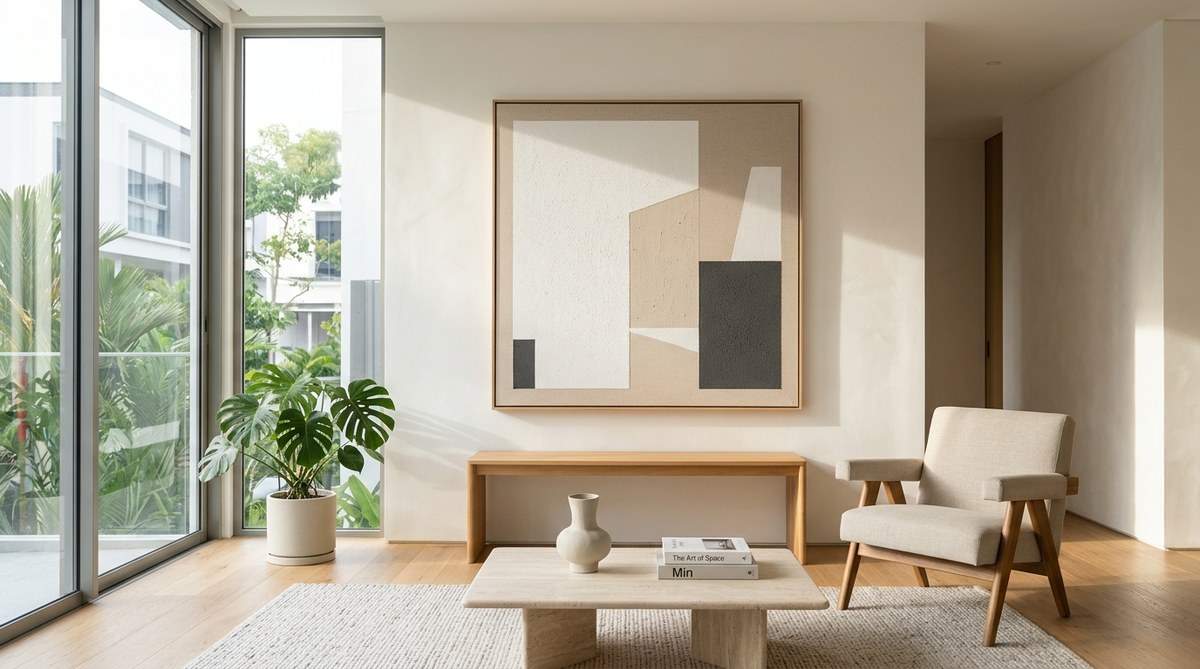
You pay attention to light, shadow, and proportion in your own home. A room with too much stuff feels cluttered not because of the objects but because your eye has nowhere to rest. Minimalist art trains you to create resting places.
You become comfortable with silence
Minimalist art is visually quiet. It does not demand your reaction. It waits. That patience transfers to your daily life. You learn to sit with a pause in conversation. You stop filling every empty moment with a screen.
If you want to bring this sensibility into your living space, you might start by reading about how minimalist art cultivates mindful living spaces. The same principles apply whether you are looking at a Judd sculpture or arranging a bookshelf.
The Deeper Lesson: Learning to See What Is Already There
The most powerful thing minimalist art teaches us is that we spend most of our lives half seeing. We glance. We categorize. We move on.
Minimalist work refuses to let you do that. It says: Look at this one thing. Really look. Notice its edge. Notice its shadow. Notice how your breathing changes when you stop rushing.
That is the real minimalist art meaning. It is not about empty rooms or white walls. It is about presence. It is about paying attention to the actual world instead of the stories we tell ourselves about it.
The next time you see a minimalist piece, try this. Do not ask what it means. Just stand there. Let the object exist. Let yourself exist with it. That is the whole practice.
How to Carry This Forward
You do not need a gallery membership to practice this way of seeing. Start with one object in your home. A coffee mug. A chair. A window. Look at it for three minutes without judgment. Notice its color, its texture, the way light hits it. That is the same attention minimalist artists ask of you.
If you want to go deeper, consider how to curate a minimalist gallery at home. You might be surprised how much a single well chosen piece can change the feeling of a room.
The world is full of noise. Minimalist art offers a quiet corner where you can remember how to see. That is a rare gift. And it is available to anyone willing to slow down.
The Quiet Power of Paying Attention
Minimalist art meaning is not a definition you memorize. It is a muscle you exercise. Every time you stop and look, you get stronger at it. You start to notice the way a shadow falls across a wall. You start to appreciate the weight of a single stone. You start to understand that less is not empty. It is full of space for you to fill with your own awareness.
That is why this movement still matters in 2026. We are surrounded by information, notifications, and endless content. Minimalist art is a counterbalance. It reminds us that the most profound experiences often come from the simplest things. A line. A cube. A beam of light. And the willingness to stop and see them.

Leave a Reply