
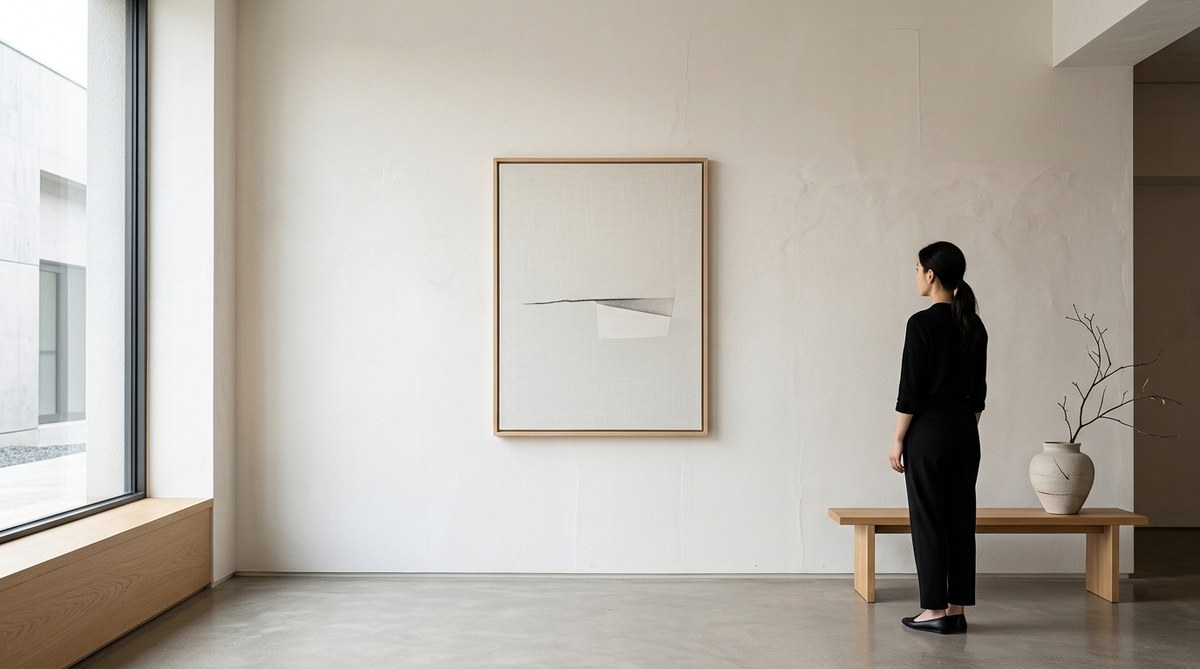
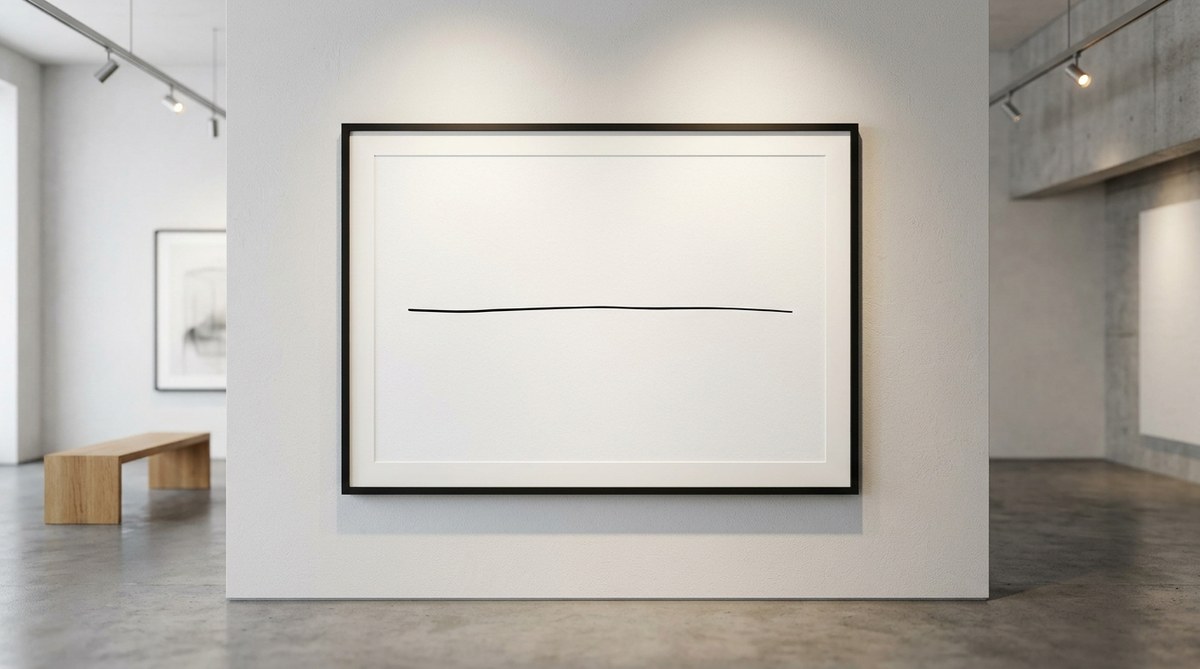
Standing in front of a white canvas with a single black line, you might feel confused at first. Is this really art? Where is the skill, the emotion, the story? But if you pause long enough, something shifts. Your eyes stop searching for more and start appreciating what is actually there. That line. That silence. That breathing room. This is the quiet power of minimalist art beauty, and it can change how you see everything.
Minimalist art trains your eye to find beauty in restraint by removing visual noise and forcing you to slow down. You learn to value negative space, subtle texture, and intentional composition. This shift in perception helps you appreciate simplicity not as emptiness but as a deliberate, powerful form of visual communication.
What Minimalist Art Actually Asks of You
Most art forms demand that you look at something busy. A Renaissance painting has dozens of figures. A baroque ceiling swirls with angels and clouds. Your eye bounces from detail to detail, never resting. Minimalist art does the opposite. It asks you to look at less so you can see more.
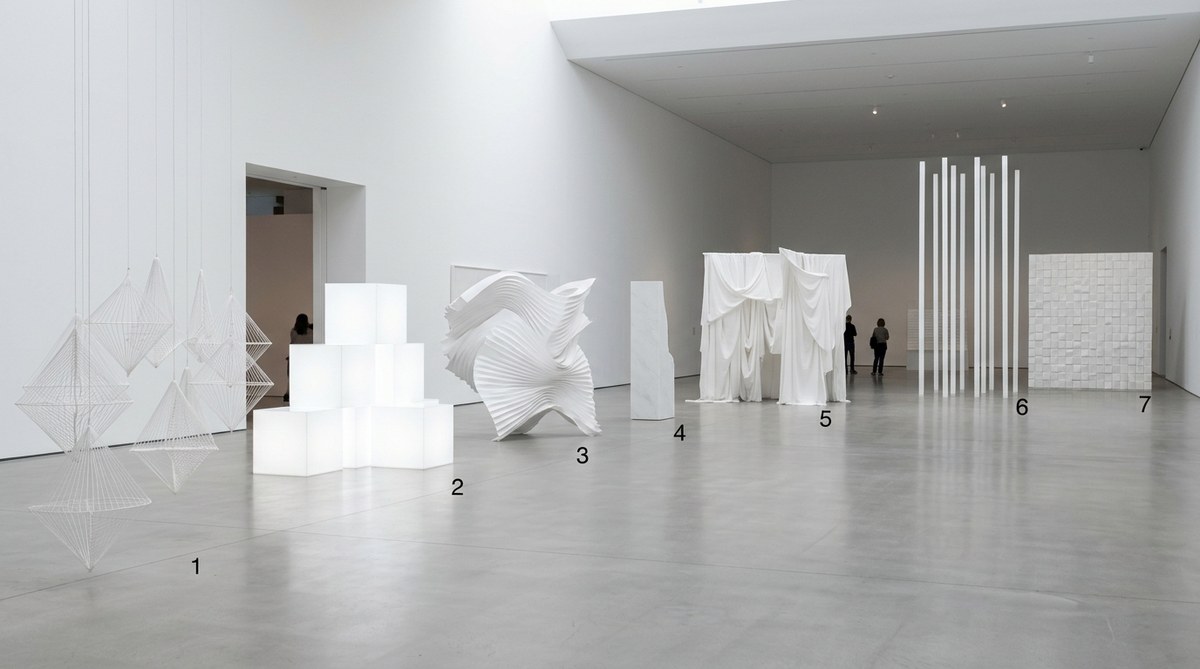
When you stand before a Donald Judd stack or a Agnes Martin grid, your brain initially panics. It wants more input. But if you resist the urge to walk away, something interesting happens. Your attention narrows. You start noticing the grain of the material, the way light hits the edge, the exact distance between two forms. This is not boredom. This is focus.
The minimalist art beauty lives in these small perceptual shifts. It is not about the object itself. It is about your relationship to the object.
Why Restraint Creates More Room for Beauty
We live in a world that screams for attention. Notifications, ads, streaming tabs, endless feeds. Minimalist art offers a counterbalance. It says, “Look at this one thing. Nothing else matters right now.”
This is why the most powerful minimalist work often uses:
- Limited color palettes that reduce distraction and heighten emotional tone
- Geometric forms that feel stable, predictable, and calming
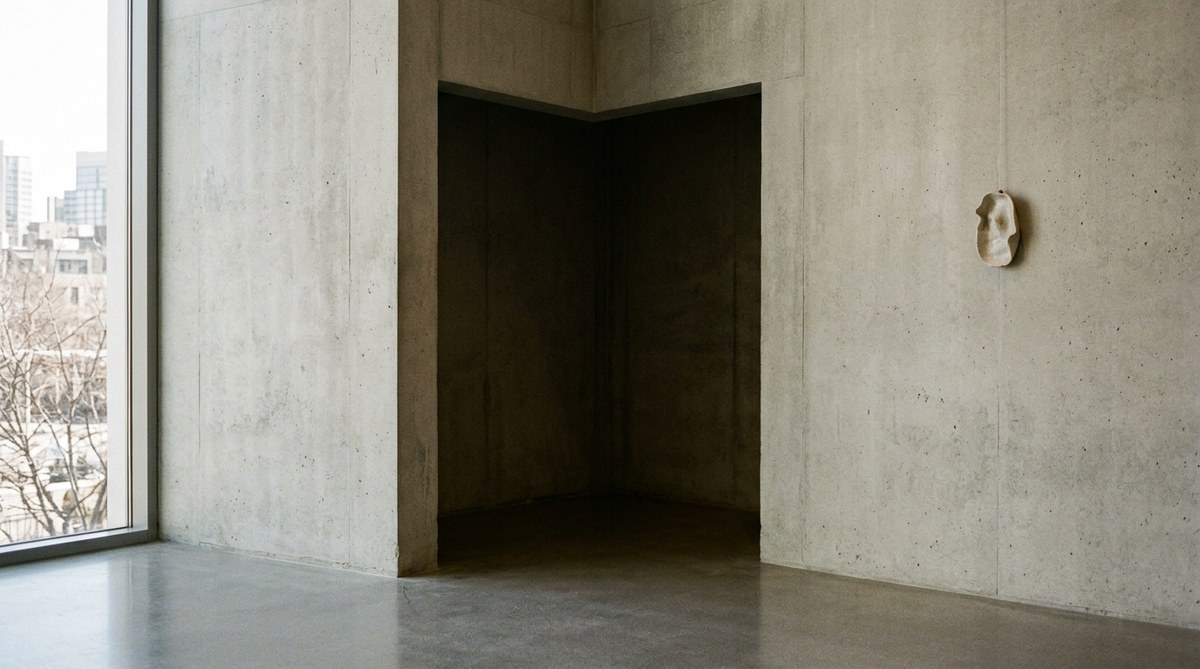
- Industrial materials like concrete, steel, or glass that feel honest and unpolished
- Repetition that creates rhythm without narrative clutter
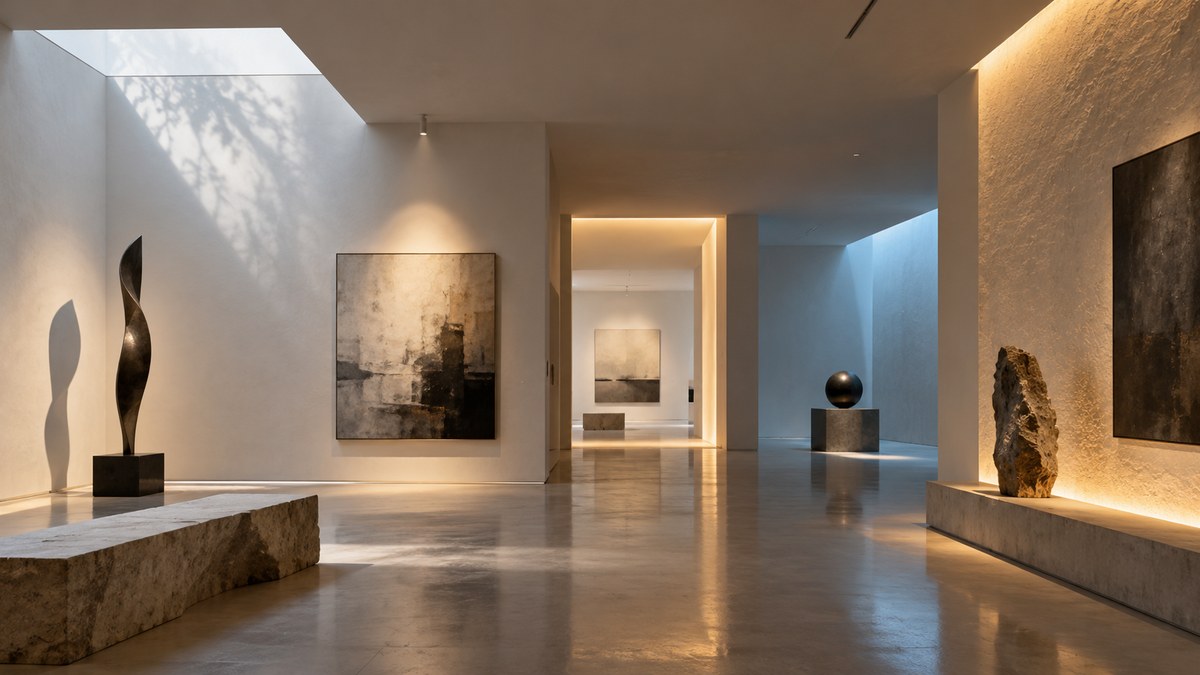
- Empty space that lets the existing elements breathe
Each of these choices strips away the unnecessary. What remains is essential. And when something is essential, it becomes beautiful.
“Minimalism is not about having less. It is about making room for more of what matters.” This idea applies directly to how you see art. By removing the decorative extras, minimalist work forces you to confront the fundamentals of form, light, and material.
How to Train Your Eye: A Practical Process
If you want to develop an appreciation for minimalist art beauty, you cannot rush. Here is a simple process to practice the next time you visit a gallery or look at a piece online.
-
Stand still for three full minutes. Set a timer on your phone. Do not move. Let your eyes wander across the surface without judgment. Notice what you feel. Restlessness is normal. Push through it.
-
Identify the elements that are actually there. Name them out loud or in your head. “A gray rectangle. A white border. A shadow underneath.” This exercise forces you to see composition instead of searching for meaning.
-
Ask what is missing. Imagine the piece with an extra color, a second line, a different texture. Would it be better? Or would it break the balance? Understanding what the artist left out is just as important as understanding what they included.
This three-step method rewires your visual instincts. After a few repetitions, you will start noticing the beauty in restraint everywhere, not just in galleries.
Common Misconceptions About Minimalist Art
Many people assume minimalist art is easy to make. That is a mistake. True minimalism requires intense discipline. The artist must resist the urge to add, to explain, to decorate. Every choice carries enormous weight because there is nothing to hide behind.
| Misconception | Reality |
|---|---|
| Minimalist art is simple to create | It demands extreme precision and intentionality |
| Minimalist art lacks emotion | The emotion is subtle, not absent |
| Minimalist art is just blank space | Space is an active compositional element |
| Minimalist art is a trend | It has been a major movement since the 1960s |
| Minimalist art is boring | Boredom often masks a lack of training in how to look |
When you understand these distinctions, you stop dismissing minimalist work as “something my kid could do.” You start seeing the craft behind the restraint.
The Role of Space in Minimalist Art Beauty
Space is not empty in minimalist art. It is a material. Think of the gap between two sculptures in a Dan Flavin installation. That gap is not nothing. It is the distance that creates tension, balance, and relationship.
Learning to read space is one of the most valuable skills minimalist art teaches. In everyday life, we fill every corner. We hang art on every wall. We crowd our shelves. Minimalist art shows you that empty areas have weight. They give the eye a place to rest. They make the objects that remain feel more significant.
If you want to see this principle in action, read about how to harness the emotional power of empty space in minimalist art. It explains how professional curators use emptiness as a storytelling tool.
How Materiality Changes Your Perception
Minimalist artists often choose materials that feel raw and honest. Polished aluminum, unfinished plywood, poured concrete. These materials do not pretend to be something else. They show their grain, their texture, their weight.
When you look at a Frank Stella protractor series, you are not distracted by narrative or symbolism. You are looking at the way paint sits on canvas, the way one color stops and another begins. This focus on materiality trains your eye to appreciate craftsmanship at a micro level.
The next time you see a minimalist sculpture, touch it if you are allowed. Feel the temperature of the metal. Run your finger along the seam. That physical connection is part of the beauty.
Applying Minimalist Seeing to Your Own Space
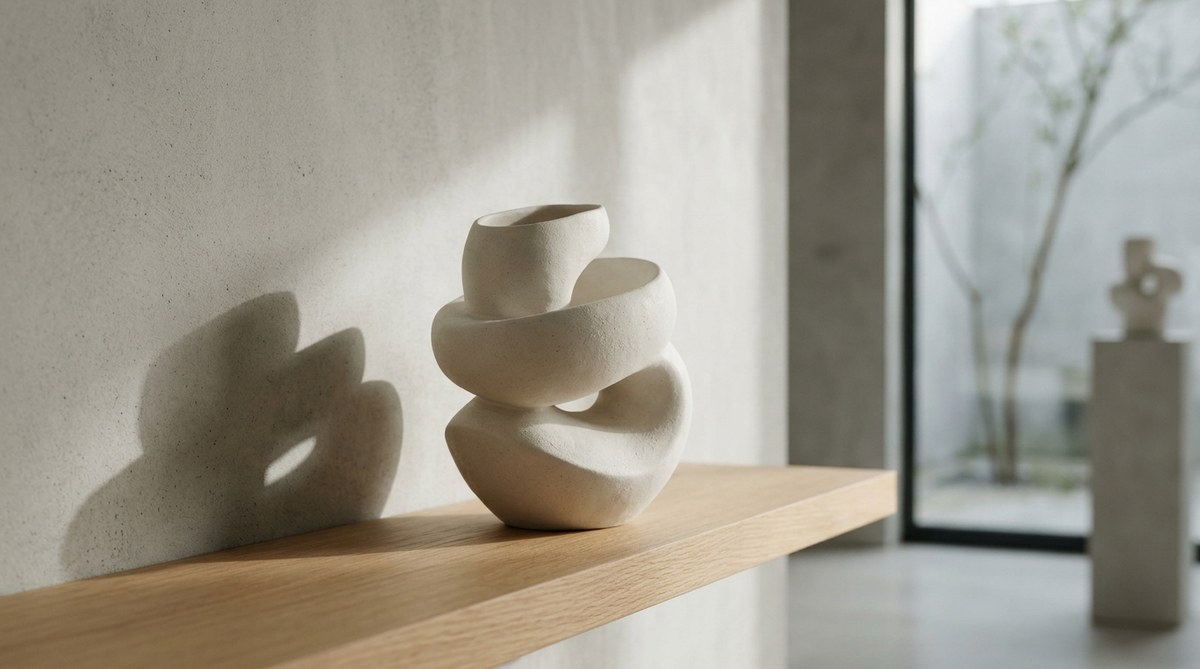
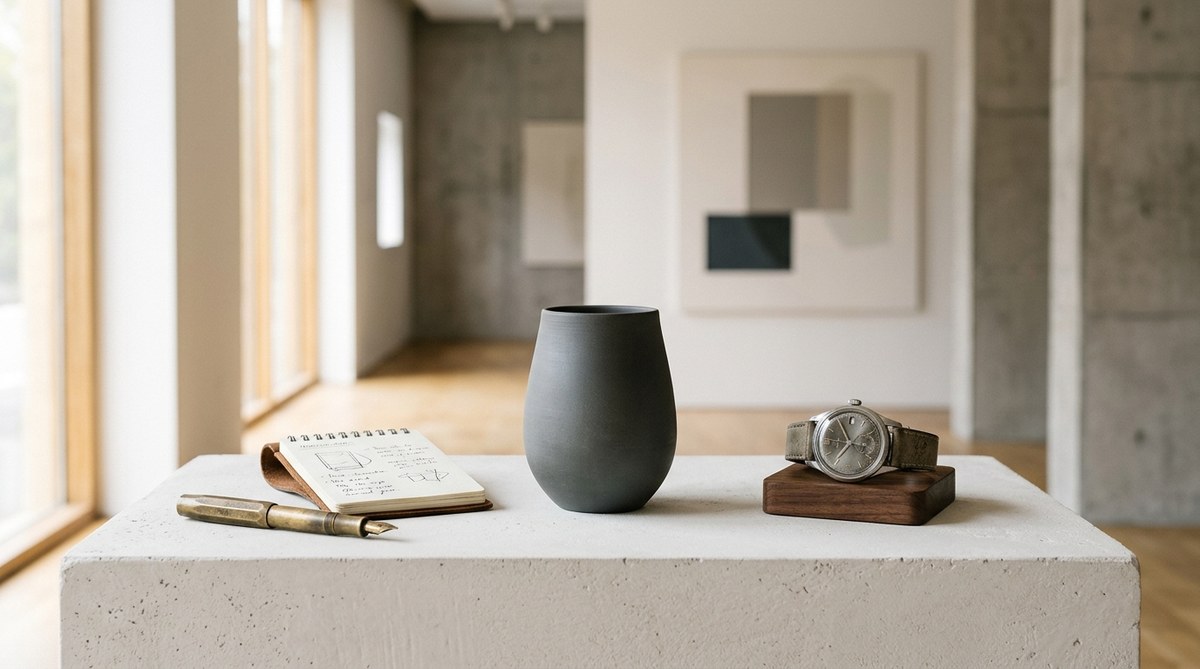
You do not need to buy expensive art to benefit from this way of seeing. Start with your own home. Pick one surface, a shelf or a tabletop. Remove everything. Then add back only three objects. Arrange them with intention. Leave breathing room between each one.
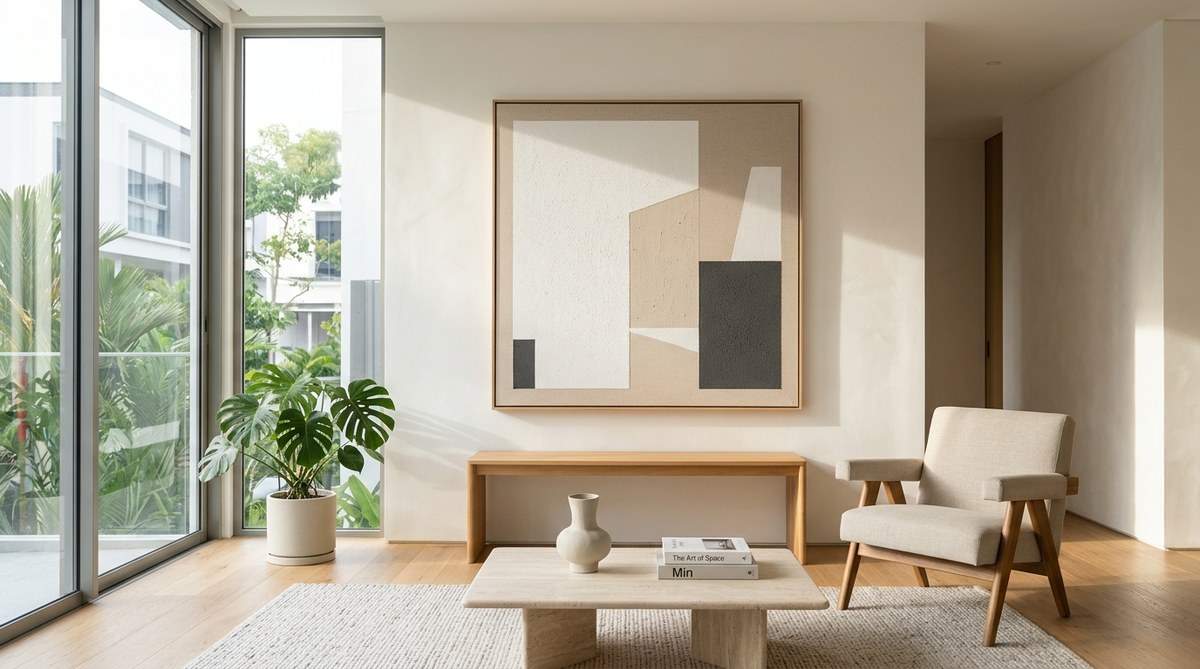
Notice how your eye moves across the arrangement. Does it feel calm? Does the space feel generous? This is the same principle that guides how to arrange minimalist objects for maximum visual impact. The skill transfers directly from gallery to living room.
Most people find that after practicing minimalist seeing, they start wanting less clutter in general. The art trains you to prefer quality over quantity, intention over accident.
Why This Matters More in 2026
We are surrounded by more visual noise than any generation before us. Social media feeds, streaming menus, digital billboards. Our brains are exhausted from processing constant input. Minimalist art offers a reset. It is not escapism. It is a training ground for a calmer, more focused way of interacting with the world.
In 2026, galleries are reporting higher attendance for minimalist exhibitions than ever before. People are hungry for silence. They want spaces that do not demand anything from them. Minimalist art provides that relief while also teaching a valuable skill: how to find satisfaction in less.
If you are new to this world, start with artists like Agnes Martin, Donald Judd, Dan Flavin, and Robert Ryman. Spend time with one piece. Do not read the wall label first. Just look. Let the work teach you how to see it.
The Quiet Power of Slowing Down
There is a reason why so many people describe minimalist art as meditative. It slows your gaze. It forces you to stop scanning and start observing. In a culture that rewards speed, this is a radical act.
When you learn to find beauty in a single line on a white field, you also learn to find beauty in a quiet morning, a simple meal, a conversation without distractions. The art becomes a mirror for how you want to live.
For a deeper look at how this philosophy shapes modern interiors, check out why minimalist art is the perfect counterbalance to modern visual noise. It connects the dots between gallery practice and daily life.
Let the Art Change Your Gaze
Minimalist art beauty does not hit you over the head. It whispers. It asks you to lean in. It rewards patience and punishes distraction. If you give it the time it deserves, it will change not just how you look at art, but how you look at everything.
Start small. Next time you see a minimalist piece, resist the urge to judge it. Instead, ask yourself one question: What is here that I almost missed? The answer is where the beauty lives.

Leave a Reply