
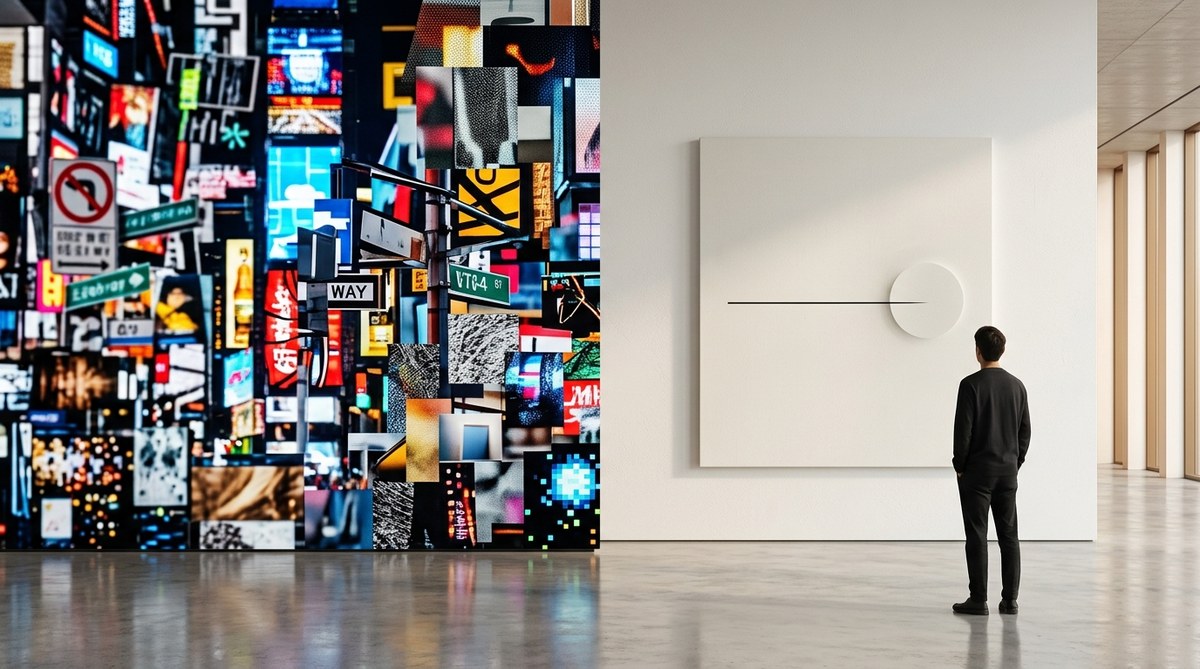
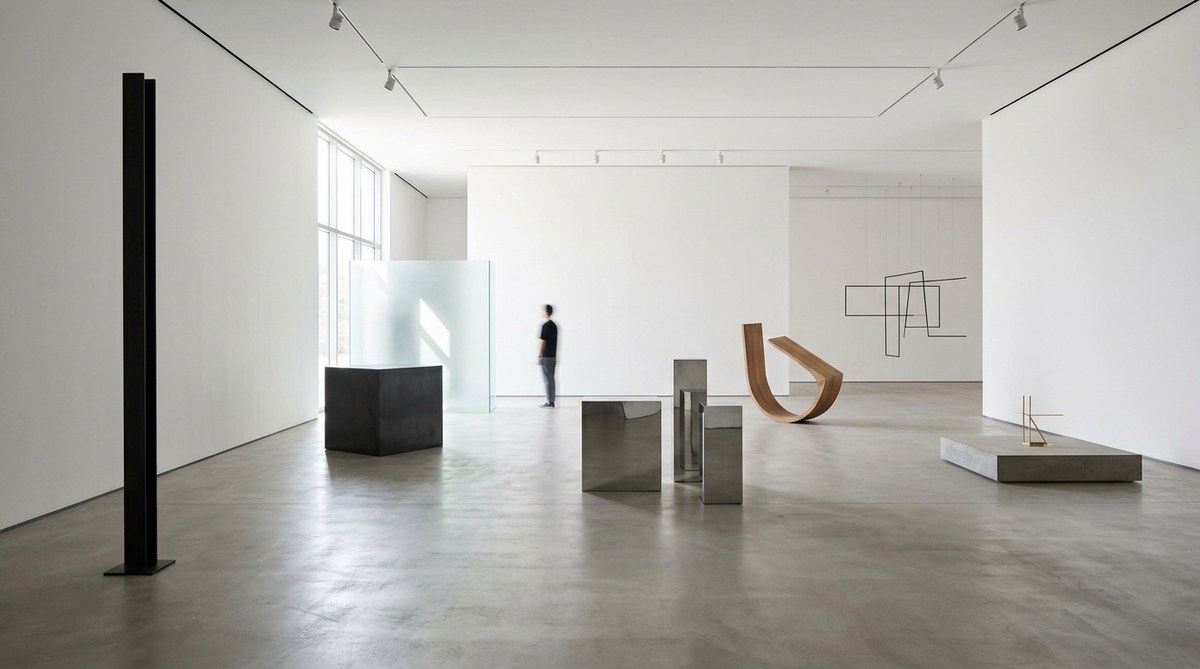
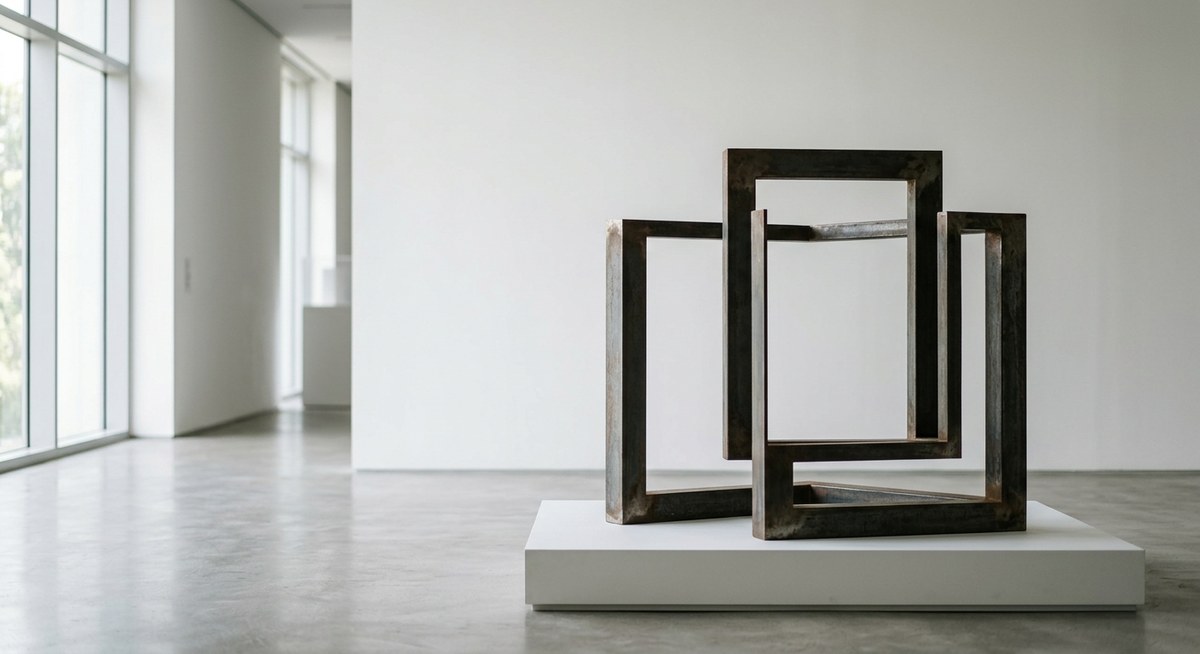
You are standing in a gallery. The room is white. There is a single steel cube on the floor. No plaque. No explanation. Just you, the cube, and the silence.
For a moment, you feel unsettled. Then something shifts. You stop looking for meaning and start feeling the space. The cube isn’t empty. It is full of presence. That shift is the entire point of minimalist art.
Minimalist art meaning isn’t about what is missing. It is about what remains when you remove everything that doesn’t belong. In 2026, with notifications pinging, screens glowing, and information flooding every corner of your day, this stripped down approach feels less like a style choice and more like a survival strategy.
Minimalist art is not about emptiness. It is a deliberate method of removing distraction to reveal essence. By reducing form, color, and content to their simplest state, this art movement creates mental breathing room. For design conscious professionals, it offers a visual antidote to modern overload and a pathway to clearer thinking.
What Minimalist Art Actually Means (Not What You Think)
Let’s clear something up. Minimalist art meaning has nothing to do with being lazy, cold, or bored. It is not a blank canvas that the artist forgot to paint. It is a radical act of subtraction.
The movement emerged in the 1960s as a direct reaction against abstract expressionism. Artists like Donald Judd, Agnes Martin, and Dan Flavin rejected the idea that art had to be a window into someone else’s emotional drama. They wanted objects that existed in your real space. Not symbols pointing somewhere else. Just things.
When you look at a painting by Robert Ryman, you see white on white. But look closer. You see texture. Brushstroke. Light hitting the surface at different angles. The work asks you to stop searching for a story and start paying attention to what is actually there.
This is the quiet power of minimalist art. It trains your brain to focus on the present moment.
Why Your Brain Craves This Kind of Visual Quiet
Your brain processes roughly 74 gigabytes of information every single day. That number comes from a 2025 study on digital consumption. It is exhausting.
Minimalist art works like a reset button. When you look at a simple geometric form, your brain doesn’t have to sort through competing signals. There is no background drama. No hidden symbolism to decode. Just form, light, and space.
This is why so many tech executives collect minimalist art. They spend all day in chaos. They want their walls to be silent.
A 2024 study from the University of Texas found that visual clutter reduces your ability to focus by as much as 40 percent. Minimalist art literally helps you think more clearly. It is not just decoration. It is cognitive architecture.
The Core Principles That Define Minimalist Art
To truly understand minimalist art meaning, you need to know what makes a piece minimalist. These are the non negotiable elements.
- Radical simplicity. Every element must justify its existence. If it doesn’t serve the whole, it goes.
- Industrial materials. Steel, glass, concrete, fluorescent light. No ornate frames or precious surfaces.
- Repetition and seriality. Many minimalist works use repeated units. Same shape. Same size. Same spacing.
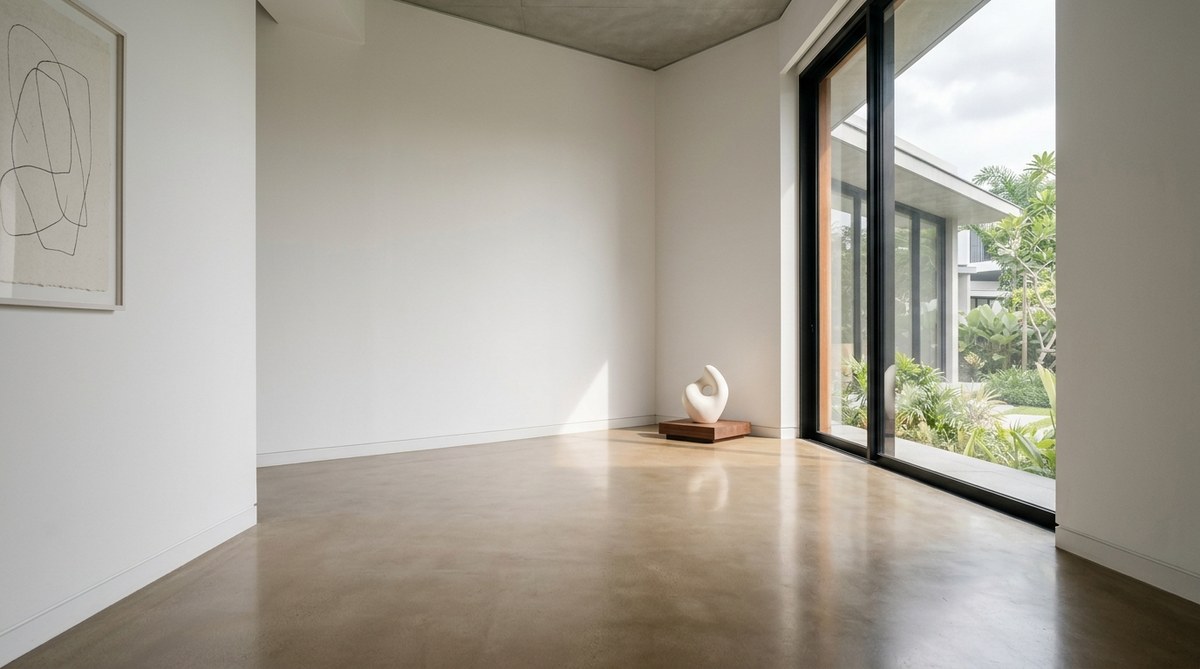
- Attention to negative space. The emptiness around an object is as important as the object itself.
- Viewer participation. The art only completes itself when you walk around it. Your movement creates the experience.
A Practical Guide to Reading Minimalist Art
If you feel intimidated by minimalist art, you are not alone. Most people were never taught how to look at it. Here is a simple process.
- Stop looking for a story. This is the hardest step. You are trained to ask what something means. Let that go. Instead, ask what something does.
- Walk around the piece. Minimalist sculpture is not meant to be viewed from one angle. Move. Watch how the light changes. Notice how the space shifts.
- Pay attention to your body. Where do you feel tension? Where do you feel calm? Your physical reaction is part of the artwork.
- Notice the materials. Is the steel brushed or polished? Is the glass clear or frosted? The material quality is the message.
- Stay longer than you want to. Give the piece three minutes. Your brain will settle. That is when the real experience begins.
Common Mistakes People Make When Interpreting Minimalist Art
| Mistake | Why It Happens | What to Try Instead |
|---|---|---|
| Calling it boring | Expecting entertainment | Look for subtle variation in surface and light |
| Dismissing it as easy | Assuming anyone could make it | Try to replicate a Judd box. You will fail. |
| Searching for hidden meaning | Habit from other art forms | Accept that the object is the meaning |
| Moving too fast | Gallery fatigue | Commit to one piece for several minutes |
| Judging it as cold | Confusing simplicity with emptiness | Notice how the work interacts with the room |
How Minimalist Art Changes the Way You See Everything
Here is the part that surprises most people. Once you train your eye to appreciate minimalist art, you start seeing differently everywhere.
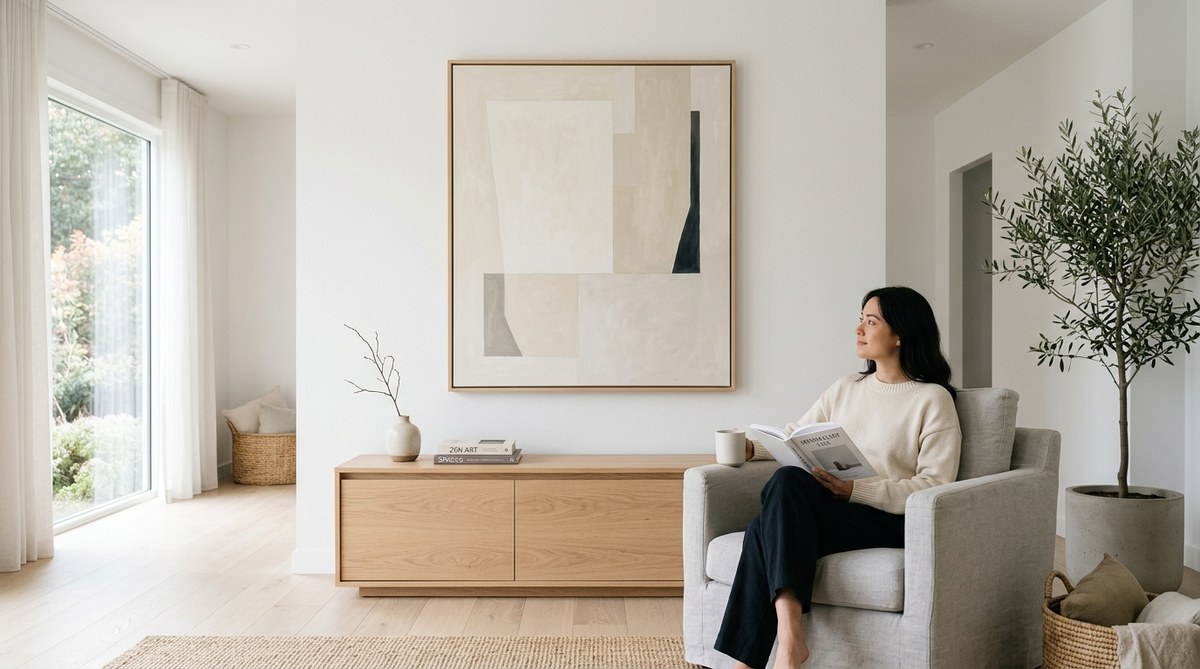
You notice the elegance of a well designed chair. You appreciate the silence of an empty room. You stop buying things that do not serve a purpose. The aesthetic bleeds into your life.
This is why so many people who collect minimalist art also practice how minimalist art cultivates mindful living spaces. The two go hand in hand. You cannot appreciate the art without also valuing the space around it.
“Minimalism is not the absence of something. It is the presence of everything that matters.” This quote from artist and designer John Pawson captures the heart of the movement. When you strip away noise, what remains is more intense. More real. More alive.
Why Minimalist Art Matters More Than Ever in 2026
The world is louder than it was in 1965. Algorithms shout at you. News alerts buzz your pocket. Every surface of your home competes for your attention.
Minimalist art offers a counterbalance. It does not demand. It does not perform. It simply exists. And in that existence, it gives you permission to stop.
Think about the last time you sat in a room with nothing to do. No phone. No TV. No book. Just you and the space. Uncomfortable, right? That discomfort is exactly what minimalist art addresses. It teaches you to sit with silence. To find richness in restraint.
For design conscious professionals, this is not just philosophy. It is a practical tool. When you discover the power of negative space in minimalist art, you start applying that principle to your own work. Your presentations get cleaner. Your home gets calmer. Your mind gets quieter.
Three Ways to Bring Minimalist Art Into Your Life
You do not need a gallery budget to benefit from this aesthetic.
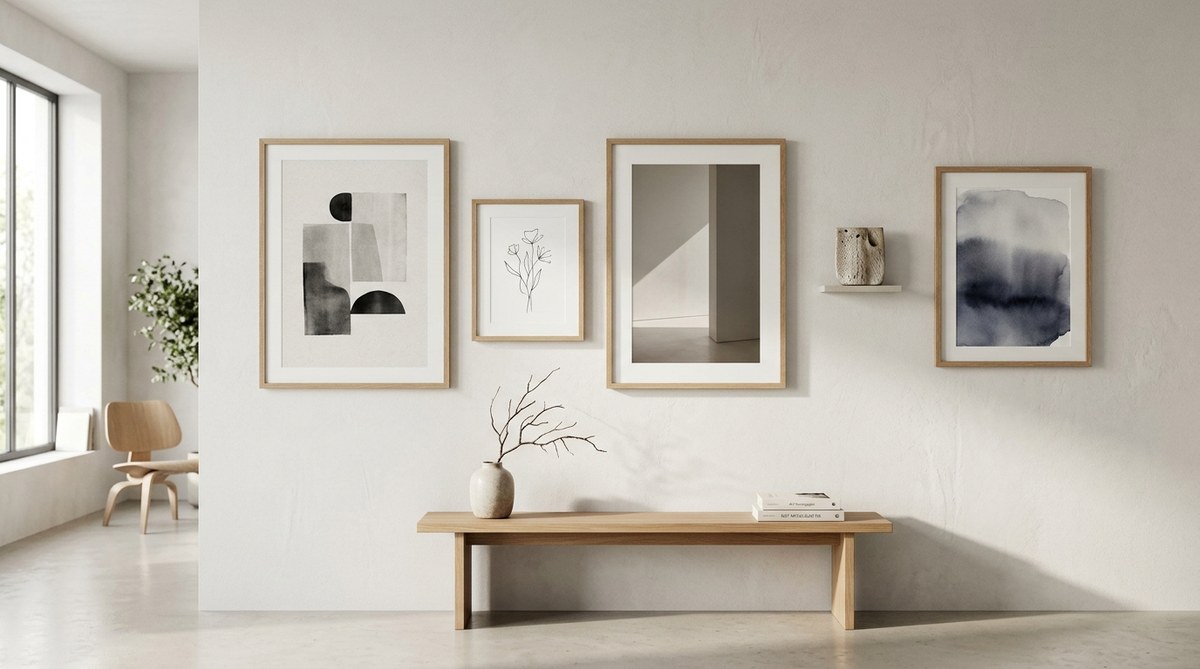
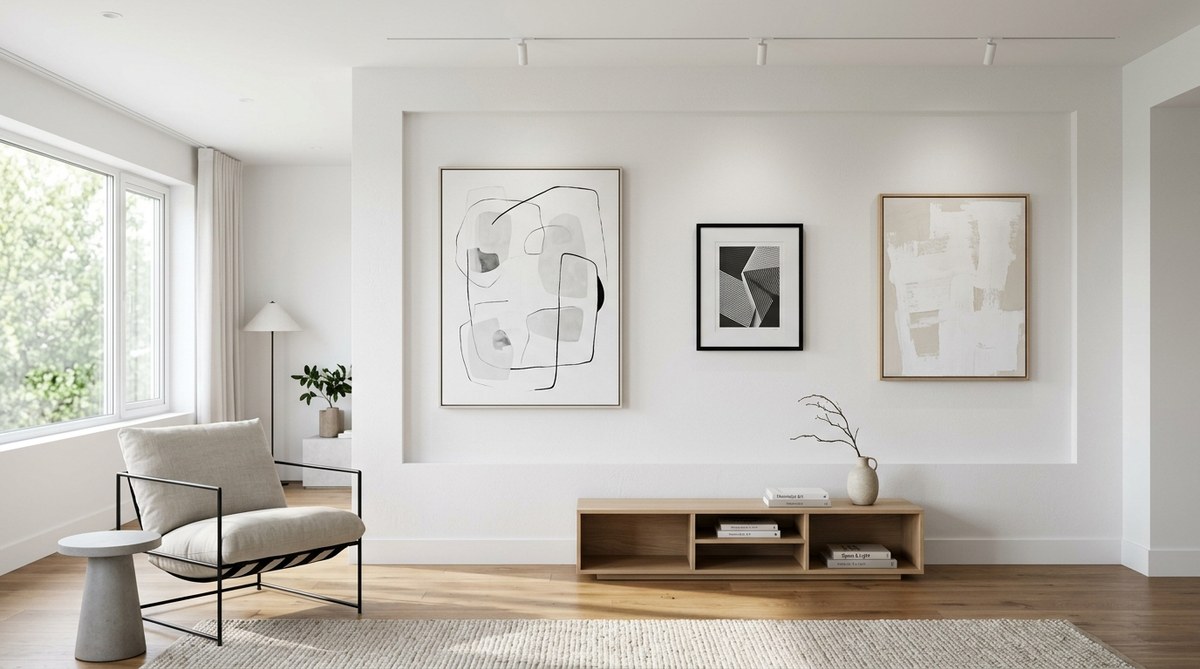
First, start with one object. A single ceramic vessel on an empty shelf. A black and white photograph with lots of breathing room. One piece. Let it hold the space.
Second, edit your walls. Take down three things. Leave one. See how it feels. The emptiness is not a void. It is a frame.
Third, visit a museum with intention. Go see a Donald Judd installation or an Agnes Martin painting. Use the five step process above. Give yourself thirty minutes with one room. Notice how your breathing changes.
If you want to go deeper, learn how to curate a minimalist art collection that reflects your aesthetic. Start small. Let the collection grow as your eye develops.
The Real Gift of Minimalist Art
Here is what no one tells you about minimalist art meaning. It is not about the art at all. It is about you.
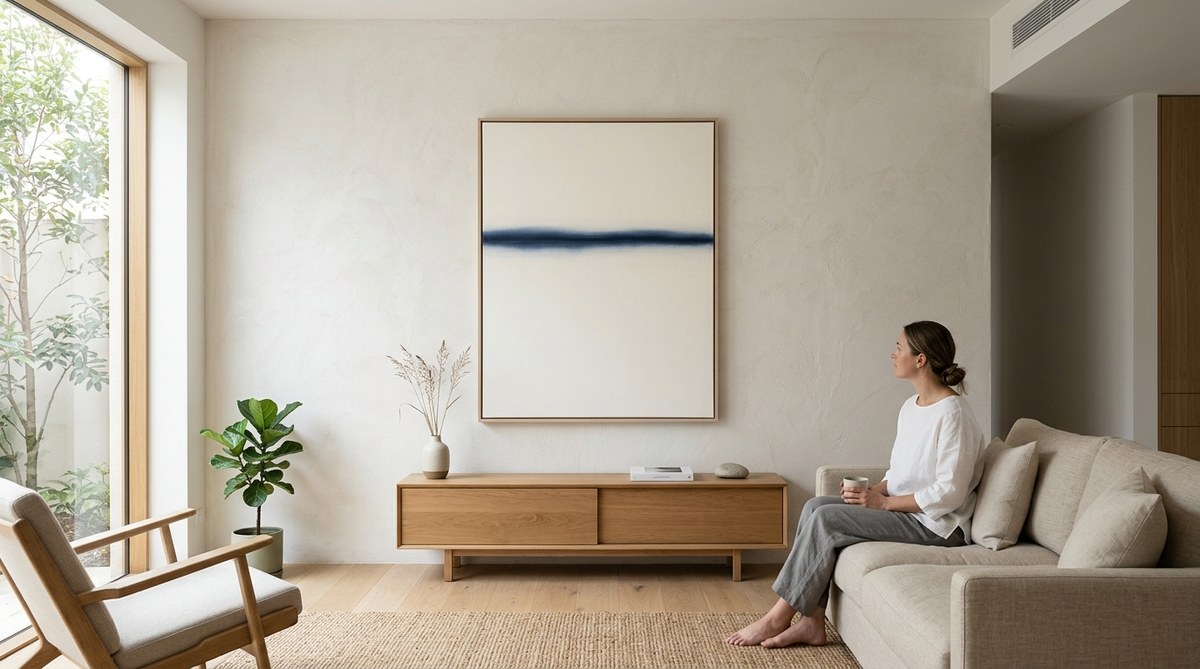
When you stand in front of a white canvas with a single black line, you have nowhere to hide. No story to distract you. No color to comfort you. You are left with your own mind. And in that space, you discover something. You are enough.
Minimalist art does not need to be decoded. It needs to be experienced. It asks you to slow down. To pay attention. To find beauty in the ordinary.
In a world that profits from your distraction, that is a radical act.
Living With Less to See More
The next time you see a minimalist piece, do not ask what it means. Ask what it makes you feel. That is the only question that matters.
Start today. Pick one room in your home. Remove one thing. Leave the empty space for a week. See what happens. You might find that the emptiness holds more than the object ever did.
If you want to continue this journey, read about why minimalist art spaces inspire a sense of calm and clarity. The principles are the same. The effect is cumulative.
Minimalist art is not a trend. It is a way of seeing. And once you learn to see this way, you cannot unsee it. That is the gift. That is the meaning.

Leave a Reply