
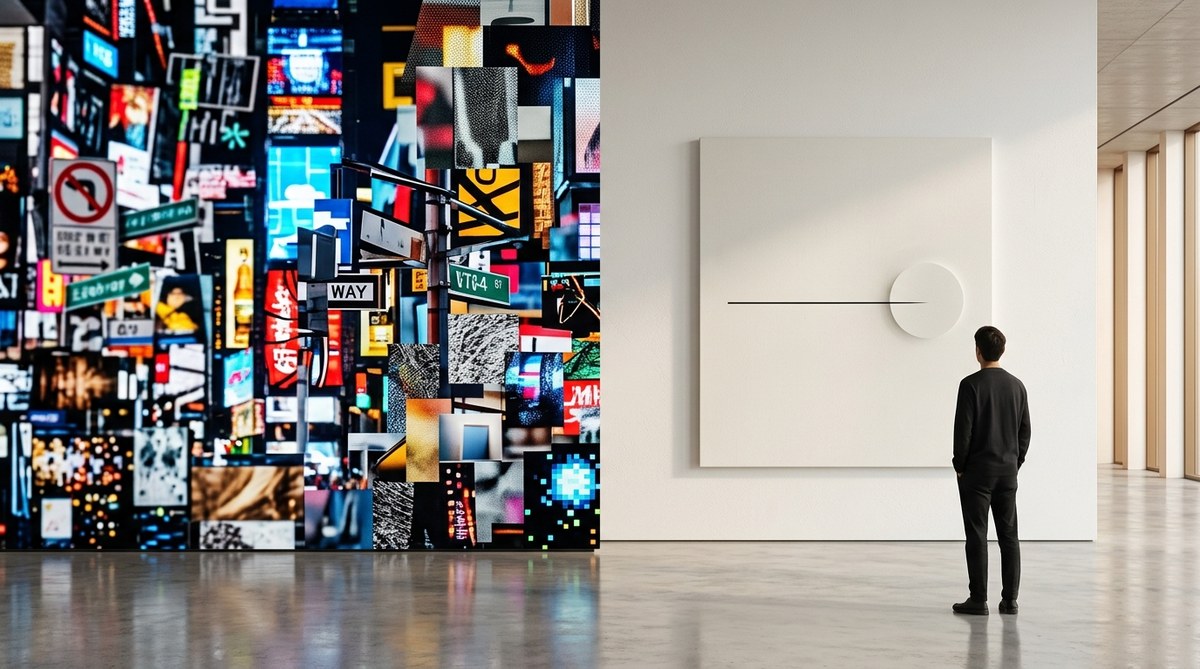
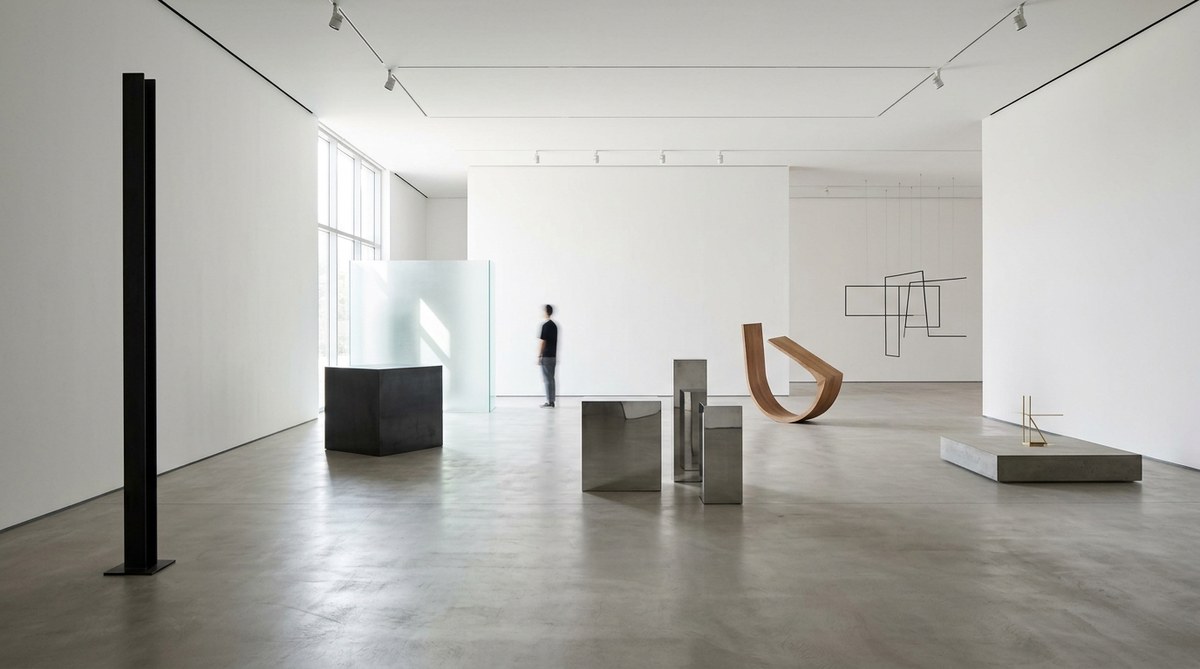
Minimalism often gets mistaken for a style. A white room, a clean typeface, a stripped-down interface. But at its core, minimalism is not about how something looks. It is about how something works when everything unnecessary has been removed. This is the art of subtraction. It is the deliberate, sometimes difficult practice of taking away until only what matters remains. For designers, product managers, and creative professionals, this skill is essential. It shapes how users feel, how stories land, and how products perform. This article explores why subtraction is so powerful, how to practice it, and where it goes wrong.
Subtraction is not about stripping away until nothing remains. It is about removing what hides the essential. Great design, clear writing, and honest products all depend on the art of subtraction. This guide shows how to apply it to your work, your storytelling, and your decision making. You will learn practical steps, common mistakes, and the mindset shifts that make less feel like more. (57 words)
Opening: Why Subtraction Feels Hard
Your instinct is to add. Add features. Add words. Add steps. That instinct feels productive. It feels safe. But the most memorable work often comes from what you remove, not what you collect.
The art of subtraction is a creative discipline. It asks you to question every element in front of you. It challenges the idea that more is better. In design, in product strategy, in storytelling, the act of removing can reveal meaning that was hidden under clutter.
This article explores the art of subtraction as a practical method. You will learn why it works, how to apply it, and where it fails. By the end, you will have a clear framework for deciding what to keep and what to cut.
Why Subtraction Feels Hard
Your brain is wired to add. When asked to improve something, most people reach for another feature, another paragraph, another layer. This is called additive bias. It feels productive. It feels safe. But it often buries what matters.
Subtraction asks you to do the harder thing: let go. It asks you to trust that less can carry more meaning. This is not about stripping everything bare. It is about removing what is unnecessary so the essential can breathe.
Consider how a sculptor works. The block of marble already contains the final figure. The sculptor does not add clay. They remove stone. They chip away everything that is not the horse, the hand, the face. The art is not in what they place; it is in what they choose to take away.
That is the art of subtraction. It applies to products, stories, interfaces, and creative work. When you remove the noise, the signal appears.
Subtraction is not about owning less or stripping a design until it feels empty. It is a deliberate act of removal that reveals what truly matters. When you subtract with intention, you create space for clarity, emotion, and meaning. The best products, stories, and experiences are shaped by what designers choose to leave out, not what they add.
Why Subtraction Feels Harder Than Addition
The human brain defaults to adding. When we solve a problem, we look for something to add: a feature, a paragraph, a new process. Researchers call this the addition bias. In one study, participants were asked to improve a design. Most added elements. Only a few removed them.
Why? Because removal feels like loss. Adding feels productive. Removing feels risky. Yet the most memorable work often comes from cutting away.
Consider a chair. A designer could add cushions, carvings, and mechanisms. But the iconic chairs in history are the ones that stripped everything down to a single idea. The same applies to software, writing, and photography. The art of subtraction is about trusting that less can carry more weight.
What the Art of Subtraction Really Means
Subtraction is not minimalism by default. Minimalism can be a style choice. Subtraction is a decision process. You start with everything and remove what does not serve the core purpose.
Think of a sculptor. The sculptor does not add clay to create a figure. They remove stone until the figure appears. That is the essence of this mindset. You do not start with a blank page and wonder what to add. You start with the full experience and carve away the noise.
This applies beyond design. It applies to daily routines, team meetings, product roadmaps, and even personal habits. When you ask “what can I remove?” instead of “what can I add?”, you shift from accumulating to clarifying.
The Addition Bias and Why We Default to More
Researchers at the University of Virginia studied this exact behavior. They gave participants a structure with a flaw. Participants could fix it by adding a piece or removing a piece. Most chose to add. Even when removal was simpler and more effective.
This bias is not limited to design tasks. It shows up in everyday decisions. We add meetings to fix communication. We add features to fix a product. We add commitments to fill our time.
The result is clutter. Cluttered schedules, cluttered interfaces, cluttered writing. And clutter hides the things that matter most.
To practice the art of subtraction, you need to notice the bias first. When you face a problem, pause. Ask yourself: “What could I remove to solve this?” That simple question is the starting point.
How to Apply Subtraction to Your Work
Subtraction is a skill. Like any skill, it improves with practice. Here is a practical process you can follow:
- Start with everything. Write down all features, all text, all steps. Do not filter yet.
- Define the one purpose. What is the single most important outcome? Write it in one sentence.
- Question each element. For every element, ask: “Does this serve the one purpose?” If the answer is unclear, mark it for removal.
- Remove without mercy. Cut everything that does not serve the core purpose. This is the hardest step because it feels like loss.
- Test the result. Use the simplified version. Does it still work? Does it feel clearer? If yes, you are done. If not, add back only what is essential.
- Repeat the process. Subtraction is not a one-time event. Revisit your work regularly and remove new clutter as it appears.
This process works for writing, product design, presentations, and even decision-making. The key is to be ruthless in step four. When in doubt, cut it out. You can always add something back later, but you will rarely need to.
Common Mistakes When Removing Too Much
Subtraction is not without risks. When done poorly, it can strip away warmth, context, or functionality. Here is a table that contrasts effective subtraction with common mistakes:
| Effective Subtraction | Common Mistakes |
|---|---|
| Removes noise while preserving the core message | Removes the core message itself |
| Leaves room for the audience to participate | Leaves the audience confused or lost |
| Keeps a clear emotional anchor | Removes all personality and warmth |
| Simplifies the interface without hiding key actions | Hides critical functions behind extra clicks |
| Uses empty space as a tool | Leaves empty space that feels unfinished |
| Removes based on a defined purpose | Removes randomly without a clear goal |
| Tests the result with real users | Assumes less is always better without testing |
The table shows the difference between subtraction and neglect. Subtraction is intentional. Neglect is careless. One improves the work. The other destroys it.
Where Subtraction Works Best
The art of subtraction is not limited to one field. It shows up everywhere, and it is worth seeing it in action across different areas:
- Writing. Remove unnecessary words. The sentence becomes sharper. The message becomes clearer.
- Product design. Remove features that nobody uses. The product becomes easier to understand.
- Photography. Remove distracting elements from the frame. The subject becomes more powerful.
- User interfaces. Remove buttons, fields, and options. The interface becomes more intuitive.
- Presentations. Remove slides that repeat the speaker. The presentation becomes more engaging.
- Code. Remove unused functions. The code becomes easier to maintain.
- Meetings. Remove agenda items that do not need a decision. The meeting becomes shorter.
In each case, the goal is the same. You are not removing for the sake of removal. You are removing to create space for what matters.
The Emotional Side of Subtraction
Removing things can feel personal. You might feel attached to a feature you built, a paragraph you wrote, or a habit you have kept. That attachment is normal. But it can also be a barrier.
Ask yourself: “Am I keeping this because it serves the purpose, or because I am comfortable with it?” That question is uncomfortable, but it is also useful.
The goal is not to become detached. The goal is to become clear about what you are trying to achieve. When you are clear about the purpose, the removal decision becomes easier. You are not losing something. You are choosing what to protect.
Subtraction as a Creative Act
There is a common misconception that subtraction is destructive. In reality, it is a creative act. When you remove clutter, you reveal something that was already there. You are not creating from nothing. You are uncovering the essential shape of the work.
“The sculpture is already complete within the marble block, before I start my work. It is already there; I just have to hew away the superfluous material.” — Michelangelo
This quote captures the spirit of the art of subtraction. The work is not about adding more. It is about removing what hides the essential form. Whether you are designing a product, writing a story, or planning a project, the same principle applies. The essential shape is already there. Your job is to clear away the noise.
How to Build a Subtraction Habit
Subtraction works best when it becomes a habit. You cannot do it once and expect the results to last. New clutter will always appear. New features, new commitments, new words. The habit is what keeps the work clear.
Here are a few ways to build that habit:
- Schedule a removal day. Once a month, go through your work and remove what is no longer needed.
- Set a removal quota. Before you finish any task, force yourself to remove at least one thing.
- Ask the removal question. Before adding anything new, ask: “What can I remove to make room for this?”
- Review your commitments. If your calendar is full, remove something before adding something new.
- Keep a “cut list.” When you are unsure about removing something, write it down. Revisit it later. You will often find you do not need it.
These habits are small, but they compound over time. The more you practice subtraction, the more natural it feels. Eventually, it becomes your default response to complexity.
When Subtraction Is the Wrong Choice
Subtraction is not always the answer. There are times when adding is the right move. If something is genuinely missing, removing will not help. You need to add what is missing.
For example, if a product lacks a core feature that users need, removing other features will not solve the problem. If a story lacks emotional depth, cutting words will not add depth. If a team lacks the skills to execute, simplifying the plan will not create those skills.
The art of subtraction is not about removing everything. It is about removing what is unnecessary. That requires you to know the difference between “unnecessary” and “missing.” When something is missing, add it. When something is unnecessary, remove it. The skill is in telling the two apart.
Subtraction in Teams and Organizations
Subtraction is not only an individual skill. It also works in teams and organizations. Many teams suffer from process bloat. They have too many meetings, too many approval steps, and too many tools. The result is slow progress and low morale.
A team can practice subtraction by asking a few simple questions:
- Which meetings can be removed without losing alignment?
- Which reports are read by nobody?
- Which approval steps slow things down without adding quality?
- Which tools are used by fewer than half the team?
The answers are often uncomfortable. But they are also liberating. When a team removes unnecessary processes, they free up time for the work that matters.
The same applies to organizations. Product roadmaps, marketing plans, and internal policies all accumulate clutter over time. The art of subtraction can keep them focused on the core mission.
The Long-Term Payoff of Subtraction
Subtraction is not about quick wins. It is about long-term clarity. When you remove clutter from your work, you create a foundation that is easier to build on. The work becomes easier to understand, easier to maintain, and easier to improve.
This is why the art of subtraction is so valuable. It is not a one-time trick. It is a mindset that you carry with you. Every time you face complexity, you have a choice. You can add to the complexity, or you can cut through it.
The choice is not always easy. Removal feels risky. It feels like loss. But the results are often worth it. When you subtract with intention, you create work that is sharper, clearer, and more memorable. You create space for the audience to breathe. And you create room for the things that truly matter.
The Path Forward
The art of subtraction is a practice, not a destination. You will never reach a point where nothing can be removed. But each time you remove something unnecessary, the work gets a little closer to its essential form.
Start small. Pick one piece of work. Apply the six-step process. See what happens. You might be surprised by how much stronger the result feels when you take things away.
The next time you face a problem, resist the urge to add. Instead, ask yourself: “What can I remove?” That question is the beginning of a different approach. It is the approach that leads to clarity, focus, and work that actually matters.
The Last Word on Subtraction
The art of subtraction is not about deprivation. It is about focus. When you remove what is unnecessary, you create space for what is necessary. That space is not empty. It is full of potential.
The best work is not the work that has the most. It is the work that has the least noise. The art of subtraction is the practice of finding that point. It takes courage, patience, and a clear sense of purpose. But the result is work that feels lighter, sharper, and more alive.
So the next time you face a complex problem, resist the urge to add. Start with everything. Define the one purpose. Then remove what does not serve it. You might be surprised at how much better the result becomes when you subtract with intention.








Leave a Reply