
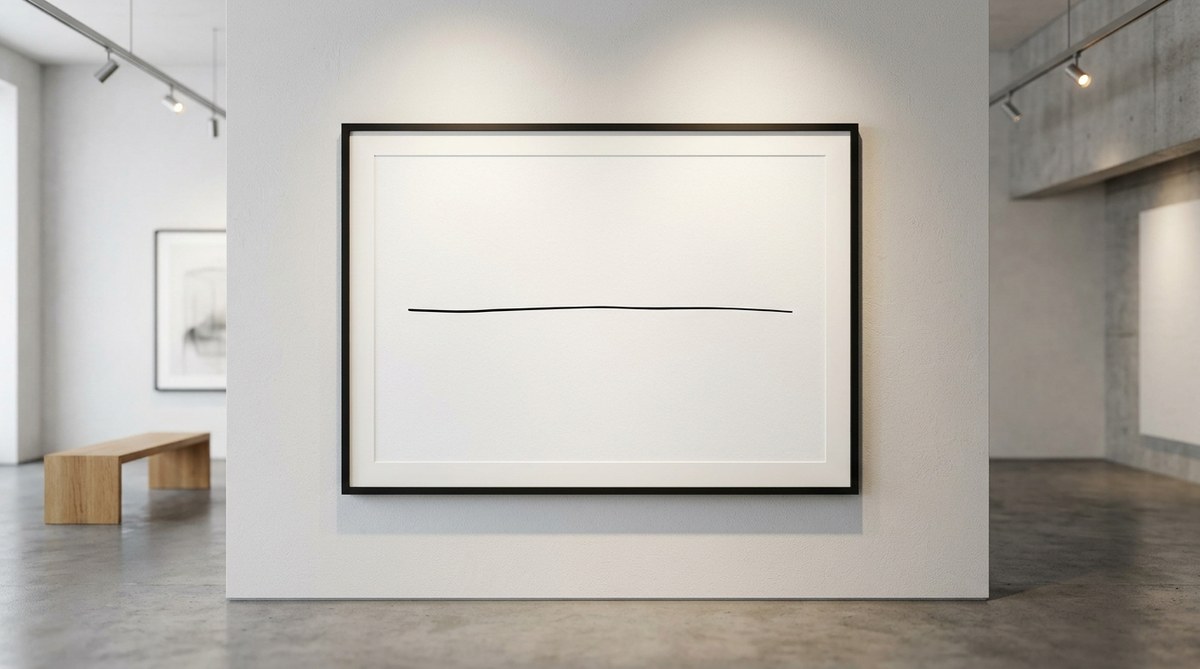
Minimalist art often gets mistaken for art that is easy to make. A white canvas. A single black line. A stack of plywood. Critics have called it empty, cold, or even lazy. But those who stop and look closely know the truth. Minimalist art meaning is not about absence. It is about presence. It is about stripping away everything that distracts so that what remains can speak with full force.
When you stand in front of a work by Agnes Martin or Donald Judd, something shifts. Your breathing slows. Your eyes stop searching for a story and start feeling the space. That is the point. Minimalist art asks you to stop reading and start experiencing. It is not a puzzle to solve. It is a feeling to inhabit.
Minimalist art meaning is rooted in intentional reduction. It uses simple forms, limited palettes, and negative space to create an immediate emotional experience. This guide explains the philosophy behind the movement, how to read a minimalist work, and why less visual information often leads to deeper personal connection.
The Philosophy Behind the Reduction
Minimalist art emerged in the late 1950s and 1960s as a reaction against the emotional intensity of Abstract Expressionism. Artists like Frank Stella and Robert Morris wanted to move away from personal gesture. They wanted the art to be about the object itself, not about the artist’s hand.
The core idea is simple. Remove anything that refers to the world outside the artwork. No symbols. No metaphors. No hidden narratives. The work is exactly what you see. A red square is just a red square. A steel beam is just a steel beam. This honesty creates a direct line between the object and the viewer. There is no interpretation layer to get through. You either feel it or you do not.
This philosophy is why minimalist art meaning often feels personal. The meaning is not locked inside the painting. It is created in the moment you stand in front of it. Your body, your space, your light, your time. All of it becomes part of the piece.
How to Read a Minimalist Work
If you are used to looking for recognizable subjects, minimalist art can feel confusing at first. Here is a practical process to help you connect with a piece.
- Stand still and breathe. Do not walk past. Plant your feet. Give the work at least thirty seconds of quiet attention.
- Notice your body. Feel where your eyes land first. Is it the edge? The center? A shadow? Notice how your gaze moves across the surface.
- Observe the materials. Look at the texture. Is the paint thick or thin? Is the surface smooth or rough? Minimalist art celebrates the material itself.
- Pay attention to the space around it. The wall, the floor, the distance between you and the object. That negative space is part of the composition.
- Name the feeling. Do not try to name the meaning. Just name the emotion. Calm. Tension. Stillness. Unease. Whatever comes up is valid.
This process shifts you from a passive viewer to an active participant. That is the real minimalist art meaning. It is a relationship, not a lecture.
Common Misconceptions About Minimalism
Many people confuse minimalism with simplicity. They are not the same thing. Simplicity can be shallow. Minimalism is precise. Every element in a minimalist work has been chosen with care. Nothing is there by accident.
Another misconception is that minimalist art is emotionless. Look at a Rothko chapel. Look at a late Agnes Martin grid. These works are full of emotion. The emotion is just not delivered through drama. It arrives through restraint. It is the difference between a shout and a whisper. A whisper can carry more weight if you are willing to lean in.
Minimalist Techniques and Common Mistakes
If you are a designer or artist experimenting with minimalism, it helps to know what works and what does not. The table below breaks down the difference between effective techniques and common pitfalls.
| Technique | What It Does | Common Mistake | Why It Fails |
|---|---|---|---|
| Single focal point | Creates immediate visual anchor | Adding a second element for balance | Splits attention and weakens impact |
| Monochromatic palette | Unifies the composition | Using off-white without testing lighting | Reads as dirty or unfinished |
| Generous negative space | Gives the eye a place to rest | Leaving empty space without intention | Feels incomplete, not purposeful |
| Repetition of form | Builds rhythm and pattern | Slight misalignment in placement | Breaks the meditative effect |
| Natural materials | Brings texture and honesty | Mixing too many material types | Loses the clarity of the primary material |
The key lesson is that minimalism punishes indecision. If you are going to use one color, commit to it fully. If you are going to leave a wall empty, let it breathe. Half measures do not work.
The Emotional Landscape of Less
Why does a single line feel powerful? Because our brains are wired to look for patterns. When you give the brain very little information, it starts to fill in the gaps. That filling in is where the emotional connection happens. The viewer becomes a co-creator.
This is why minimalist art meaning is so personal. Two people can stand in front of the same black square and feel completely different things. One feels peace. Another feels anxiety. Both are correct. The art does not dictate a single response. It creates a container for whatever the viewer brings.
“Minimalist art does not tell you what to feel. It gives you the space to feel what is already there.” — This is a lesson every designer should carry into their work. Whether you are designing a logo or a room, leaving room for the user’s own response is a powerful act of respect.
Where Minimalism Lives Today
In 2026, minimalist art is everywhere. It influences architecture, branding, interior design, and even digital interfaces. But the commercial version of minimalism is often a surface-level aesthetic. True minimalist art meaning is not about looking clean. It is about thinking clearly.
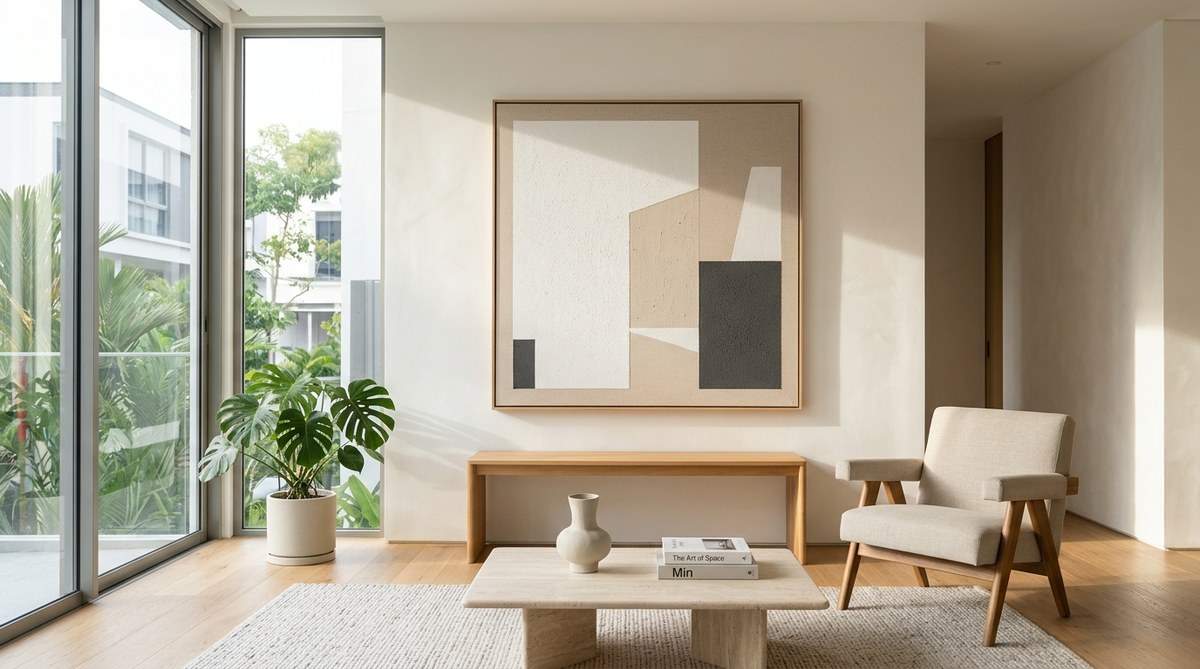
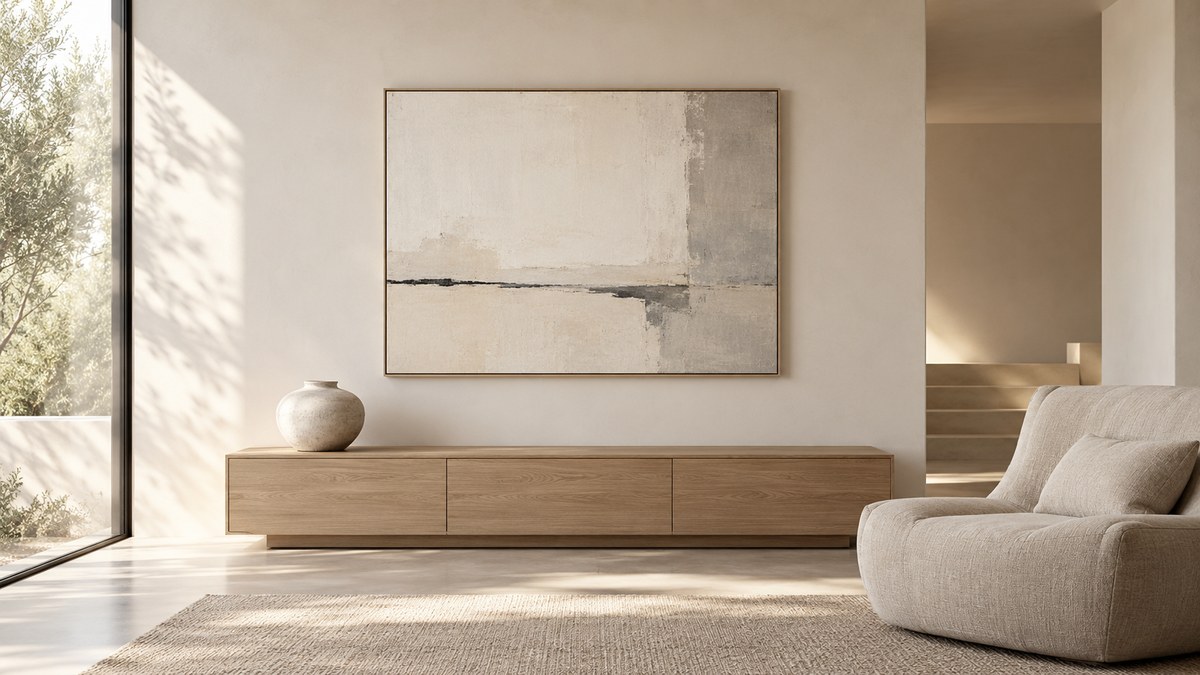
When you choose a piece of minimalist art for your home or studio, you are not just decorating. You are making a statement about how you want to feel in that space. You are choosing calm over chaos. You are choosing intention over accumulation. This is why minimalist art works so well in spaces that need to feel grounded. A bedroom. A reading nook. A gallery wall with one single piece.
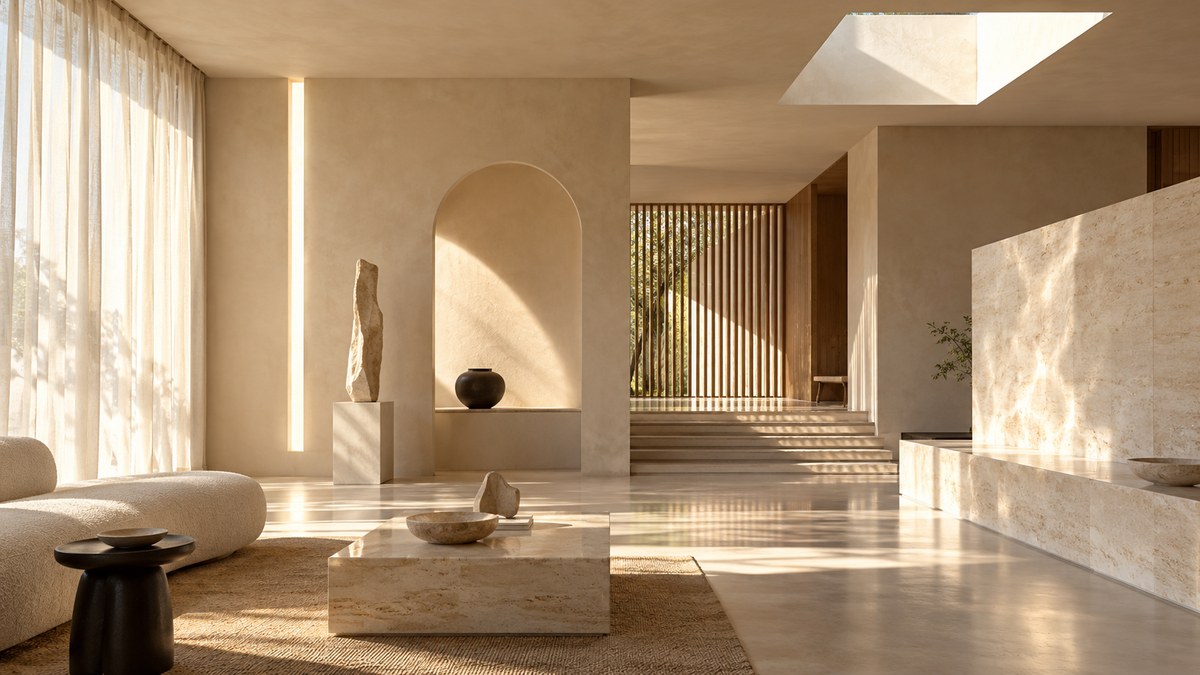
If you want to see this philosophy applied to physical spaces, take a look at how mastering spatial harmony through minimalist art and design can reshape a room. The same principles of reduction and intention apply whether you are looking at a canvas or an entire living area.
A Simple Framework for Creating Minimalist Work
If you are a creative professional looking to apply these ideas to your own practice, try this three-step framework.
- Start with everything. Do not begin by limiting yourself. Create a version of your piece that includes all the elements you think you need.
- Remove one thing at a time. Look at the piece and ask: does this element support the core feeling? If the answer is not a clear yes, take it out.
- Stop when it hurts. The right amount of reduction is the point just before the piece loses its emotional weight. That is your target.
This process is harder than it sounds. It requires discipline and a willingness to let go of things you worked hard on. But the result is work that feels inevitable. It could not be any other way.
What Minimalist Art Asks of You
The most honest answer to the question of minimalist art meaning is this. It asks you to slow down. It asks you to trust your own experience over what an expert tells you. It asks you to accept that a work can be both simple and profound at the same time.
In a world that constantly demands more of your attention, minimalist art offers a rare gift. It asks for less. And in that less, you might find more than you expected. A moment of quiet. A feeling of clarity. A reminder that not everything needs to be complicated to matter.
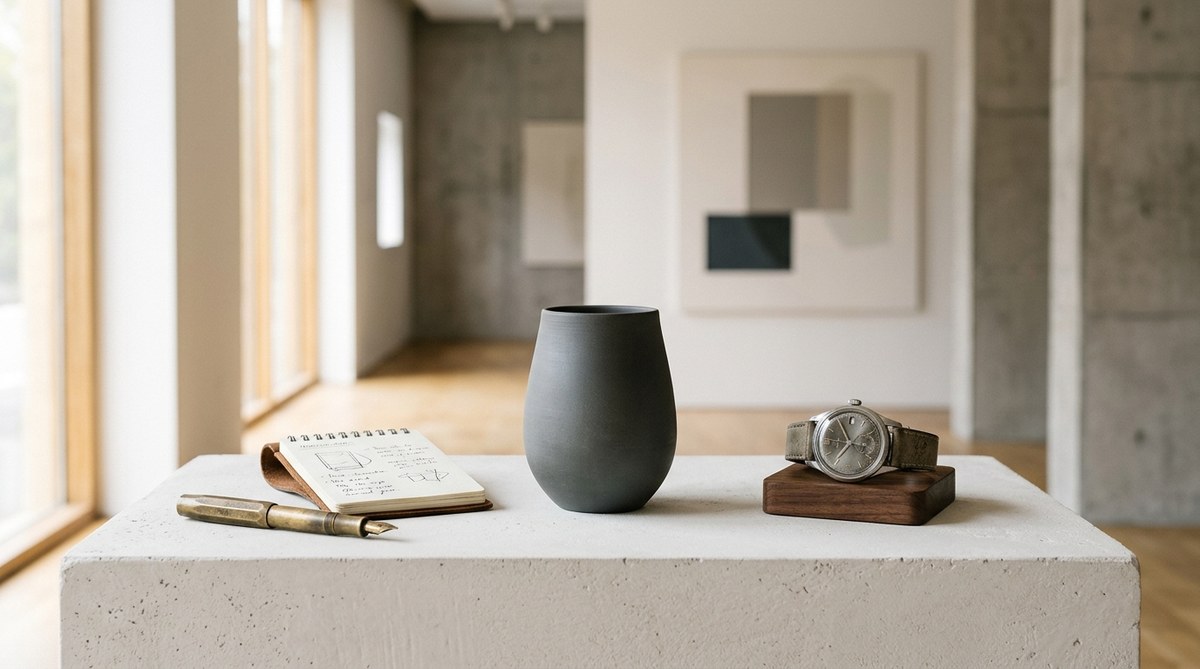
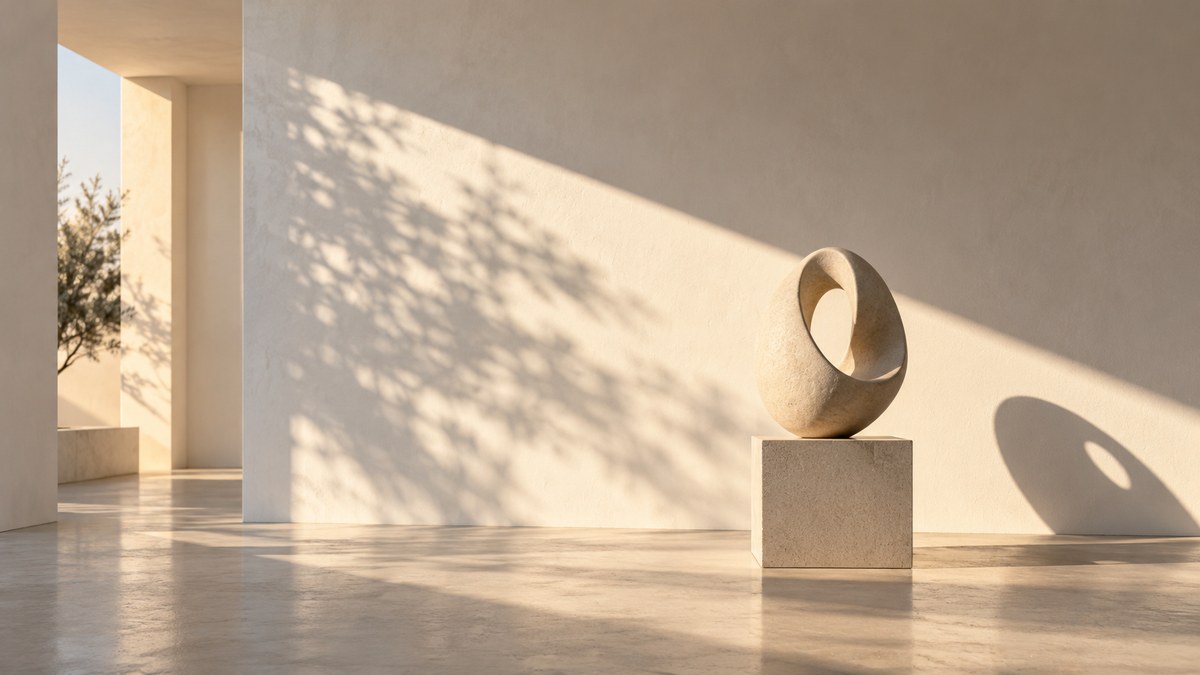
If you are ready to bring this feeling into your own environment, start small. Choose one object. Place it alone on a shelf. Let it breathe. See how it changes the room. See how it changes you. That single act is the whole philosophy in miniature.

Leave a Reply