
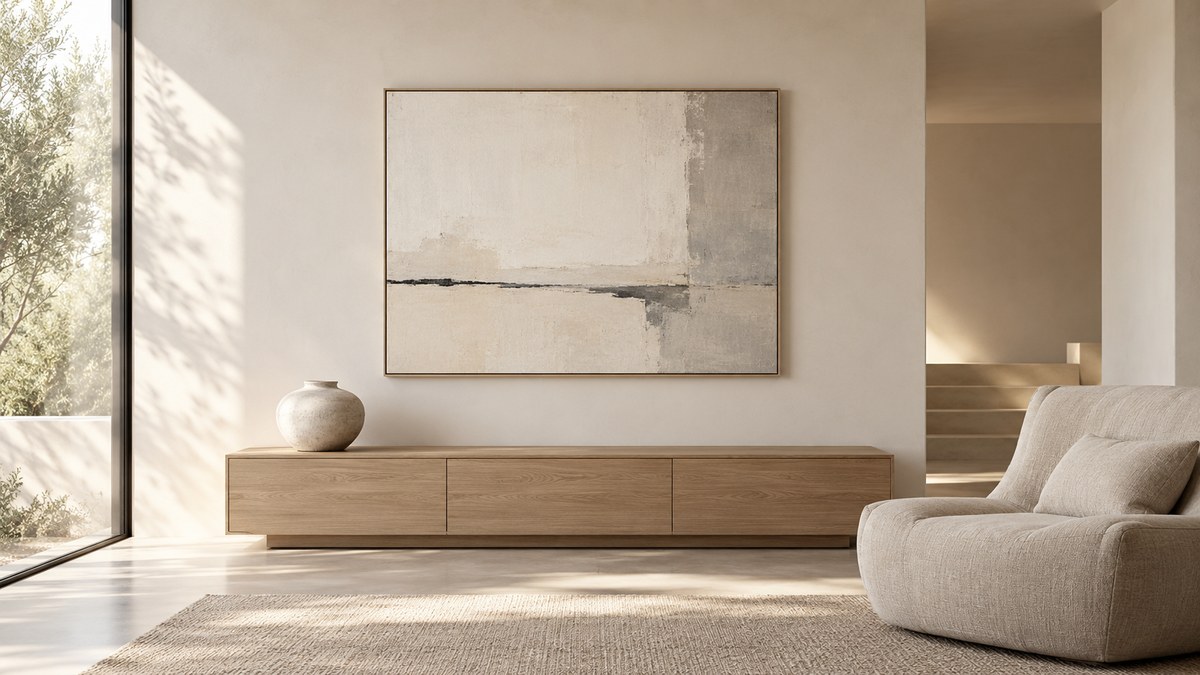
Your living room should feel like a deep breath. Instead, it often feels like a shout. Too many colors, too many objects, too much noise. Minimalist art offers a way out. It is not about empty walls or boring spaces. It is about choosing pieces that give your eyes a place to rest. When you use minimalist art to create a sense of calm in any room, you are designing a sanctuary for your mind. The right piece of art can lower your heart rate and quiet your thoughts. It can turn a chaotic space into a peaceful one.
Minimalist art calms a room by reducing visual noise. Choose pieces with simple shapes, neutral colors, and plenty of empty space. Place them at eye level on a clear wall. Keep the surrounding area uncluttered. The art should be the only focal point. This approach lowers stress and creates a peaceful atmosphere in any room of your home.
What Makes Minimalist Art So Calming?
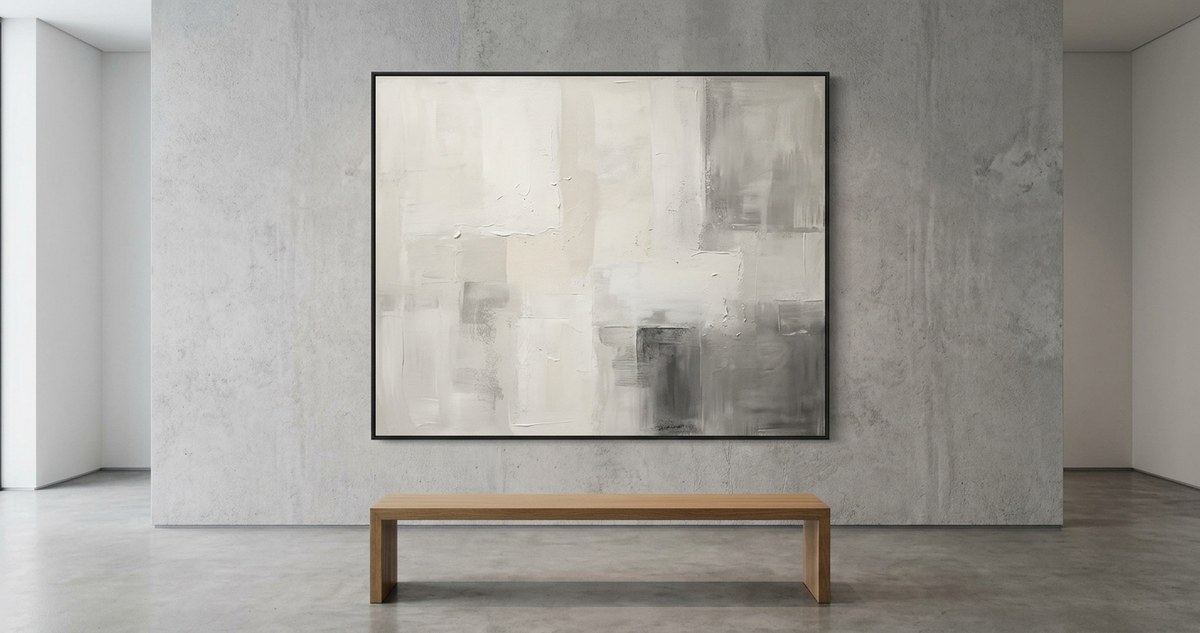
Think about the last time you stood in a crowded room. Your eyes darted from one object to the next. You felt restless. Now picture a single, large canvas with a soft gray wash and a thin black line near the bottom. Your eyes land on it. They stay there. Your shoulders drop.
That is the power of minimalist art. It gives your brain a break. Our minds process visual information constantly. Every pattern, every color, every object demands a tiny bit of attention. Minimalist art reduces that demand. It uses negative space, simple forms, and muted tones to create a visual rest stop. This is why many people find that minimalist art calm room setups help with anxiety and overstimulation.
The style also encourages mindfulness. When there is less to look at, you actually look more carefully. You notice the texture of the paper. You see the way light falls on the canvas. You become present in the room.
The Science of Visual Rest
Your brain has a default mode network. It activates when you are not focused on a specific task. When you look at a busy pattern or a cluttered wall, your brain works harder to filter out irrelevant details. Minimalist art reduces this cognitive load. It allows your default mode network to settle. The result is a feeling of spaciousness and calm.
How to Choose Minimalist Art for a Calm Room
Not all minimalist art is created equal. Some pieces will make your space feel serene. Others might feel cold or unfinished. Here is how to pick the right ones.
Look for These Qualities
- Simple shapes: Circles, squares, gentle curves. Avoid jagged lines or chaotic forms.
- Limited color palette: Stick to one or two colors. Neutrals, earth tones, and soft pastels work best.
- Generous negative space: The art should breathe. At least half of the canvas should be empty or nearly empty.
- Natural textures: Canvas, linen, or handmade paper add warmth without visual clutter.
- Subtle contrast: Soft differences between tones are more calming than harsh black and white.
What to Avoid
| Choose This | Avoid That |
|---|---|
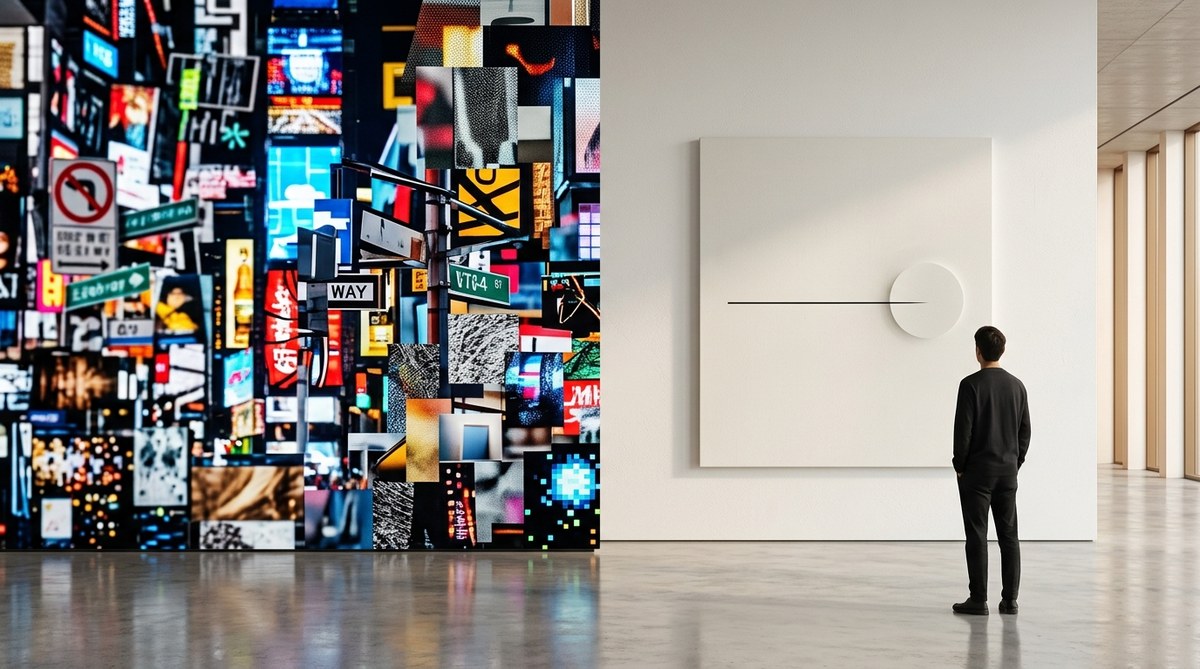
| A single brushstroke on a large canvas | A collage of tiny abstract shapes |
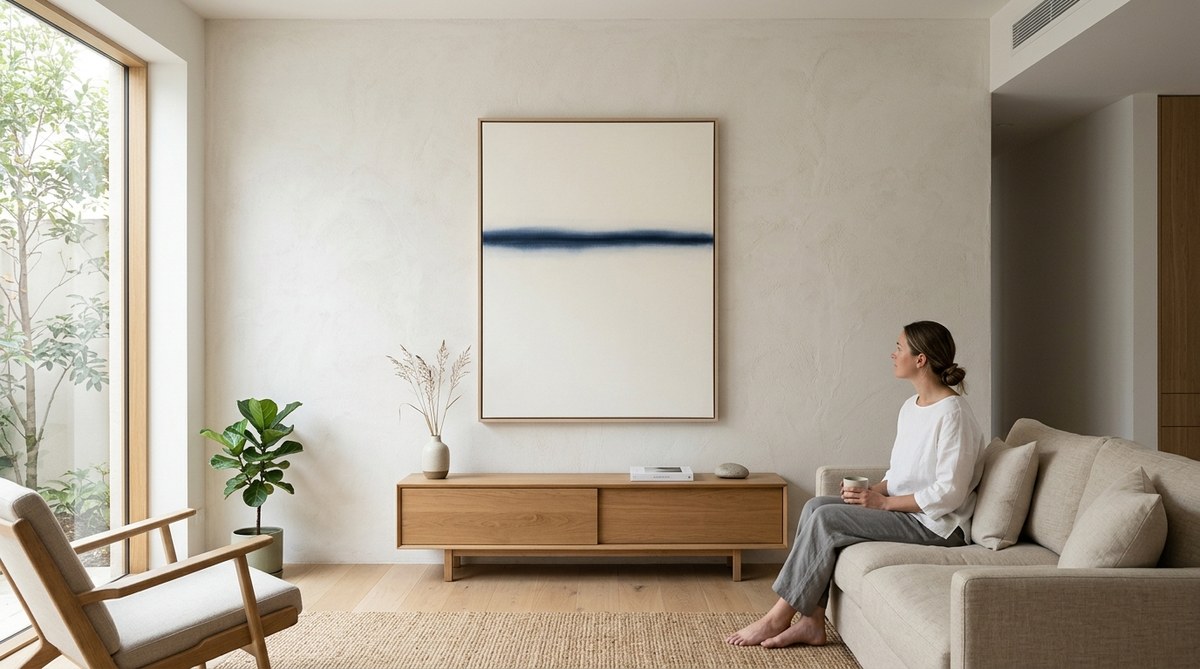
| A pale blue wash with a faint horizon line | A neon geometric pattern with six colors |
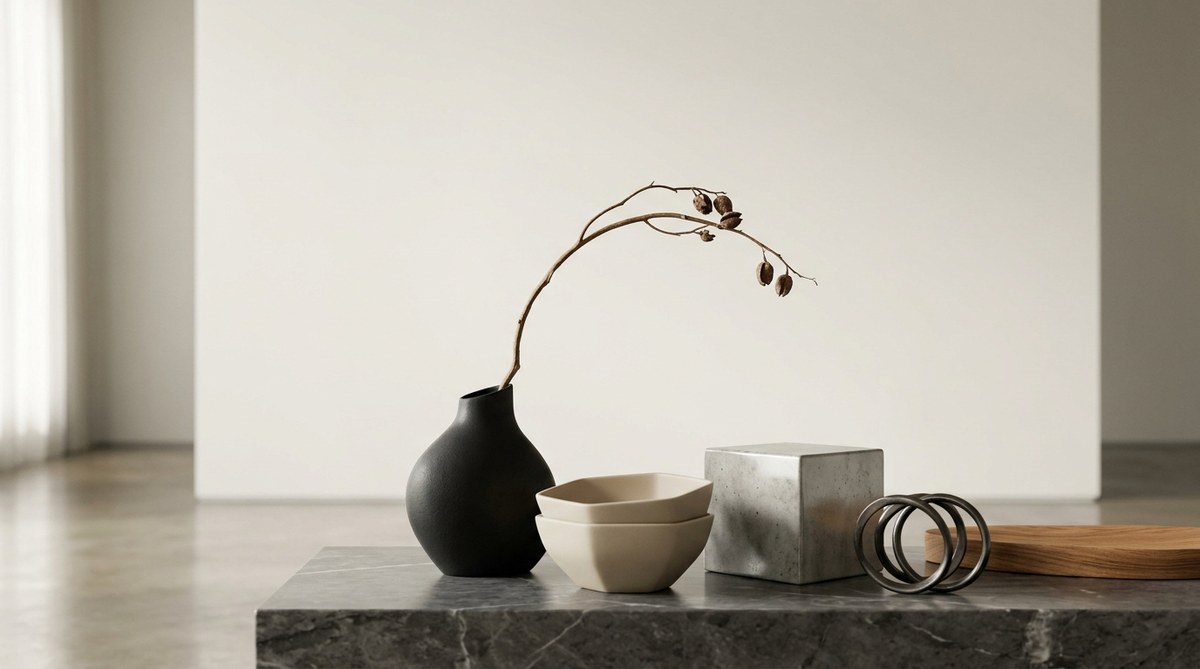
| A simple ceramic bowl on a pedestal | A shelf crowded with ten small figurines |
| A black ink circle on white paper | A detailed cityscape drawing |
The table above shows the difference between calming and stressful options. The left column gives your mind space. The right column demands attention.
A Practical Process for Using Minimalist Art to Create a Sense of Calm in Any Room
Follow these steps to transform your space. The goal is to let the art do the work without competing with other elements.
-
Pick one wall per room. Do not cover every surface. Choose the wall you see first when you enter the room. This will be your focal point.
-
Remove everything from that wall. Take down photos, shelves, and decor. You want a blank slate. This step alone will make the room feel calmer.
-
Select one piece of minimalist art. It should be large enough to fill the space without needing companions. A good rule is to choose a piece that takes up about two thirds of the width of the wall.
-
Hang it at eye level. The center of the artwork should be 57 to 60 inches from the floor. This is standard gallery height. It feels natural to the eye.
-
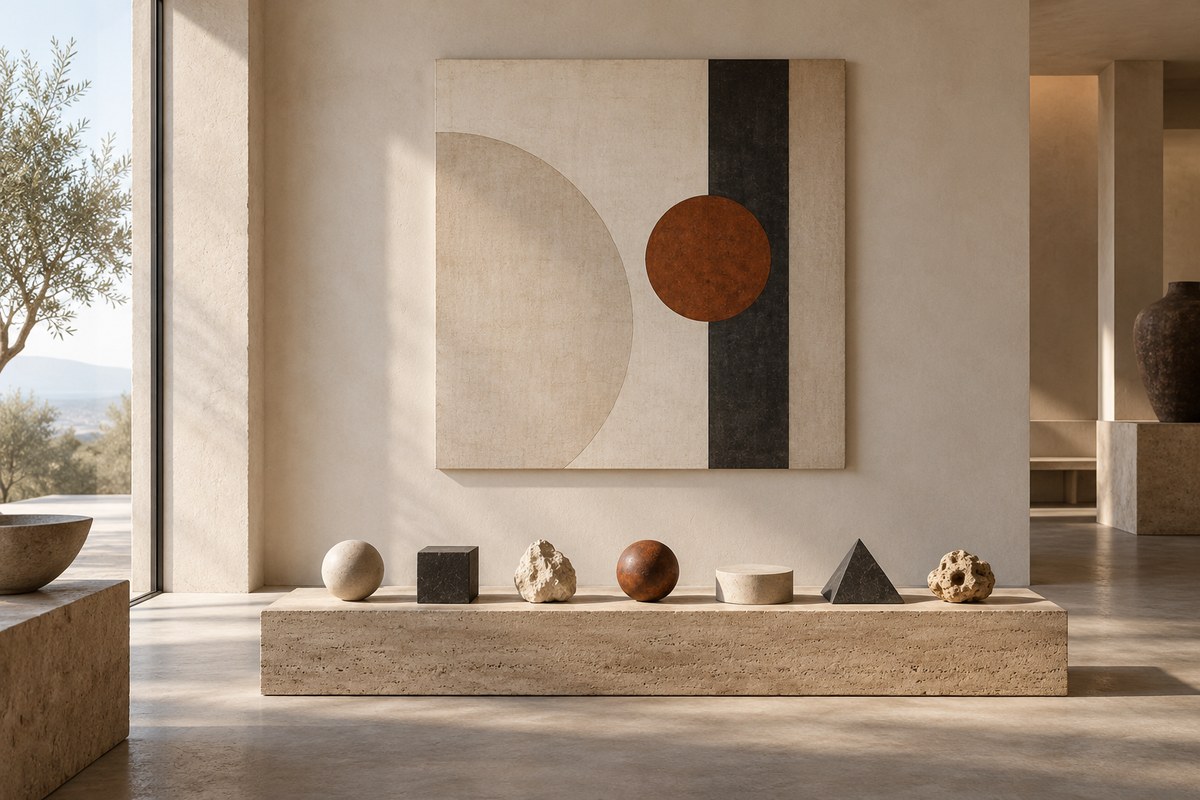
Clear the area below. Do not place furniture directly under the art unless it is a low, simple bench. Avoid tables with lamps, books, or plants. The art needs room to breathe.
-
Adjust the lighting. Soft, diffused light works best. A picture light or a floor lamp aimed at the wall can highlight the piece without glare.
-
Live with it for a week. Do not add anything else. Let your eyes adjust. You will likely find that the room feels bigger and quieter.
Common Mistakes That Ruin the Calm
Even with good art, you can accidentally create visual noise. Here are the most common pitfalls.
- Pairing minimalist art with busy furniture. A zebra print sofa will fight a calm abstract painting. Keep your furniture simple and solid colored.
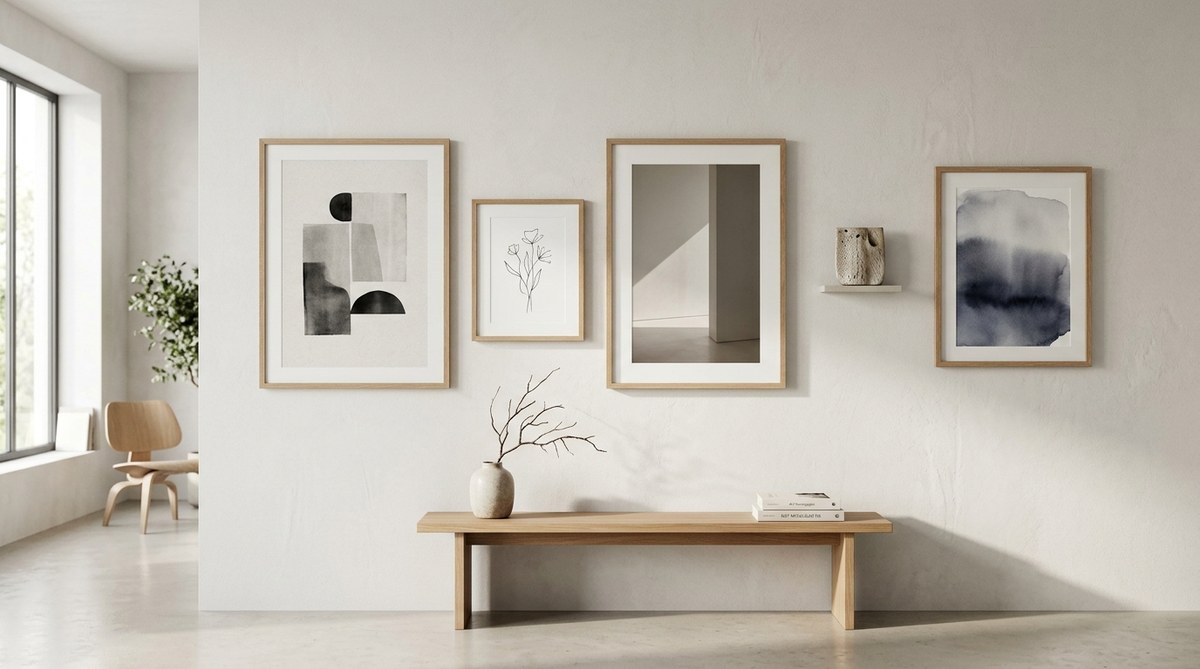
- Using too many pieces. One large piece is more calming than a gallery wall of small works. If you want multiple pieces, leave generous space between them.
- Choosing art that is too small. A tiny painting on a large wall creates tension. The art looks lost, and the wall feels empty in a bad way.
- Ignoring the frame. A heavy ornate frame can undo the calm of a simple image. Use thin, natural wood frames or no frame at all.
- Adding decor on top of the art. Do not lean a smaller picture against a larger one. Do not hang a clock next to your art. Let the art stand alone.
How to Use Minimalist Art in Different Rooms
Each room has a different purpose. Your approach should shift slightly.
Living Room
This is the heart of your home. It is also where most clutter gathers. Use a large, horizontal piece above the sofa. Keep the coffee table clear. If you have a television, consider placing the art on a perpendicular wall so it is not competing with the screen. For more ideas on arranging spaces, see our guide on creating harmonious art spaces with minimalist design principles.
Bedroom
Your bedroom should be a retreat. Choose a piece with very soft tones. Pale grays, muted blues, or warm whites work well. Hang it on the wall opposite your bed. That way, it is the last thing you see at night and the first thing you see in the morning. The quiet power of monochromatic palettes in minimalist art can help you select the right tones for sleep.
Home Office
Focus is the goal here. A piece with a single strong line or shape can anchor your attention. Avoid anything too abstract or busy. You want your eyes to rest, not wander. For more on this topic, read about how minimalist art cultivates mindful living spaces.
Bathroom
This room is often overlooked, but it is a perfect place for small minimalist works. A single small print or a simple ceramic object on the counter can make the space feel like a spa. Keep the counter clear of bottles and products.
“The best minimalist art does not shout. It whispers. It invites you to stop, breathe, and notice the space around the object. That is where the calm lives.” – interior designer and minimalism advocate Mara Lin
The Role of Negative Space in Your Room
Negative space is the empty area around and inside the art. It is not wasted space. It is active space. It gives your eyes a place to land when they are not looking at the art.
Think of it this way. When you listen to music, the silence between notes is just as important as the notes themselves. The same is true for art. The empty wall around a painting is what makes the painting feel significant. If you crowd it with other things, you lose that effect.
To understand this better, check out our article on discovering the power of negative space in minimalist art. It explains how empty areas create visual breathing room.
A Simple Checklist for Your Room
Use this list before you call a room finished.
- Is there one clear focal point?
- Does the art have a limited color palette?
- Is at least half of the wall surface empty?
- Is the area around the art free of clutter?
- Is the lighting soft and indirect?
- Does the room feel quieter than before?
If you answered no to any of these, make an adjustment. Even one change can shift the energy of the space.
Why This Approach Works in 2026
We are living through a time of constant notifications, endless feeds, and visual overload. Our homes should be the opposite. They should be places where we can unplug. Minimalist art is not a trend. It is a tool for mental health. More people in the United States are realizing that their living spaces affect their stress levels. They are choosing quality over quantity. They are selecting one meaningful piece instead of ten forgettable ones. This shift is part of a larger movement toward intentional living. If you want to see how this connects to broader design ideas, read about 7 minimalist design trends dominating art spaces in 2026.
Finding Your Calm
Start small. You do not need to redesign your entire home at once. Pick one room. Choose one wall. Find one piece of minimalist art that speaks to you. Hang it. Clear the area around it. Then sit in the room for ten minutes. Notice how your body feels. Notice your breathing. That sense of ease is what you are after. Once you feel it, you will want to bring it to every room.
The path to a calmer home is not about adding more. It is about choosing better. Let the art do the work. Let the empty space be your friend. Your mind will thank you.

Leave a Reply