
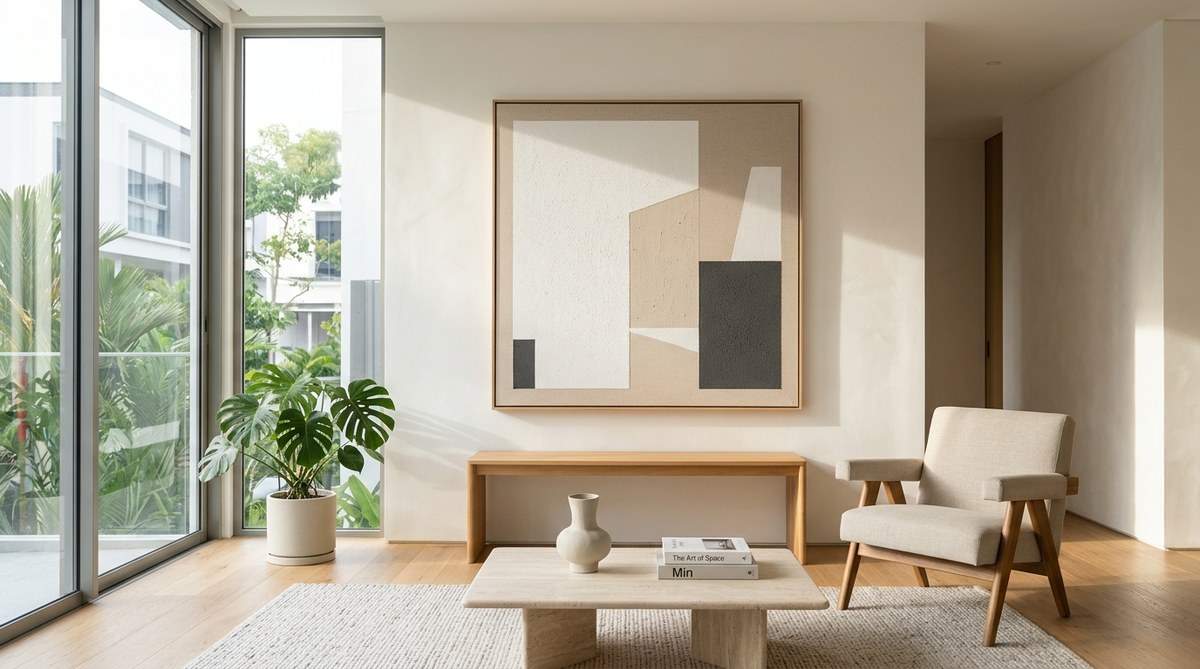
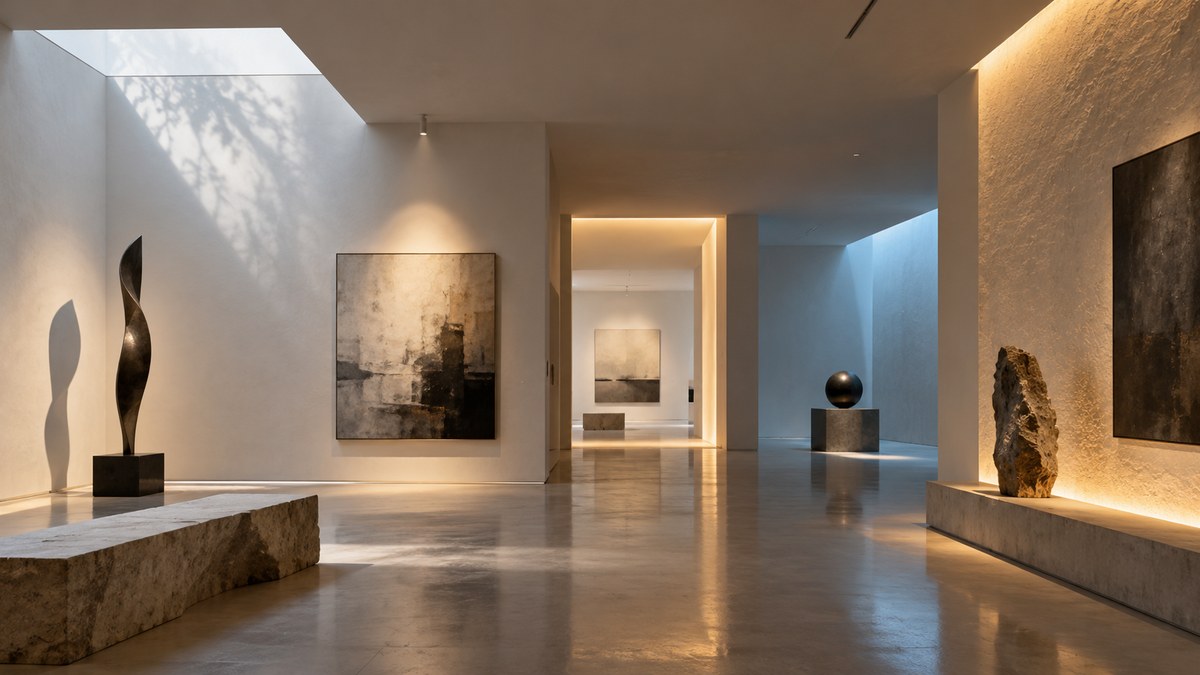
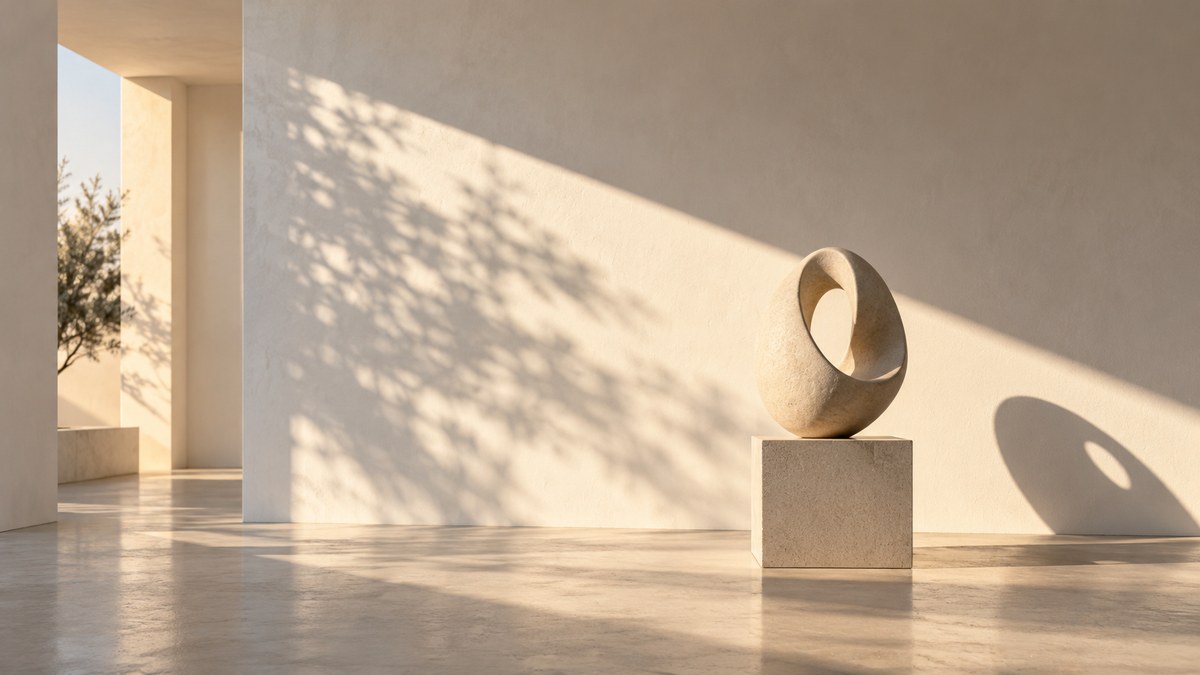
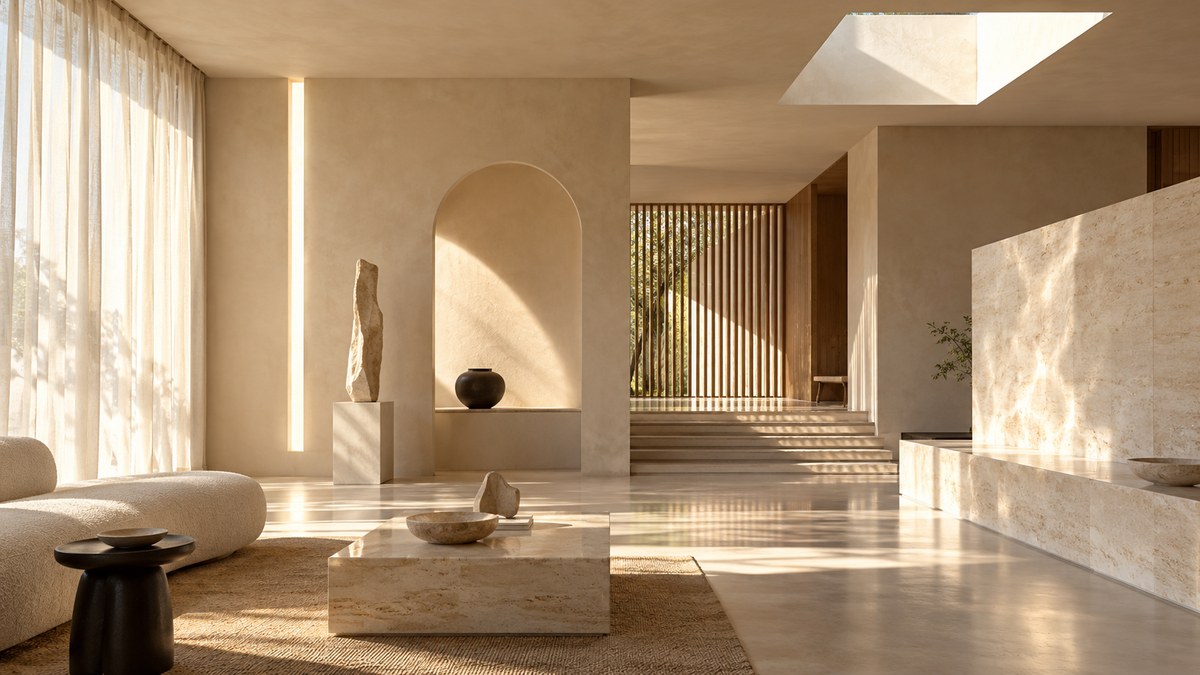
Picture a room where every object has a reason to exist. The walls are not bare, but they breathe. A single artwork holds your attention without shouting. That is the quiet power of minimalist art in an intentional space. It does not fill a room. It anchors it. For anyone trying to bring more calm and purpose into their home, minimalist art offers a clear path forward. It asks you to choose less, but choose better.
Minimalist art is not about empty rooms. It is about making every piece count. By focusing on form, material, and negative space, you can turn any room into a place of rest. This guide shows you how to choose art that supports your daily life, avoid common mistakes, and build a space that feels both open and personal.
Why Minimalist Art Works So Well for Intentional Design
Minimalist art strips away the extra. No busy patterns. No distracting frames. No need to tell you what to feel. It just sits in the room and lets you breathe. That is why it fits so naturally into homes designed for calm.
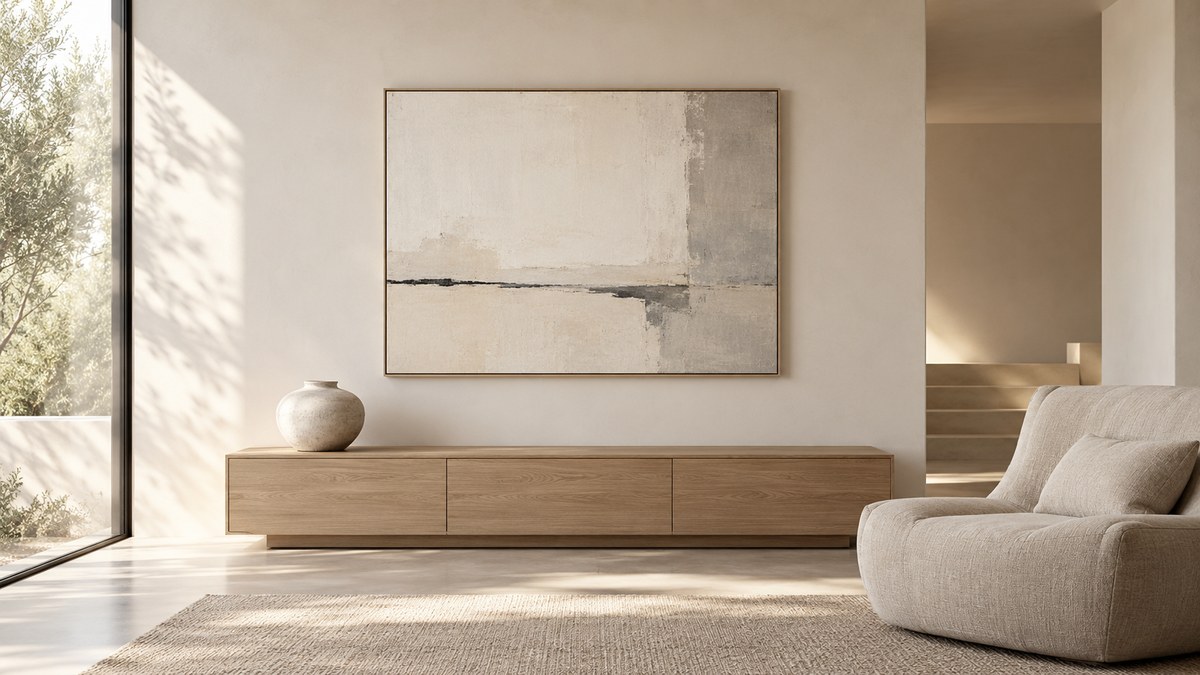
When you walk into a living room with a large canvas that uses only one color and a subtle texture, your eyes do not jump around. They land. They rest. That restfulness is the whole point. According to the principles behind creating harmonious art spaces with minimalist design principles, the goal is to support your state of mind, not compete with it.
Think about your busiest room. Maybe it is the kitchen or the home office. Clutter stresses you out, but so does a room that feels dead. Minimalist art solves that problem. It adds visual weight without adding noise. A single sculptural piece on a countertop or a large print above a desk gives the eye a place to settle. That one focal point can change how the whole room feels.
The Core Principles of Minimalist Art for Your Home
Before you start shopping, it helps to understand what makes a piece of art truly minimalist. Not every simple image qualifies. Real minimalist art follows a few core ideas.
- Reduction to essentials. Every element in the piece must earn its place. If you can remove something without changing the piece, it should go.
- Focus on material and form. The way light hits a rough ceramic surface matters. The exact angle of a line matters. Materiality is the star.
- Use of negative space. Empty areas in the artwork are just as important as the filled areas. They give the eye room to move.
- Neutral or limited color palettes. White, black, gray, earth tones, and single accent colors are common. They keep the visual field calm.
- Repetition and geometry. Simple shapes repeated across a canvas or sculpture create rhythm without chaos.
These principles make minimalist art a natural partner for mastering spatial harmony through minimalist art and design. When the art itself is disciplined, the room follows.
How to Choose Minimalist Art for Your Intentional Space
Choosing the right piece is not about guessing. It is a process of elimination. Start by looking at what your room already has.
- Assess your current visual weight. Stand in the doorway and look at each wall. Which one feels the most empty? Which one feels the most busy? The wall that feels unbalanced is your target.
- Define the room’s purpose. A bedroom needs a different energy than a dining room. For a bedroom, look for soft textures and muted tones. For a dining room, consider a piece with more structure, like a geometric line drawing.
- Measure your wall and your furniture. A common mistake is buying art that is too small. For an intentional space, go bigger than you think. A large piece on a large wall feels like a statement. A tiny piece on a large wall feels like an accident.
- Choose one focal point per room. Do not try to fill every wall. Pick one wall and commit to it. Let the other walls stay quiet.
- Test with a digital mockup. Take a photo of your wall and drop in an image of the artwork. Live with it for a day before you buy.
This process works whether you are looking at original paintings, prints, or minimalist object designs that transform your living space. The goal is intention, not decoration.
Common Mistakes When Using Minimalist Art (And How to Fix Them)
Even with good intentions, it is easy to make errors. Here is a table that shows the most common problems and their solutions.
| Mistake | Why It Happens | The Fix |
|---|---|---|
| Buying art that is too small | Fear of making a bold choice | Go at least 60% of the width of your furniture piece below it |
| Hanging art too high | Gallery habit or not measuring | Hang so the center is 57 to 60 inches from the floor |
| Mixing too many styles | Trying to please everyone | Stick to one medium or one color palette per room |
| Ignoring the frame | Thinking the frame is invisible | Use a thin frame or no frame at all for a truer minimalist look |
| Choosing art that competes with the room | Not considering existing colors | Pull a single accent color from the artwork and repeat it in a pillow or vase |
Each of these mistakes pulls you away from the intentional space you are trying to build. The fix is usually simple. Step back. Measure. Edit.
The Role of Light in Showing Minimalist Art
A piece of minimalist art lives or dies by the light it receives. Because these artworks rely on subtlety, you need to control how light hits them. Harsh overhead lighting can flatten a textured canvas. Soft, directional light can make it glow.
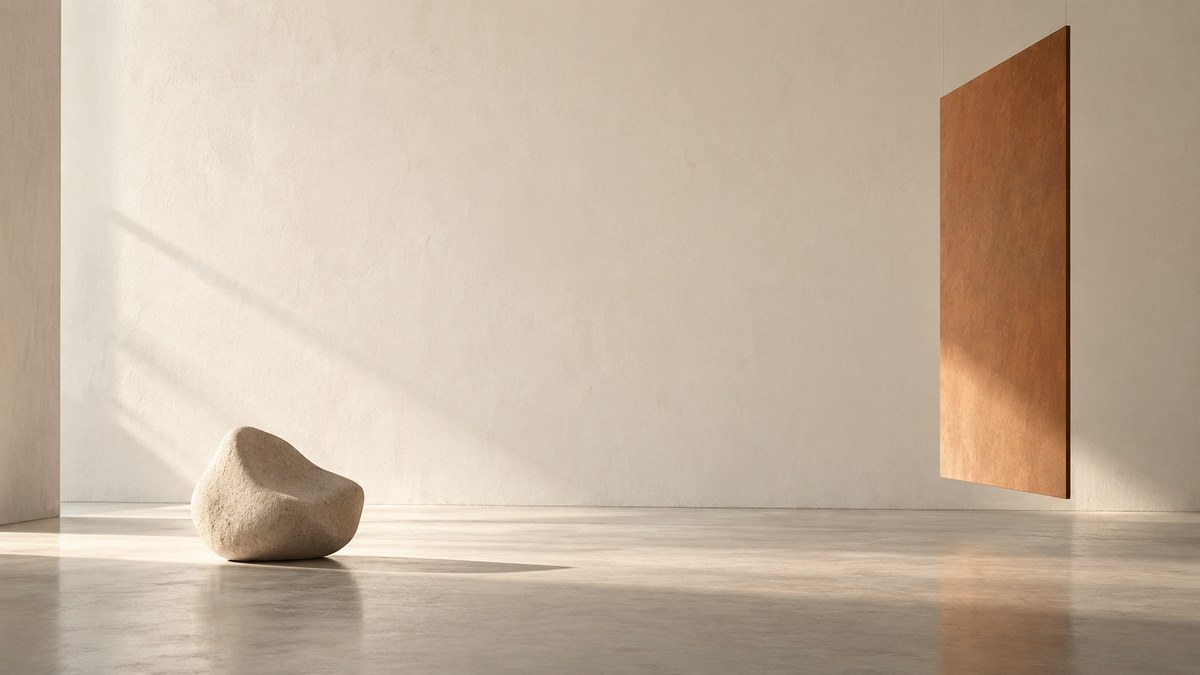
For a sculpture or ceramic piece, natural light from a window is ideal. It changes throughout the day and reveals different shadows. For a painting, consider a picture light mounted on the frame itself. That focused beam draws the eye exactly where you want it.
If you want to go deeper into this topic, the guide on the art of light and space in minimalist interior design offers practical ways to use lighting as a design tool. The same principles apply whether you are lighting a gallery or your living room.
A Simple Framework for Arranging Art in an Intentional Room
Once you have your piece, placement matters. Use this numbered checklist to get it right.
- Start with the floor. Place the artwork on the floor against the wall. Stand it up and live with it there for a day. This lets you test the scale without committing to a nail.
- Mark the center line. Measure the width of the wall. Find the center. That is where your art should sit unless you are creating an asymmetrical arrangement.
- Hang at eye level. For most people, that means the center of the artwork is 57 inches from the floor. This is the standard used by most museums.
- Consider the furniture below. If the art hangs above a sofa or console, leave 6 to 8 inches of space between the bottom of the frame and the top of the furniture.
- Let the art breathe. Do not crowd the piece with plants, lamps, or shelves. Give it at least 12 inches of empty wall space on all sides.
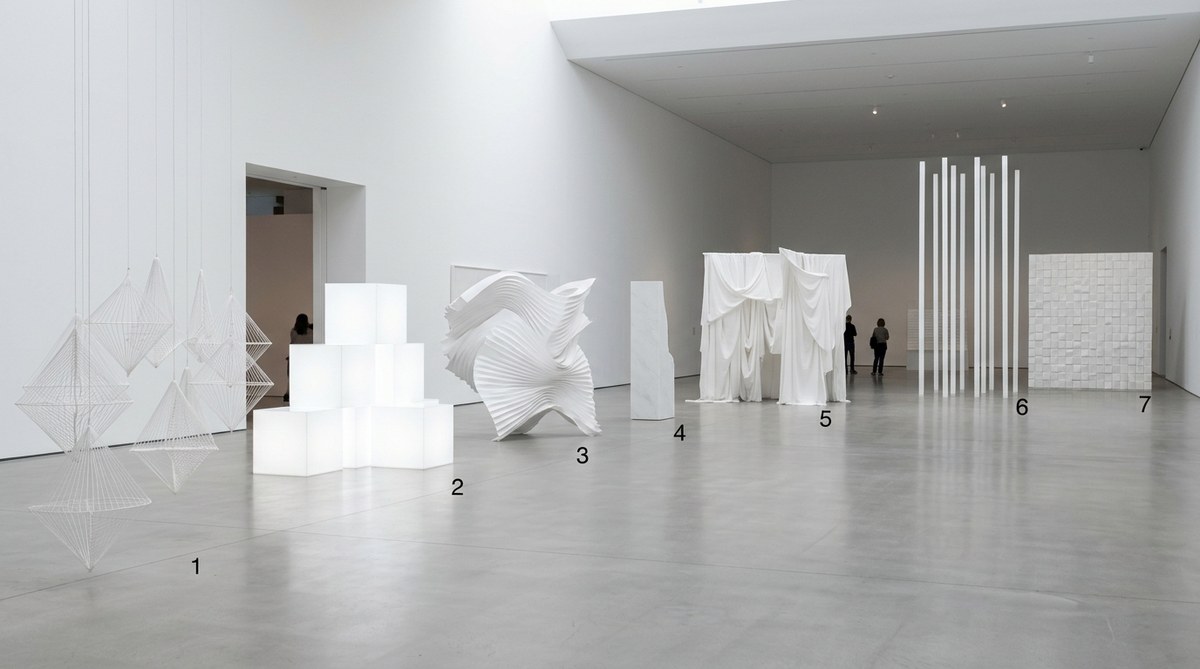
This framework works for any room. It is especially helpful when you are working with minimalist art installations that redefine spatial design. The principle is the same: give the piece room to exist on its own terms.
Why Negative Space in Your Room Matters as Much as the Art
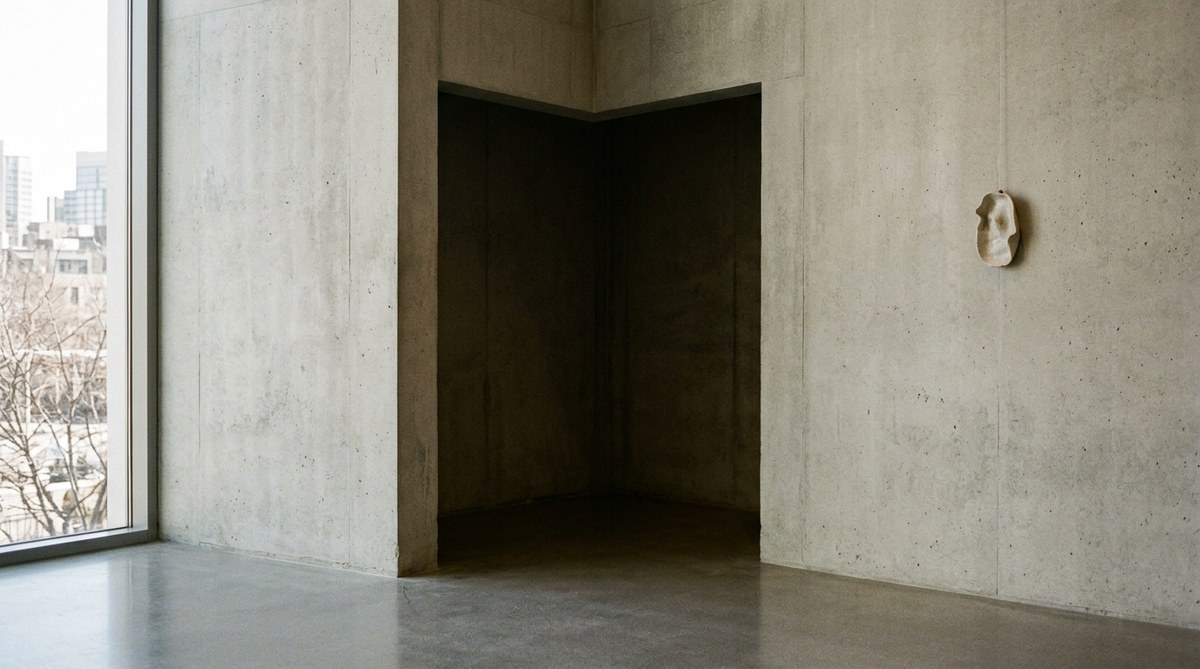
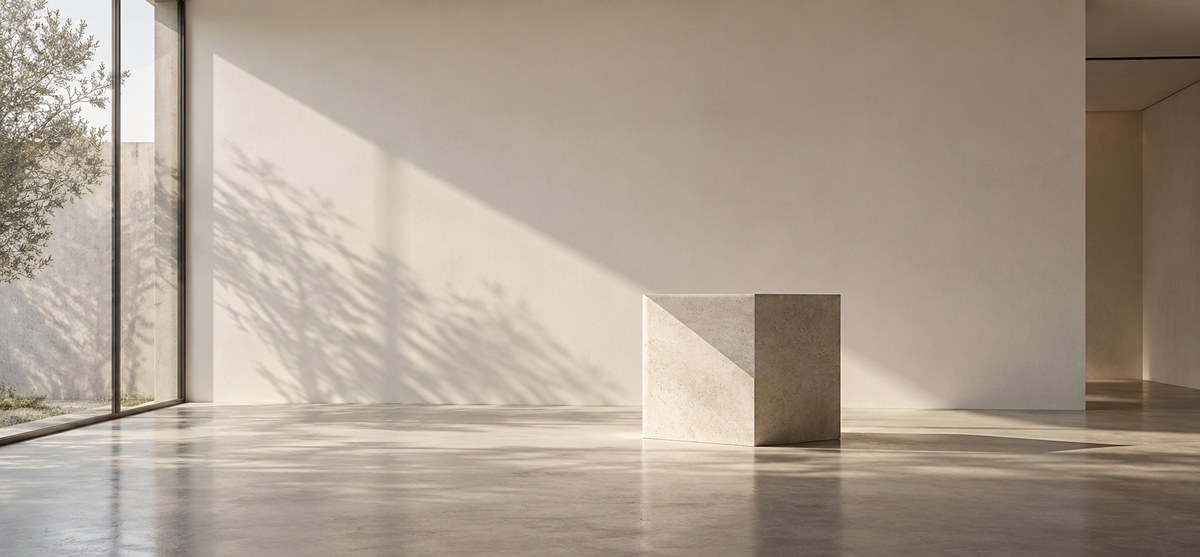
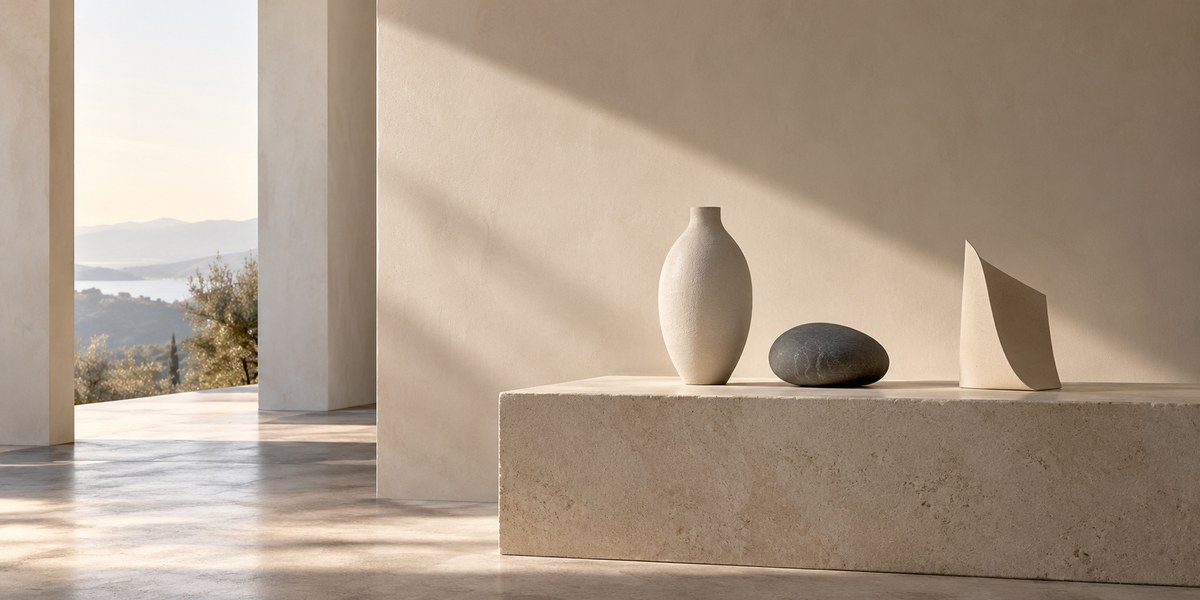
Minimalist art teaches us that what you leave out is just as important as what you put in. The same rule applies to your room. The empty wall space around a painting is not a mistake. It is part of the composition.
When you look at a room, your brain scans for patterns. If the room is packed with objects, the scan never stops. If the room has generous empty areas, the scan slows down. That slowdown is what creates the feeling of calm.
To practice this, try a simple exercise. Remove everything from one wall except one piece of art. Live with it for a week. You will notice that the room feels bigger and quieter. That is the power of negative space. It is not a lack of design. It is a deliberate choice.
For a deeper look at this idea, the article on discovering the power of negative space in minimalist art explains how empty areas create tension and release in a room.
How to Build a Collection Over Time
You do not need to buy everything at once. A thoughtful collection grows slowly. Start with one piece that you love. Live with it. Learn what it teaches you about your own taste.
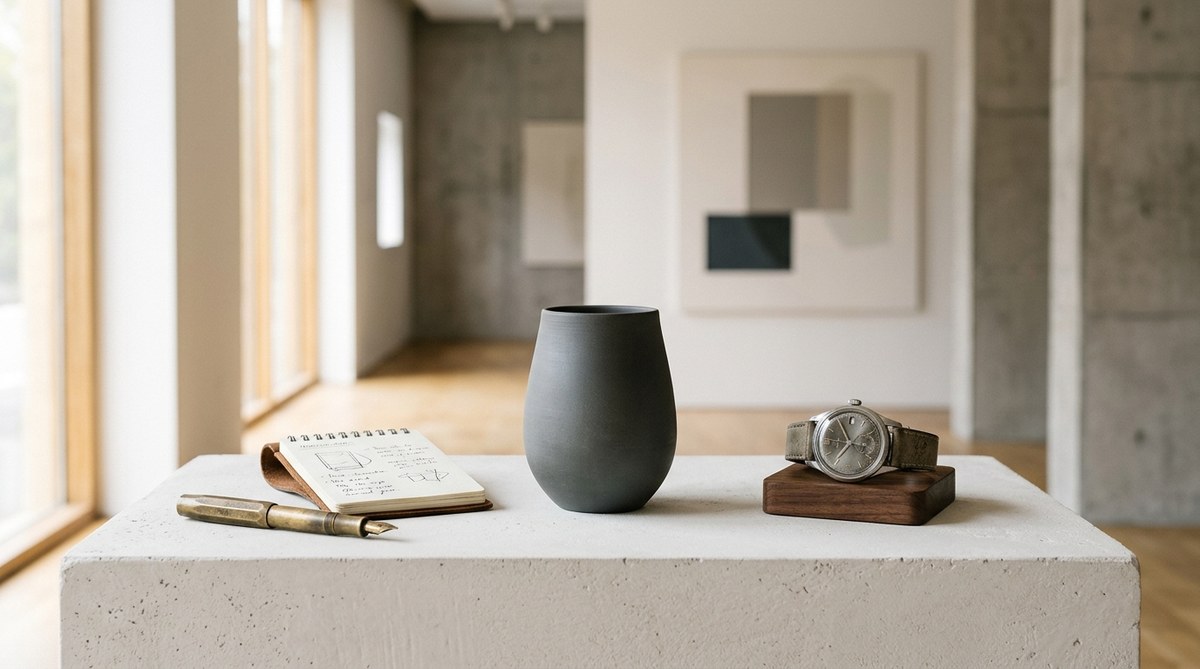
When you are ready for a second piece, look for something that shares a material or a color note with the first. Maybe both are ceramic. Maybe both use a matte black finish. The connection does not need to be obvious. It just needs to be there.
Avoid the urge to fill every wall. A collection of three pieces in a home is often more powerful than a collection of thirty. Each piece gets its own moment. Each piece matters.
If you want guidance on finding pieces that tell a story, the resource on how to build a minimalist art collection that tells a story without words is a helpful place to start.
The Emotional Effect of Minimalist Art in Daily Life
There is a reason so many people turn to minimalist art after a stressful period. The quietness of a single shape on a canvas can feel like a reset. When you walk into a room and see a large, calm piece of art, your shoulders drop. Your breathing slows.
That is not poetic exaggeration. It is a physiological response. Your nervous system reads visual clutter as a threat. It keeps you alert. Minimalist art removes that trigger. It tells your brain that the environment is safe. You can rest.
This is why minimalist art cultivates mindful living spaces. It is not just about looking good. It is about feeling good in your own home.
A Final Word on Making It Yours
The rules in this guide are starting points, not laws. If a piece of art speaks to you, trust that instinct. Minimalist art is not about perfection. It is about clarity. When you choose a piece that feels right, the room will follow.
Start with one room. Pick one wall. Find one piece that makes you want to sit down and stay a while. That is the whole practice. Everything else is just refinement.
For more inspiration, the collection of 7 essential principles of minimalist art spaces in 2026 offers a broader look at how this approach is shaping modern interiors. But remember, you do not need a full redesign. You just need one intentional choice.
Let the Art Lead the Way
You do not have to overhaul your entire home to feel the shift. Minimalist art works best when it is given space to breathe. So give it that space. Choose one piece. Hang it with care. Then step back and let the room quiet down around it. That is the moment when a house starts to feel like a home.

Leave a Reply