
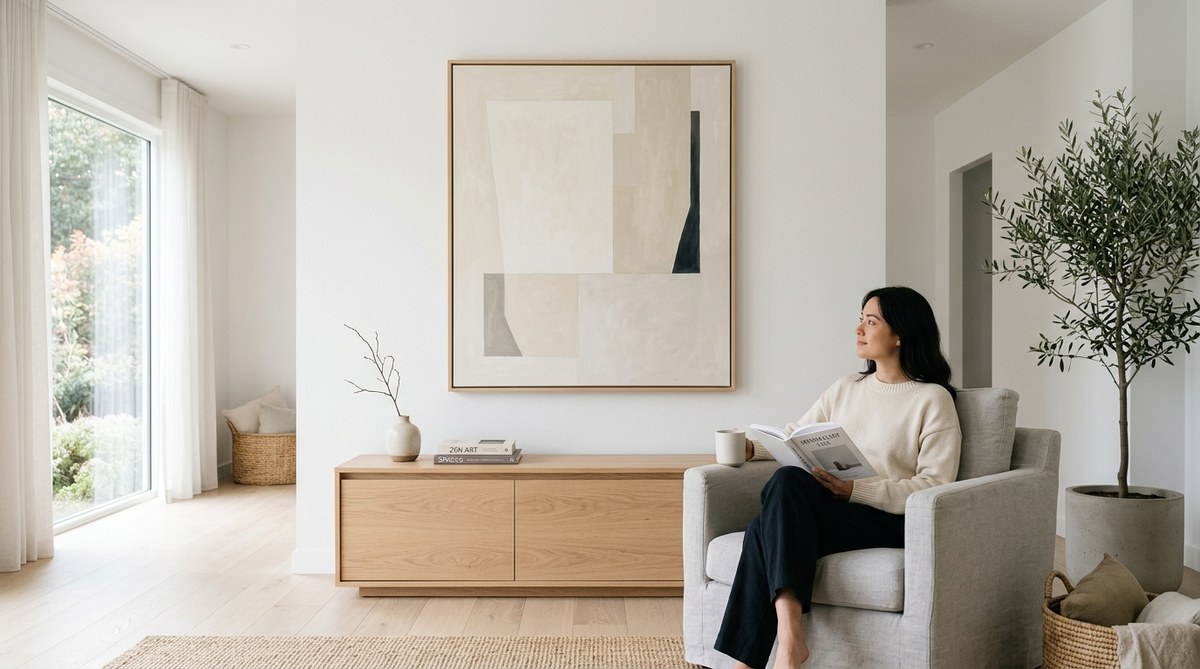
Your living room feels heavy. Your phone buzzes with notifications. Your brain hums with a low grade static that never seems to turn off. You are not alone. In 2026, the average American adult spends over six hours a day on screens, and our homes have become catch all spaces for stuff we do not need, tasks we do not want, and noise we did not ask for. Minimalist art offers a way out. It is not about owning nothing. It is about choosing what stays. And that choice, made visible on your walls and in your space, can directly reduce anxiety, sharpen focus, and give your nervous system a break.
Minimalist art benefits mental health by reducing visual clutter, lowering cognitive load, and creating predictable visual patterns that calm the nervous system. When you replace chaotic decor with simple forms, neutral palettes, and intentional negative space, your brain can rest. This article shows you how to use minimalist art to unclutter your home and your mind, even if you have never bought a piece of art before.
Why Your Brain Craves Visual Silence
Your brain processes visual information constantly. Every object in your line of sight demands a tiny bit of attention. A cluttered shelf, a patterned rug, a stack of mail on the counter. Each one is a micro distraction. Over time, these micro distractions add up to mental fatigue.
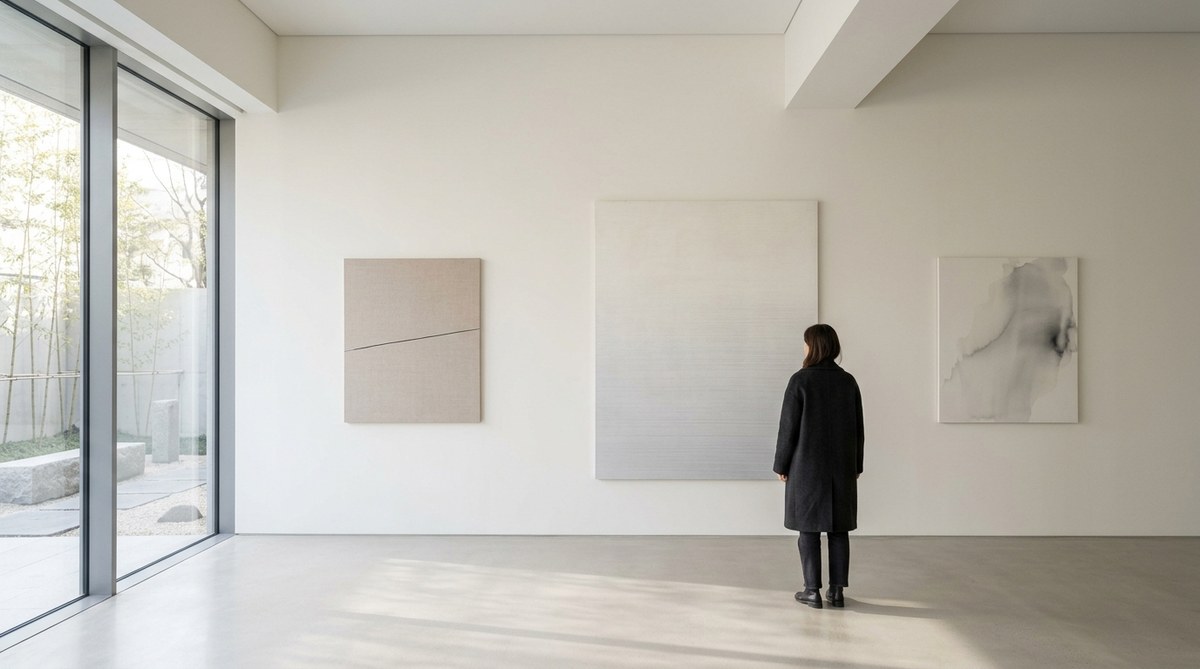
Minimalist art works because it removes the excess. A single black line on a white canvas. A soft gradient of beige to cream. A geometric shape placed exactly off center. These pieces do not ask your brain to work hard. They let your eyes rest.
Research in environmental psychology supports this. Spaces with fewer objects and simpler color palettes are associated with lower cortisol levels and improved mood. When you look at a minimalist painting, your brain does not need to figure out what it is seeing. It just receives the calm.
The Direct Link Between Minimalist Art and Anxiety Reduction
Anxiety often stems from overwhelm. Too many inputs. Too many decisions. Too much stuff. Minimalist art interrupts that cycle by offering a single focal point. It gives your mind something stable to hold onto.
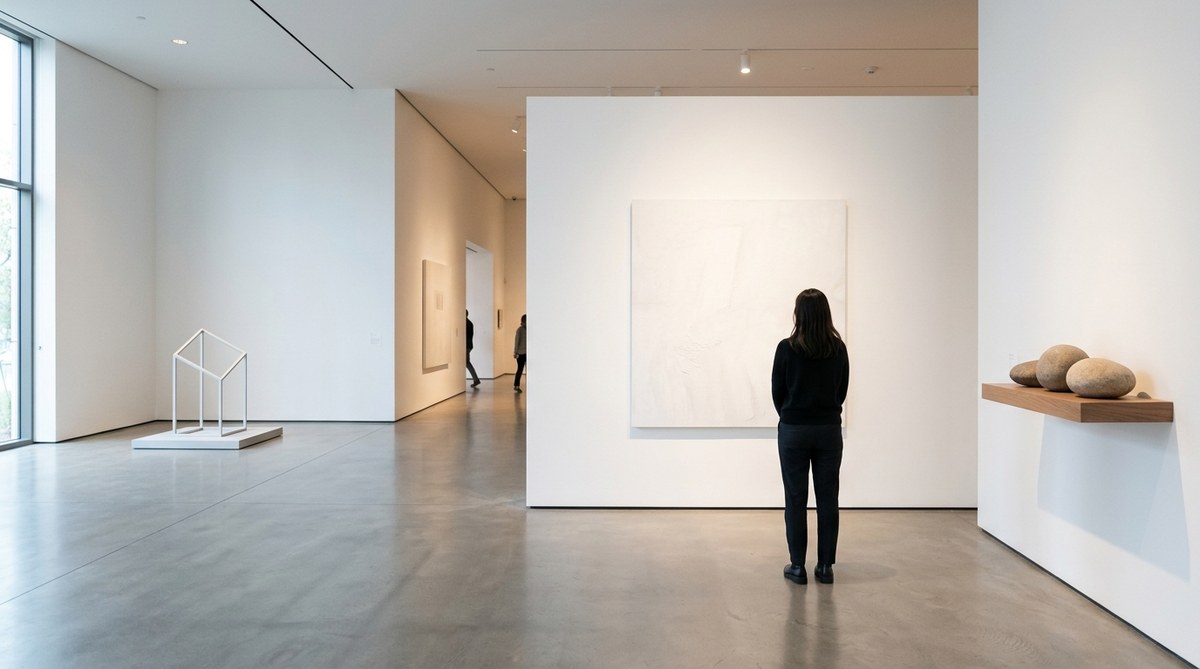
Consider the work of artists like Agnes Martin. Her grid paintings are barely there. Soft lines, pale colors, repetitive structure. Viewers often describe feeling a sense of peace when standing in front of them. That is not accidental. The repetition and simplicity create a predictable visual rhythm that your brain finds soothing.
When you bring that same principle into your home, you create a sanctuary. A place where your eyes can rest and your mind can follow. This is why so many therapists and wellness practitioners recommend minimalist art for home offices and bedrooms. It supports the mental shift from high alert to calm presence.
How to Choose Minimalist Art That Supports Your Mental Health
Not all minimalist art is created equal. Some pieces might feel cold or sterile. Others might resonate deeply. The key is to choose work that feels like a exhale.
Here is a simple process to find the right piece for your space:
-
Identify your stress triggers. Walk through your home and notice which rooms make you feel tense. Is it the kitchen with too many magnets on the fridge? The living room with a busy patterned sofa? The bedroom with a cluttered nightstand? Write down the top three spaces that feel overwhelming.
-
Define your visual calm. Look at images of minimalist art online. Notice which ones make you pause. Is it a soft wash of color? A stark black and white photograph? A single ceramic form on a shelf? Pay attention to your body. If your shoulders drop, that is the direction to go.
-
Match the art to the room function. For a home office, choose art with clean lines and muted tones. For a bedroom, look for warm neutrals and organic shapes. For a living room, a larger piece with generous negative space can anchor the whole space.
-
Start with one piece. You do not need to redecorate your entire home. Buy or print one piece of minimalist art. Hang it where you will see it most. Live with it for two weeks. Notice how it changes your experience of the room.
-
Edit the surrounding space. The art will only work if the area around it is also calm. Clear the surfaces near the art. Remove competing decor. Let the piece breathe.
“The job of the artist is to go against the tide of noise and find the signal. Minimalist art is not empty. It is full of intention.”
Adapted from a conversation with a gallery director at a 2026 minimalist art fair in Los Angeles.
Common Mistakes That Undermine the Calm
Even good intentions can backfire. Here are the most common mistakes people make when trying to use minimalist art for mental health, and how to avoid them.
| Mistake | Why It Hurts | Better Approach |
|---|---|---|
| Hanging art too high | Your neck strains to see it, creating tension | Hang at eye level (57 to 60 inches to center) |
| Choosing busy frames | The frame competes with the art | Use thin, neutral frames or no frame at all |
| Cluttering the wall around the art | The calm is lost in visual noise | Leave at least 6 inches of empty wall around the piece |
| Buying art that does not resonate | It feels like decoration, not intention | Only buy art that makes you feel something |
| Ignoring lighting | Bad lighting creates shadows and glare | Use soft, diffuse light to illuminate the piece |
A Practical Guide to Arranging Minimalist Art for Maximum Calm
The way you place art matters as much as the art itself. Proper arrangement reinforces the mental health benefits. Poor arrangement creates new distractions.
Follow these guidelines to get it right:
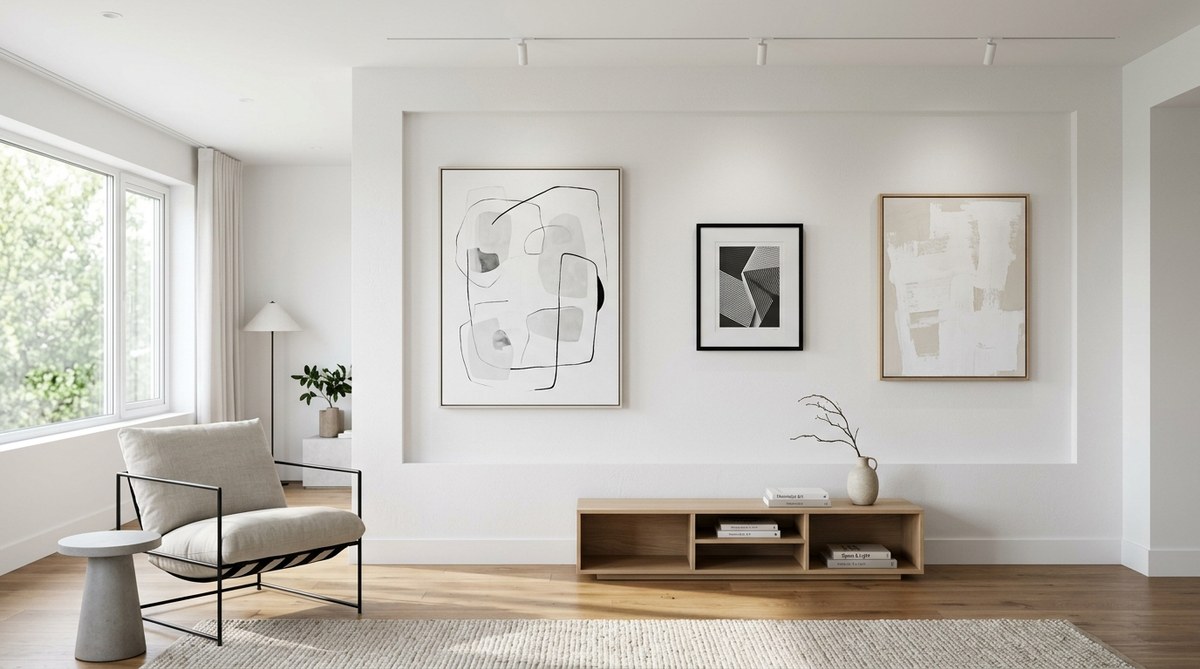
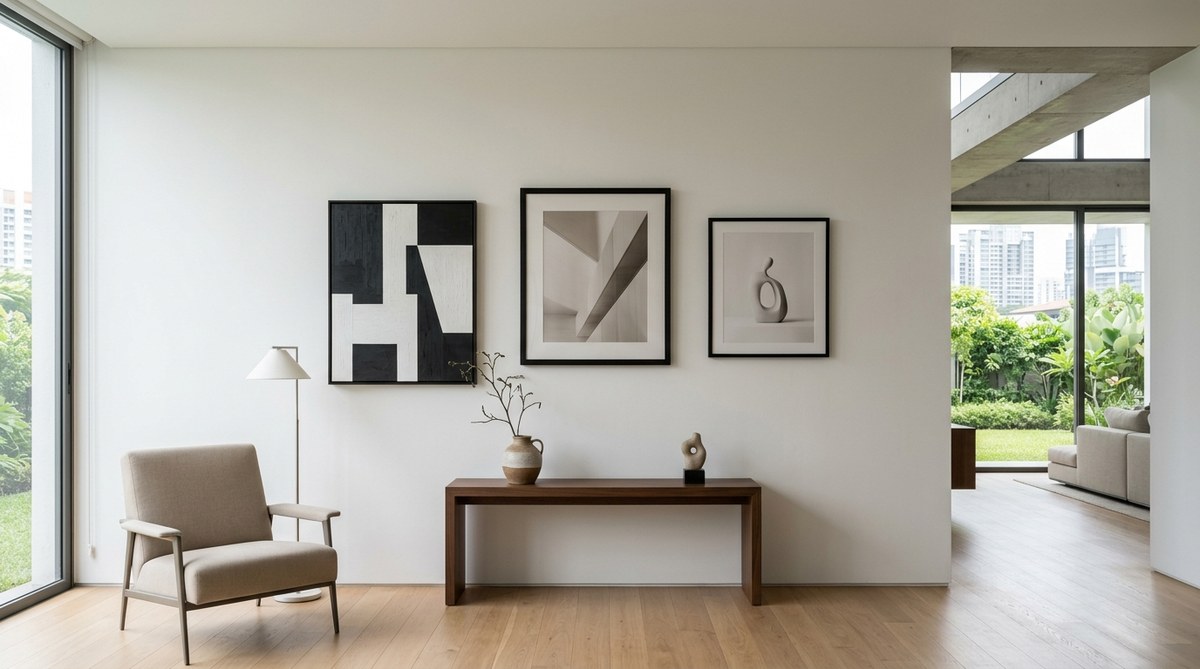
- Single focal point. One large piece on a blank wall is the most powerful arrangement for calm. It gives your eyes one place to land.
- Symmetry with space. If you hang two pieces, keep them aligned and leave generous space between them. Crowding two pieces together creates visual tension.
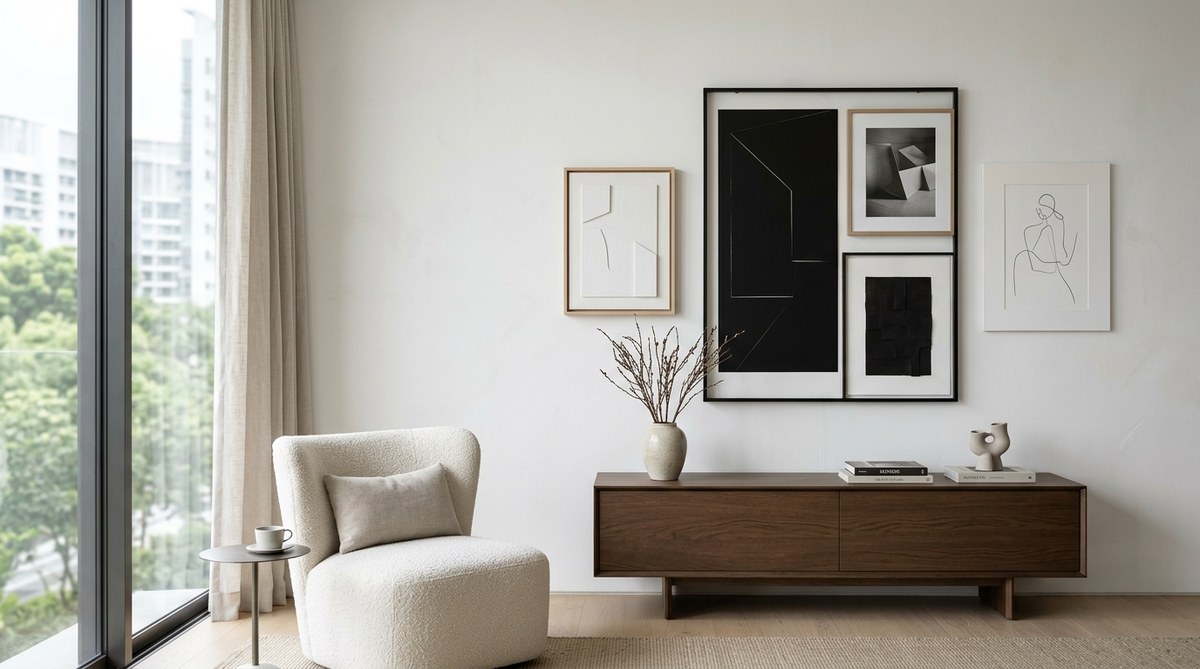
- Low furniture, high impact. Place art above a low console table or a simple sofa. The contrast between the low furniture and the art creates a sense of openness.
- Use negative space as part of the design. Do not fill every inch of wall. Let the wall itself become part of the composition.
For a deeper look at how layout affects your experience, read about mastering spatial harmony through minimalist art and design.
Why Minimalist Art Works Better Than Decluttering Alone
Decluttering helps. It clears physical space. But it does not always address the mental noise. You can have a tidy room and still feel anxious. Minimalist art adds something that decluttering cannot: a focal point for reflection.
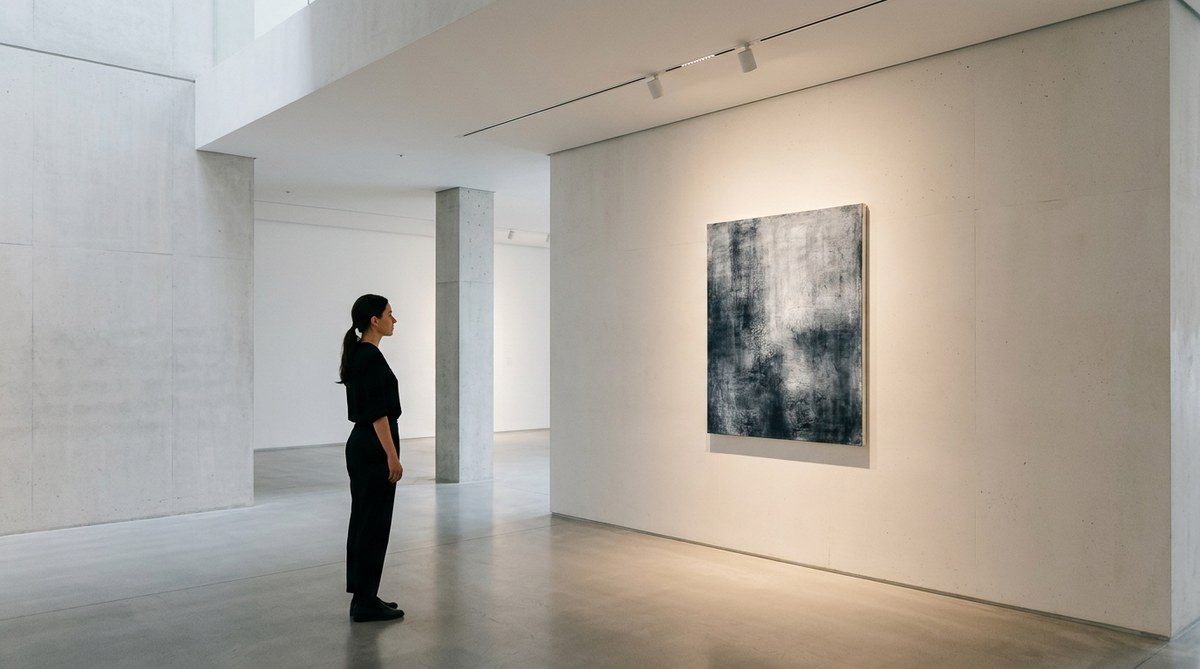
When you look at a minimalist piece, you are not just seeing a clean surface. You are engaging with form, light, and space. That engagement is active. It invites your mind to slow down and notice details. The subtle shift in color. The texture of the canvas. The way the light changes across the surface during the day.
This practice of slow looking is a form of mindfulness. It trains your brain to focus on one thing at a time. Over weeks and months, that training carries over into the rest of your life. You become less reactive. More patient. More able to sit with silence.
If you want to understand how this works on a deeper level, consider what minimalist art can teach us about intentional living.
How to Incorporate Minimalist Art Without Spending a Fortune
You do not need a gallery budget to get the mental health benefits of minimalist art. Here are five affordable ways to bring it into your home:
- Print your own. Download high resolution images of minimalist works from museum archives. Print them on matte paper and frame them simply.
- Shop local art fairs. Emerging artists often sell small minimalist works for under $100. Look for student shows or community galleries.
- Make your own. A single brushstroke on a large canvas can be a powerful piece. You do not need training. You just need intention.
- Use fabric. A piece of linen or cotton canvas stretched over a frame creates a soft, minimalist sculpture. No paint required.
- Swap seasonally. Rotate pieces to keep your space feeling fresh. This prevents visual boredom while maintaining the calm.
For a more curated approach, learn how to curate a minimalist art collection that reflects your aesthetic.
The Role of Light and Space in Mental Clarity
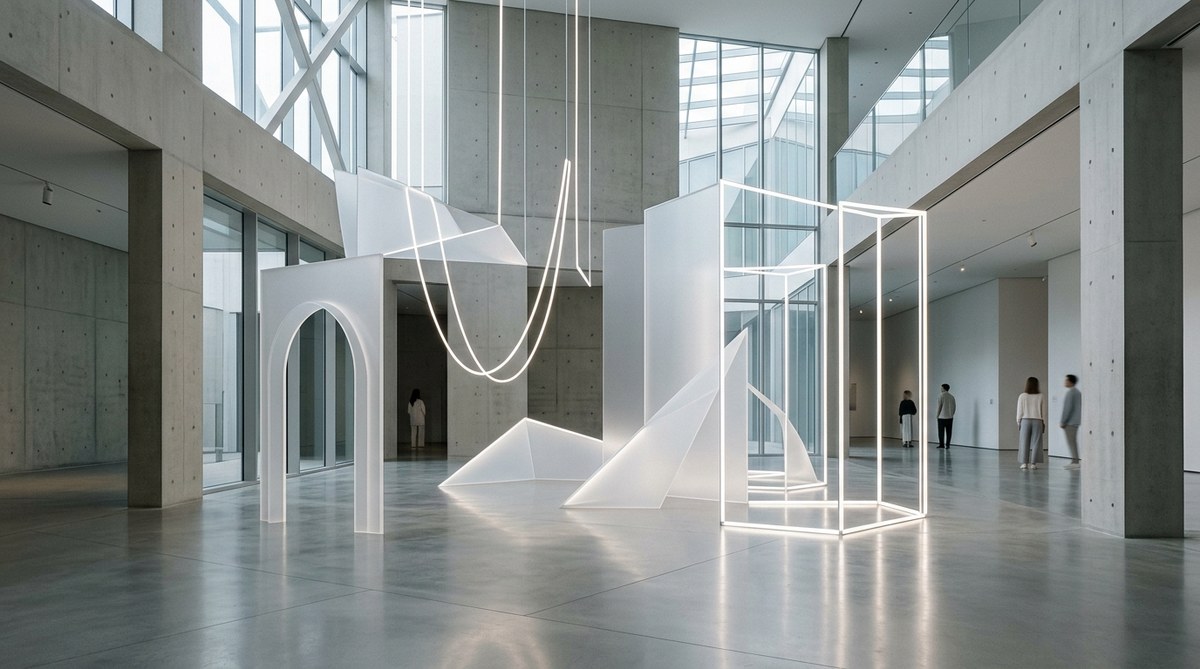
Minimalist art does not exist in a vacuum. It interacts with the light and space around it. Getting that interaction right amplifies the mental health benefits.
Natural light is ideal. Place your art where it catches morning or late afternoon sun. The changing light keeps the piece dynamic without being distracting. If you do not have natural light, use a warm LED spotlight aimed at the art. Avoid overhead fluorescent lights. They create harsh shadows and wash out color.
Space is just as important. A minimalist piece needs room to breathe. Do not crowd it with plants, books, or decorative objects. Let the wall be empty. Let the art be the only thing in your field of view.
For more on this relationship, check out the art of light and space in minimalist interior design.
A Simple Weekly Practice to Deepen the Benefits
Art is not passive. It works best when you engage with it. Here is a five minute weekly practice to strengthen the connection between minimalist art and your mental health:
- Stand or sit in front of your chosen piece.
- Take three slow breaths.
- Notice one thing you did not see before. A texture. A shadow. A variation in color.
- Stay with that observation for thirty seconds.
- Let your thoughts drift. Do not try to control them.
- After two minutes, close your eyes and carry the image with you.
This practice trains your brain to slow down. It also deepens your relationship with the art. Over time, the piece becomes a anchor for calm, not just decoration.
When Minimalist Art Feels Too Sparse
Some people worry that minimalist art will make their home feel cold or empty. That is a valid concern. But minimalism does not mean sterile. It means intentional.
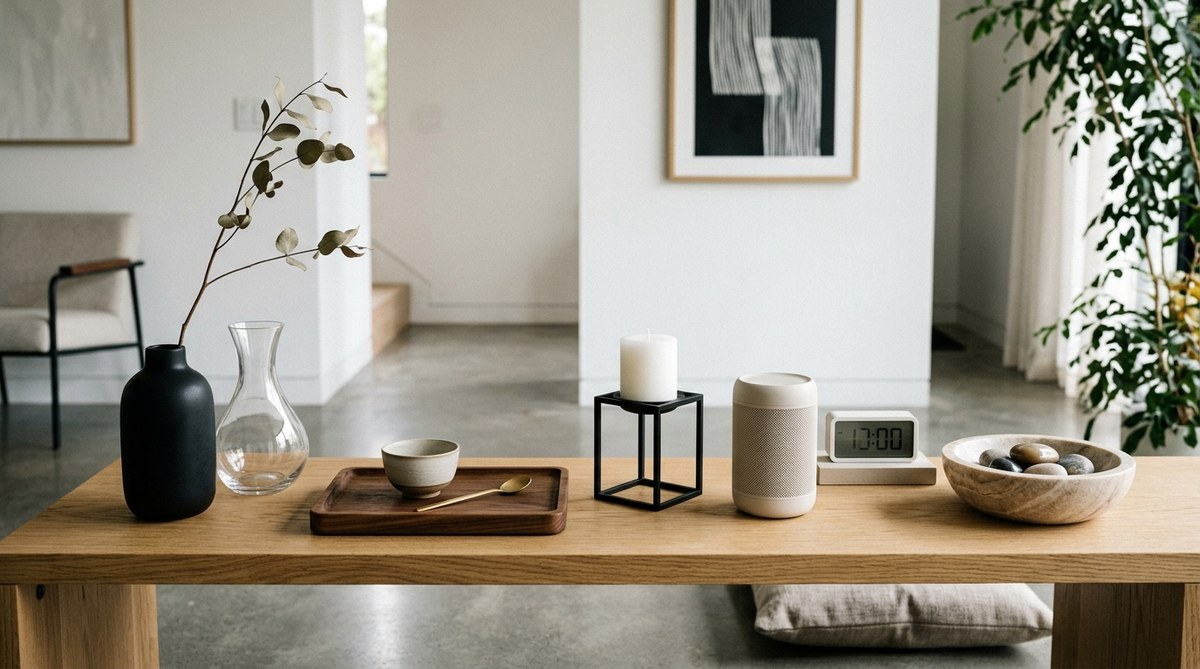
If you are worried about warmth, choose art with organic shapes. Soft curves. Warm earth tones. A piece of driftwood mounted on a white wall. A ceramic bowl with a single glaze. These objects feel alive without being noisy.
You can also layer textures. A linen canvas next to a wool throw. A smooth stone sculpture on a rough wood shelf. The contrast adds depth while keeping the visual field calm.
For more ideas, look at the impact of object simplicity on modern art installations.
The Long Term Mental Health Shift
The benefits of minimalist art are not instant. They compound over time. The first week, you might notice that your eyes feel less tired. The second week, you might catch yourself taking deeper breaths in your living room. By the third month, you might realize that you are less reactive to small stressors.
This happens because your environment shapes your nervous system. When you surround yourself with visual calm, your body learns to expect calm. The art becomes a cue. Every time you see it, your brain gets a small signal: you are safe. You can rest.
This is the real power of minimalist art. It is not a trend. It is a tool for long term mental health.
Your Next Step Toward a Calmer Home and Mind
You do not need to overhaul your entire life. You just need one piece. One wall. One moment of stillness.
Start small. Choose a piece that speaks to you. Hang it where you will see it every day. Clear the space around it. Let it be quiet.
Then pay attention to how you feel. Notice the shift. It might be subtle at first. But it will be real.
Minimalist art benefits mental health not because it is beautiful, but because it is honest. It shows you what is essential. And in a world that keeps demanding more, that honesty is a gift.
If you are ready to go deeper, read about why minimalist art is the antidote to digital clutter. It might change how you think about everything else in your home.

Leave a Reply