
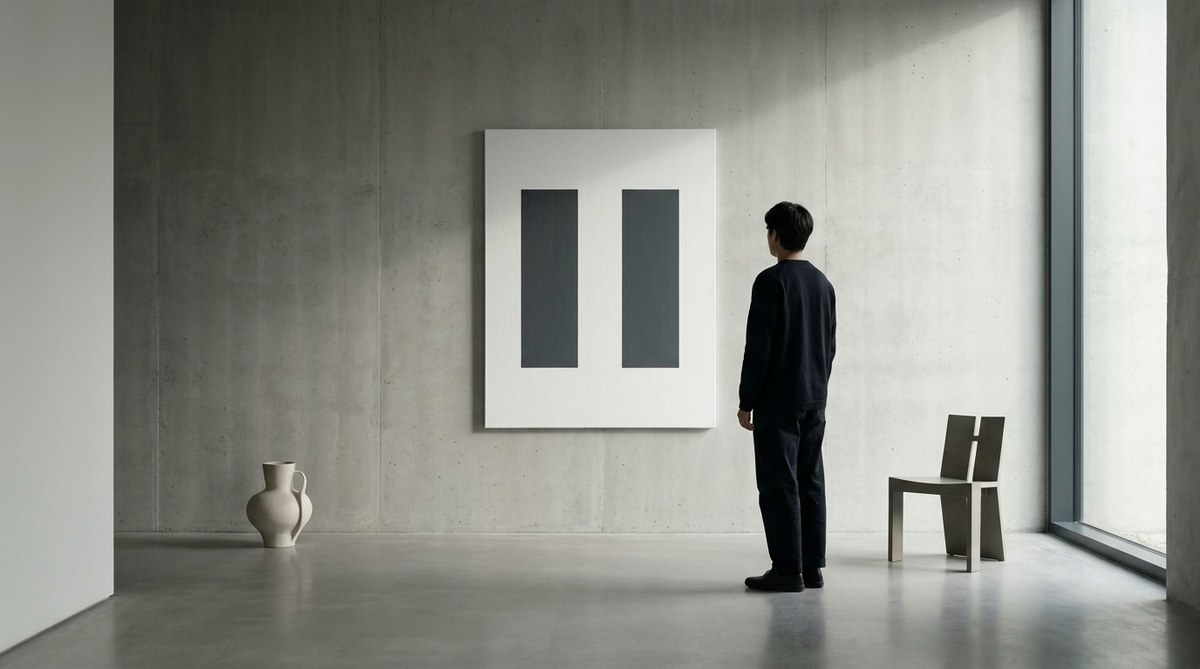
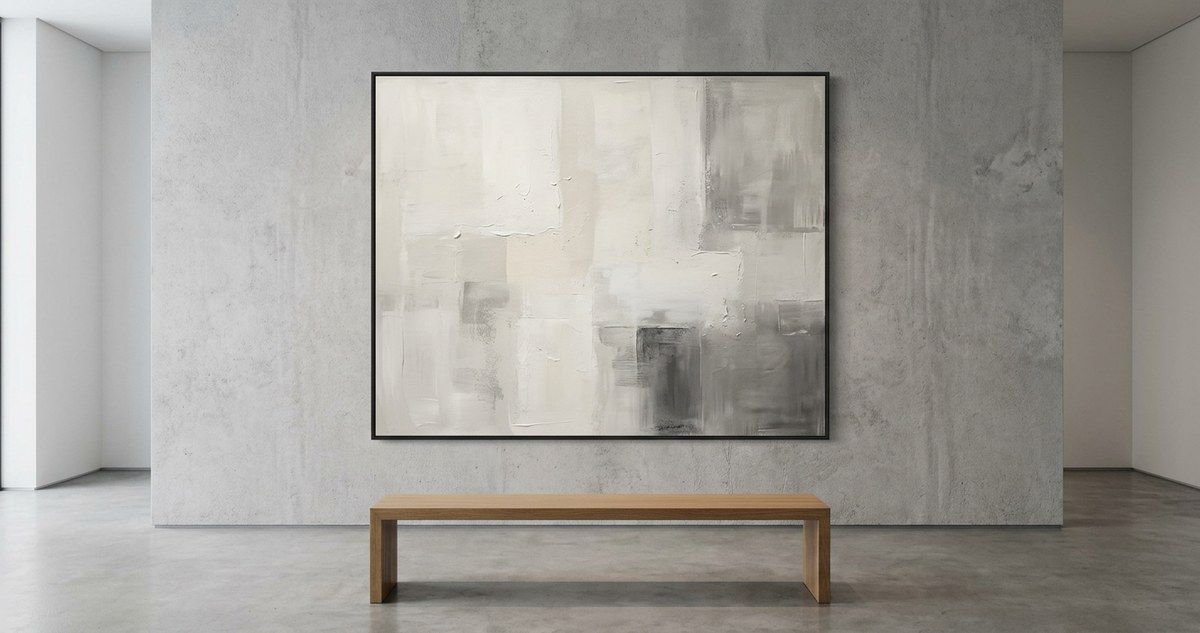
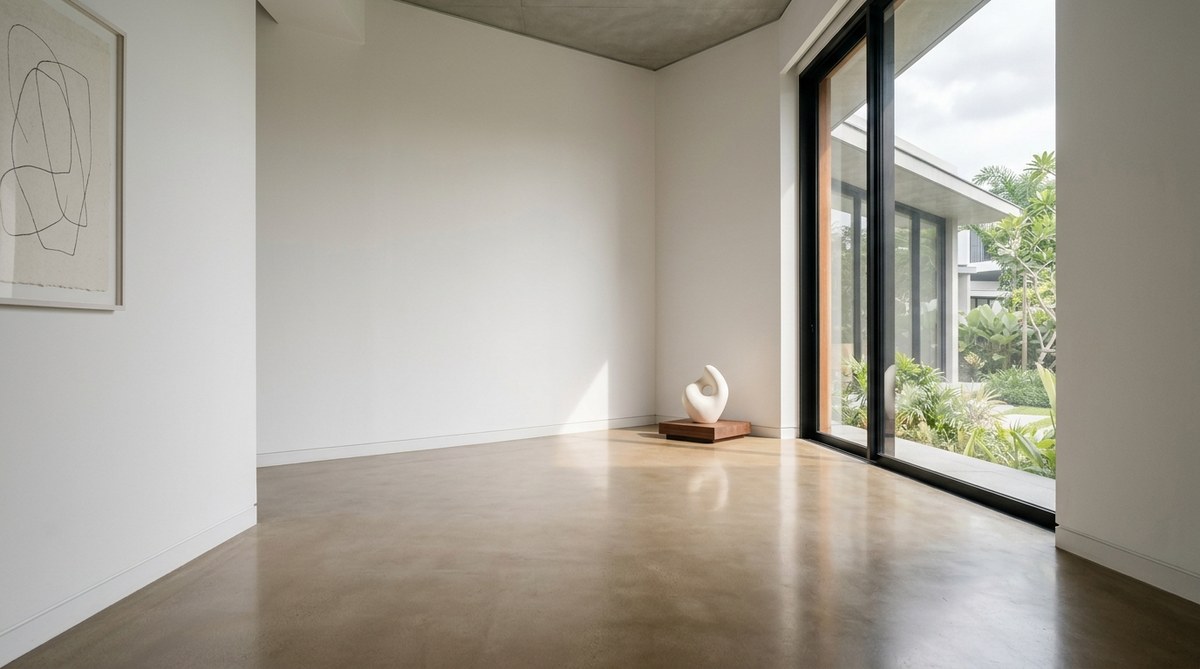
A white canvas with a single black line. A concrete room lit by one window. A sculpture made of nothing but air and light. At first glance, minimalist art looks like it is holding back. But look closer and you will see it is doing something far more radical. It is making room. Every choice to leave something out is actually a choice to let something else in. That quiet discipline is exactly what intentional living asks of us. The same principles that guide a minimalist painter or sculptor can guide how we shape our homes, our schedules, and our attention.
Minimalist art is not about emptiness. It is about clarity. By studying how artists use negative space, limit their palette, and reduce forms to their essence, we can learn to edit our own lives with the same precision. This article shows you how to apply those artistic principles to your daily routines, your possessions, and your focus so you can live with more purpose and less noise.
The Art of Leaving Things Out
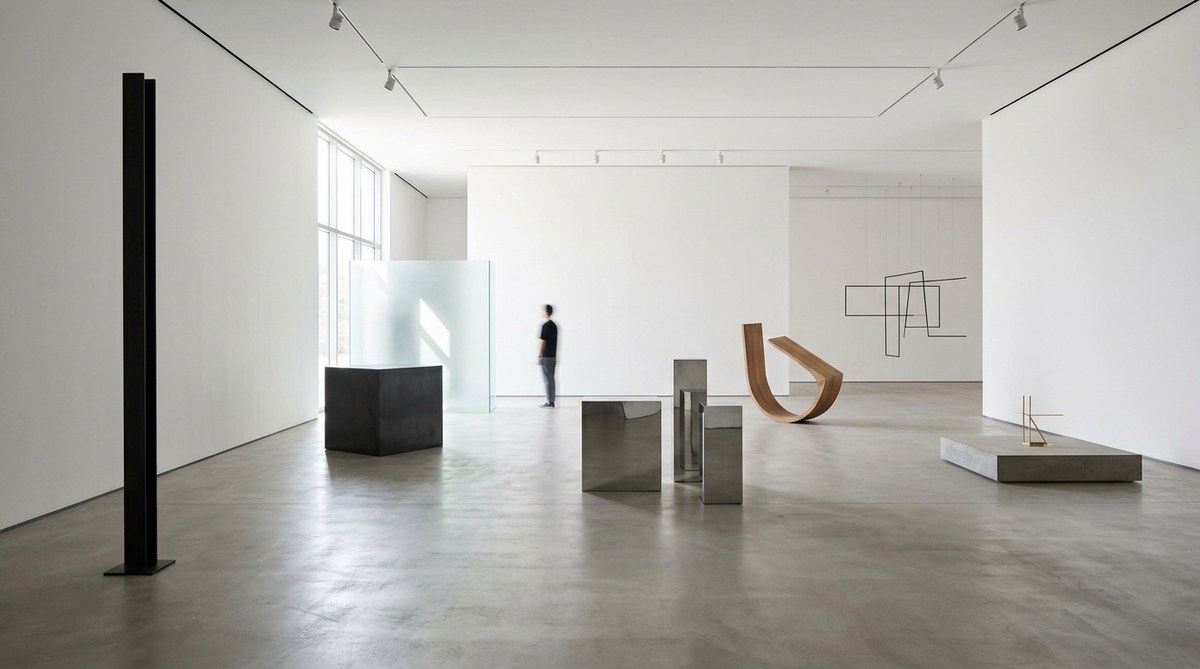
Minimalist artists like Donald Judd, Agnes Martin, and Yayoi Kusama understood something that most of us forget. What you remove matters as much as what you keep. When Judd placed a series of identical metal boxes on a gallery floor, he was not being lazy. He was asking the viewer to notice the space between the boxes, the light hitting the metal, the way the room itself became part of the artwork.
That same logic works in life. Every object you do not buy, every commitment you decline, every notification you silence creates space for something more important. The discipline of omission is not about deprivation. It is about priority.
If you want to see this principle in action, spend time studying how artists handle their materials. Read about the impact of object simplicity on modern art installations and notice how much power comes from restraint.
Negative Space as a Life Skill
Negative space is the empty area around and between the subjects of an artwork. In a painting, it might be the sky around a bird or the blank wall behind a figure. In life, negative space is the margin you leave between activities. It is the five minutes of silence after a meeting. It is the empty shelf on your bookcase. It is the unscheduled Saturday.
Most people fill every inch of their lives with something. They treat empty space as an enemy. Minimalist art teaches us that negative space is not wasted. It is functional. It gives the eye a place to rest. It makes the positive elements stand out.
Here are a few ways to build negative space into your daily life:
- Leave buffer time between appointments instead of back to back scheduling.
- Keep one shelf or drawer completely empty at home.
- Spend ten minutes each morning with no phone, no book, no input.
- Say no to one invitation this week so you have a quiet evening.
- Let a conversation have moments of silence instead of rushing to fill it.
When you treat empty space as a feature rather than a flaw, your life starts to breathe. You can discover the power of negative space in minimalist art to see how artists have used this principle for decades.
Reduction to Essentials
A minimalist artist starts with a complex world and strips it down to its core. A landscape becomes a horizontal line. A face becomes a single curve. The goal is not to lose meaning but to concentrate it.
This process is called reduction to essentials. It is the heart of both minimalist art and intentional living.
To practice this in your own life, try this three step process:
-
Inventory everything. List your belongings, your commitments, your digital subscriptions, your daily activities. Write it all down without judgment.
-
Ask what each item does. For every object or obligation, answer one question: does this serve a real purpose or bring genuine satisfaction? Be honest. A sweater you have not worn in three years probably does neither.
-
Remove what fails the test. Take action on the items that do not serve you. Donate the sweater. Cancel the subscription. Decline the meeting. Let the essential remain.
This is not about living with the absolute minimum. It is about living with only what matters. Artists do not use one brushstroke when they can say everything with one brushstroke. You do not need one object when you can feel whole with one object.
“Simplicity is about subtracting the obvious and adding the meaningful.” That idea, often attributed to the architect John Pawson, captures the spirit of reduction. It is not about having less for the sake of less. It is about making sure what remains actually counts.
Palette Restriction and Decision Fatigue
Minimalist painters often limit their color palette to two or three hues. By doing this, they remove the burden of endless choice. They can focus on composition, texture, and emotion instead of worrying about which red to use.
You can apply the same idea to your wardrobe, your kitchen, and your schedule. When you limit your options, you free your mind for better decisions.
| Area of Life | Common Mistake (Too Many Choices) | Minimalist Fix (Restricted Palette) |
|---|---|---|
| Wardrobe | Owning 50 shirts you rarely wear | Keeping 10 shirts you love and wear often |
| Meals | Deciding what to cook every night from scratch | A weekly rotation of 5 simple meals you enjoy |
| Digital tools | Using 15 apps for notes, tasks, and calendar | One reliable system for everything |
| Decor | Filling every wall with art and furniture | Choosing a few meaningful pieces with space around them |
| Social commitments | Saying yes to every event | Protecting your evenings with a personal rule |
The fix is not about being rigid. It is about being deliberate. When you restrict your palette, you give yourself permission to stop deciding and start living. You can master spatial harmony through minimalist art and design to see how these principles translate into physical spaces.
How Minimalist Art Cultivates Mindful Living Spaces
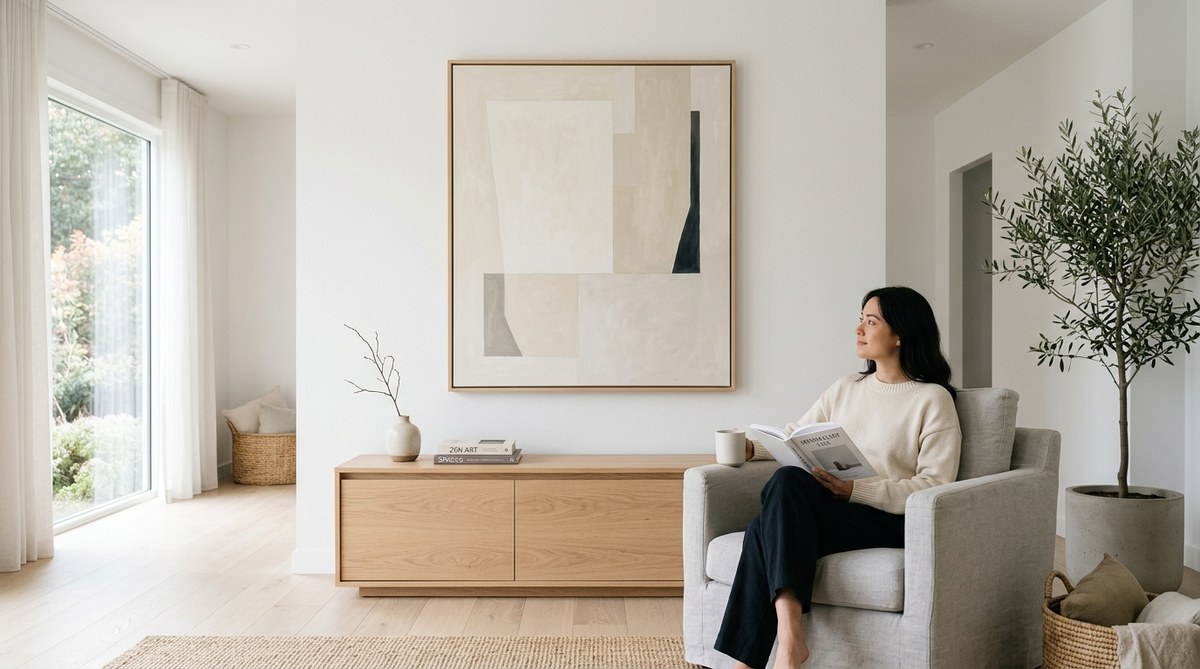
Minimalist art does not shout. It whispers. It asks you to slow down and pay attention. A room designed with minimalist principles does the same thing. It does not demand your attention. It invites your presence.
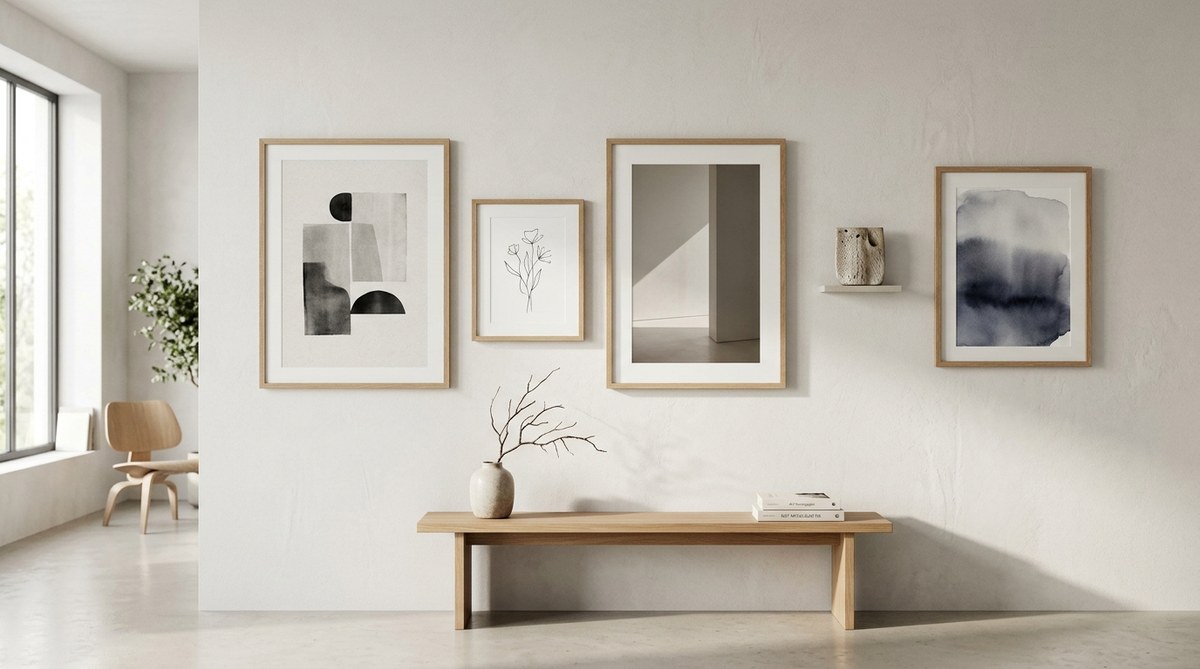
Think about the last time you walked into a cluttered room. Your eyes darted from one object to the next. You felt restless without knowing why. Now think about a room with one good chair, a lamp, and a painting on the wall. You probably felt your shoulders drop. You wanted to sit down.
That is the effect of intentional design. When every object in a room has a reason for being there, the room becomes a sanctuary. You can learn how minimalist art cultivates mindful living spaces to understand this connection more deeply.
The Table of Intentional Living
Here is a simple table that maps minimalist art techniques to everyday habits. Use it as a reference when you feel your life getting cluttered.
| Art Technique | What It Does in Art | How to Apply It in Life |
|---|---|---|
| Negative space | Creates breathing room around the subject | Leave empty time in your calendar |
| Reduction to essentials | Removes details that distract from the core message | Declutter your home room by room |
| Limited palette | Reduces color choices to create harmony | Simplify your wardrobe to a few colors |
| Repetition of form | Builds rhythm and calm through repeated shapes | Create morning and evening routines |
| Focus on materials | Lets the texture and quality of materials speak | Buy fewer things, but choose better quality |
Each row gives you a practical move. You do not need to overhaul your whole life at once. Pick one technique and try it for a week.
Repetition, Rhythm, and Daily Rituals
Minimalist artists often use repetition. Think of Agnes Martin’s grids or Donald Judd’s stacks of boxes. Repeating a simple form creates a rhythm that feels calm and orderly. It does not feel boring. It feels grounded.
Your life can benefit from the same kind of rhythm. When you repeat a simple action each day, you stop wasting energy on decisions. You build a container for your attention.
A few examples:
- Drink a glass of water at the same time each morning.
- Walk the same route around your neighborhood after dinner.
- Write three sentences in a journal before bed.
- Listen to the same album while you make breakfast.
These small repetitions are not about monotony. They are about creating a structure that supports your focus. When the small things are automated, your mind is free for the big things.
Focus on Materials and Quality Over Quantity
A minimalist sculptor cares deeply about the material. The wood grain, the metal finish, the way light passes through glass. When you work with fewer elements, each one matters more.
Apply this to your spending. Instead of buying ten cheap items that wear out, buy one well made item that lasts. Instead of scrolling through hundreds of songs, listen to one album all the way through. Instead of following fifty social media accounts, follow five that actually teach you something.
This shift from quantity to quality changes how you relate to your possessions. You start to value what you own. You take care of it. You use it fully.
If you want to explore how minimalist art transforms contemporary space through light and form, you will see how much power comes from focusing on a single material or a single ray of light.
How Minimalist Art Helps You Say No
One of the hardest parts of intentional living is saying no. We say yes to social plans, work projects, and new purchases because we do not want to miss out. But every yes is also a no to something else. Minimalist art makes this trade off visible.
When an artist chooses to paint only one line, they are saying no to the rest of the canvas. They are okay with what they left out. That clarity is what we need in our own lives.
Here is a list of things you have permission to say no to:
- Meetings that could be an email.
- Social events you dread attending.
- Clothes that do not fit or flatter.
- Apps that distract more than they help.
- News feeds that make you anxious.
- Hobbies you started but no longer enjoy.
- Relationships that drain your energy.
Each no clears a path for a more meaningful yes.
The Artist’s Discipline Applied to Your Day
Intentional living is not a one time purge. It is an ongoing practice. Minimalist artists do not make one simple painting and stop. They keep working. They keep editing. They keep refining.
You can treat your life the same way. Set aside one hour each month to review your commitments, your spaces, and your habits. Ask yourself what still serves you. Remove what does not.
This monthly review is the equivalent of an artist stepping back from the canvas. It gives you perspective. It keeps you honest.
To make this easier, start with the 7 essential principles of minimalist art spaces in 2026 and use them as a checklist for your own environment.
Living With Intention Is an Art Form
Minimalist art has been around for decades, but its lessons are more urgent than ever. We live in a world that constantly asks for more. More stuff, more information, more speed. Minimalist art points in the other direction. It says that less is not a loss. Less is a clarification.
When you apply the principles of minimalist art to your life, you stop reacting and start choosing. You stop accumulating and start curating. You stop filling every moment and start savoring the ones that count.
You do not need to live in a white room with one chair. You do not need to own ten things. What you need is to ask yourself, in every area of your life, what truly belongs. Then leave the rest out.
Start small. Edit one shelf this weekend. Leave ten minutes empty in your schedule tomorrow. Choose one commitment to let go of. Each small edit is a brushstroke in the larger composition of your life.
The canvas of your life is waiting. What will you choose to put on it?

Leave a Reply