
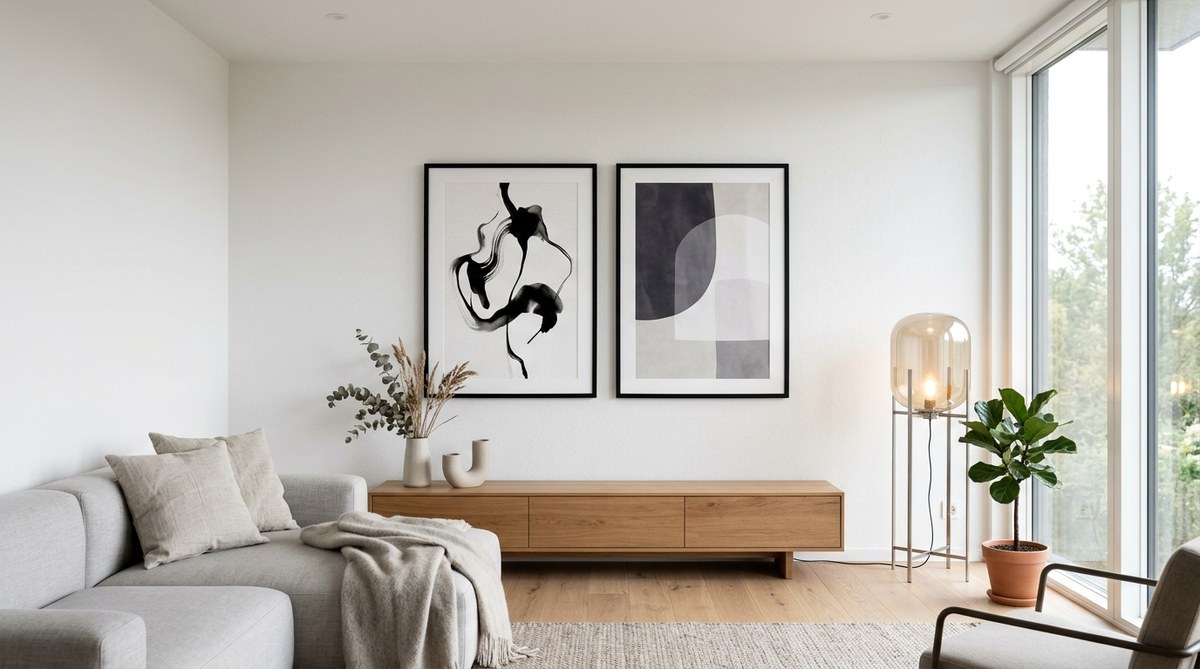
A home filled with too much stuff can feel heavy. But a space with just the right pieces? It breathes. Minimalist art and light decor ideas are not about having nothing. They are about choosing everything with intention. The right artwork paired with precise lighting can turn a plain room into a personal sanctuary. It makes your home feel larger, calmer, and more like you.
The core of minimalist design is intentionality. Art and light work together to shape mood and space. Start by choosing art that speaks to you through texture or form, not just color. Then layer your lighting: ambient for overall glow, task for function, and accent to make your art stand out. This guide walks you through the exact steps to balance these elements for a serene, stylish home.
Why Art and Light Define Minimalist Spaces
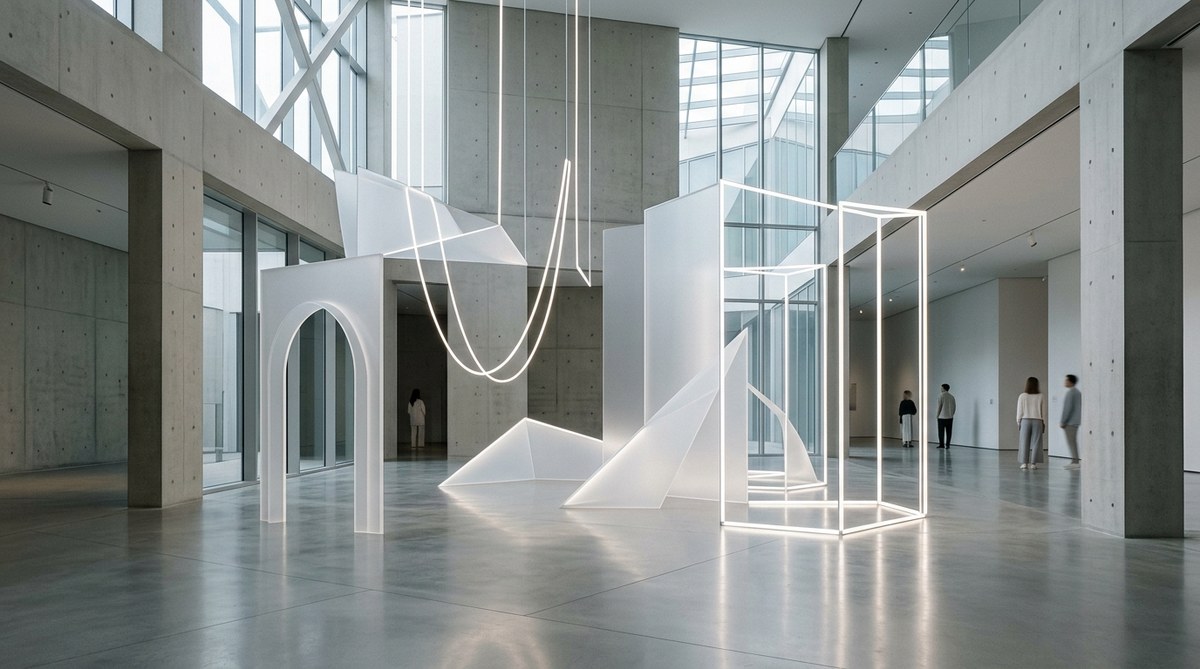
Think of light as the invisible paintbrush. Without it, even the most striking abstract canvas falls flat. In a minimalist home, every object carries weight. The interplay between a sculptural light fixture and a monochrome painting creates a dialogue. It adds depth without clutter.
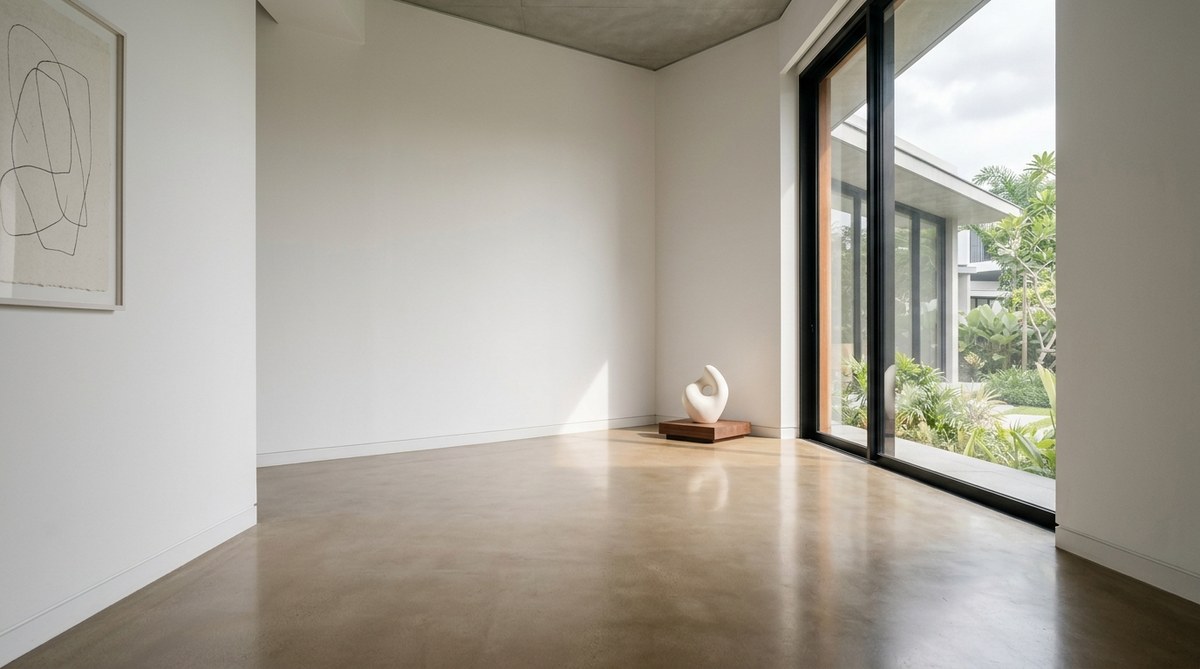
Minimalism borrows from the Japanese concept of Ma, which means the space between objects. That negative space is not empty. It is a design tool. Light can create Ma. A shadow cast by a paper lampshade is just as important as the lamp itself. When you add a piece of art to that scene, the light dictates how you feel about it. A softly lit canvas feels intimate. A brightly lit one feels bold.
Before you buy anything new, stand in your room at different times of day. Watch where the sun falls. That natural path is your starting point for placing art. For a deeper look at how emptiness shapes a room, read our guide on the power of negative space in minimalist art.
A 4-Step Process to Choosing Minimalist Art
Choosing art for a minimalist room takes a different strategy than decorating a traditional space. You are not filling a wall. You are anchoring a room. Follow these four steps.
-
Define your color compass. Stick to a restrained palette. Whites, grays, charcoal, and warm earth tones work well. If you want a pop of color, choose one accent hue, like muted terracotta or slate blue. Too many colors in the art will fight with the simplicity of the room.
-
Look for texture over chaos. Minimalism can feel cold if everything is flat. A piece of woven fiber art or a heavily textured oil painting adds sensory richness without visual noise. The texture invites you to come closer. It gives the room a human feel.
-
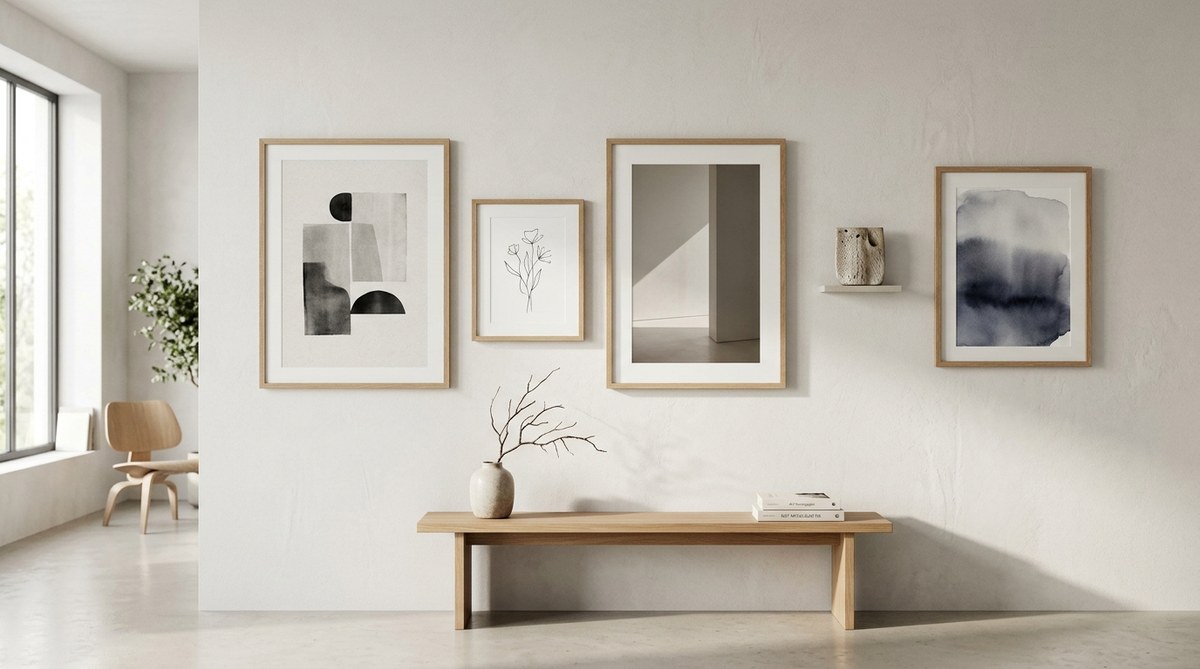
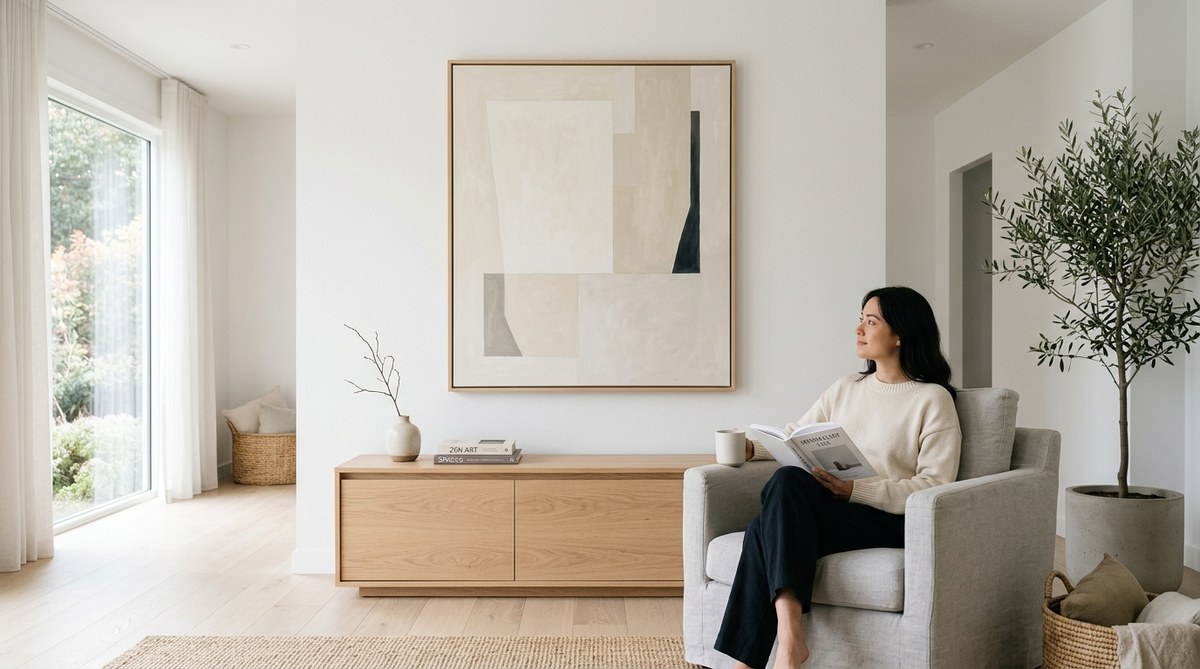
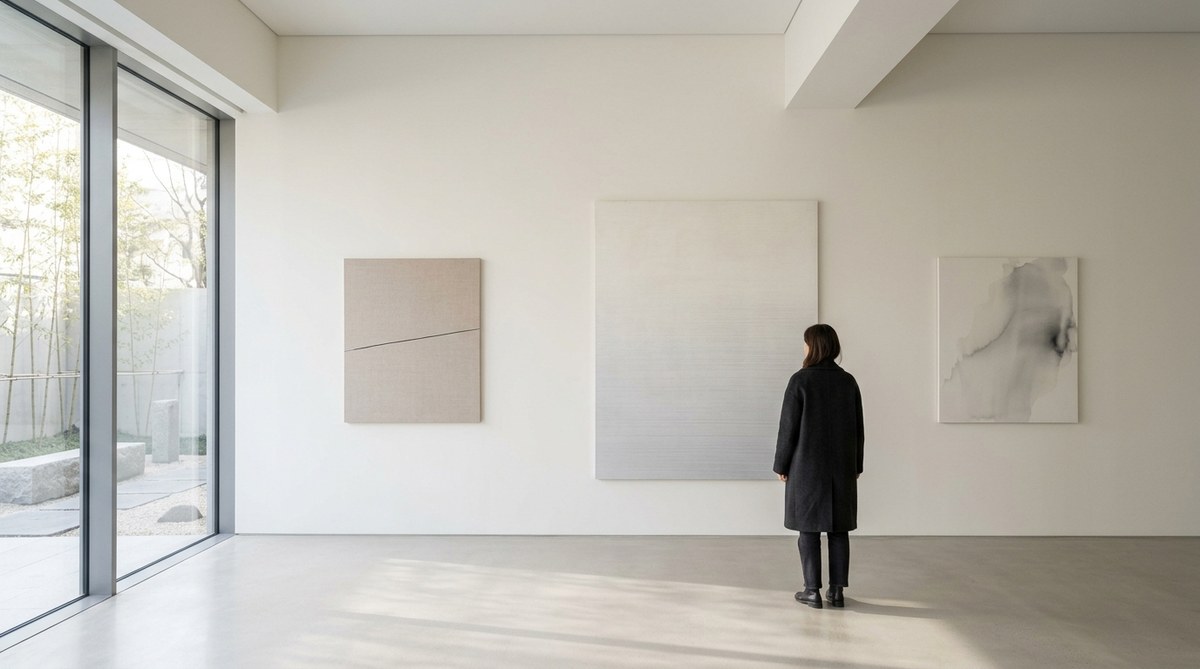
Get the scale right. This is the most common mistake. A small frame on a large wall looks lost. Go bigger than you think you should. A single oversized canvas creates a powerful focal point. It makes the room feel curated, not cluttered. If you have a very large wall, consider a diptych or triptych.
-
Choose pieces that reward repeat viewing. Minimalism is about living with things for a long time. Pick art that feels quiet but deep. An abstract piece with subtle layers of grey and white will reveal new details over the years. That staying power is what makes a minimalist home feel timeless.
If you want to understand how art shapes your daily mindset, take a look at how minimalist art cultivates mindful living spaces.
Mastering Light to Showcase Your Art
You can buy the most beautiful painting in the world, but if the lighting is wrong, it will look flat. Light is the medium through which art lives. Here are the tools you need to get it right.
- Use dedicated picture lights. Battery-operated or hardwired picture lights cast a controlled beam directly onto the canvas. They turn the art into an event. Choose a warm brass or black finish to keep the fixture itself minimal.
- Layer with floor lamps. A simple, sculptural floor lamp in the corner washes the wall with soft light. It makes the room feel warm without being harsh. It also adds a vertical line that balances the horizontal lines of furniture.
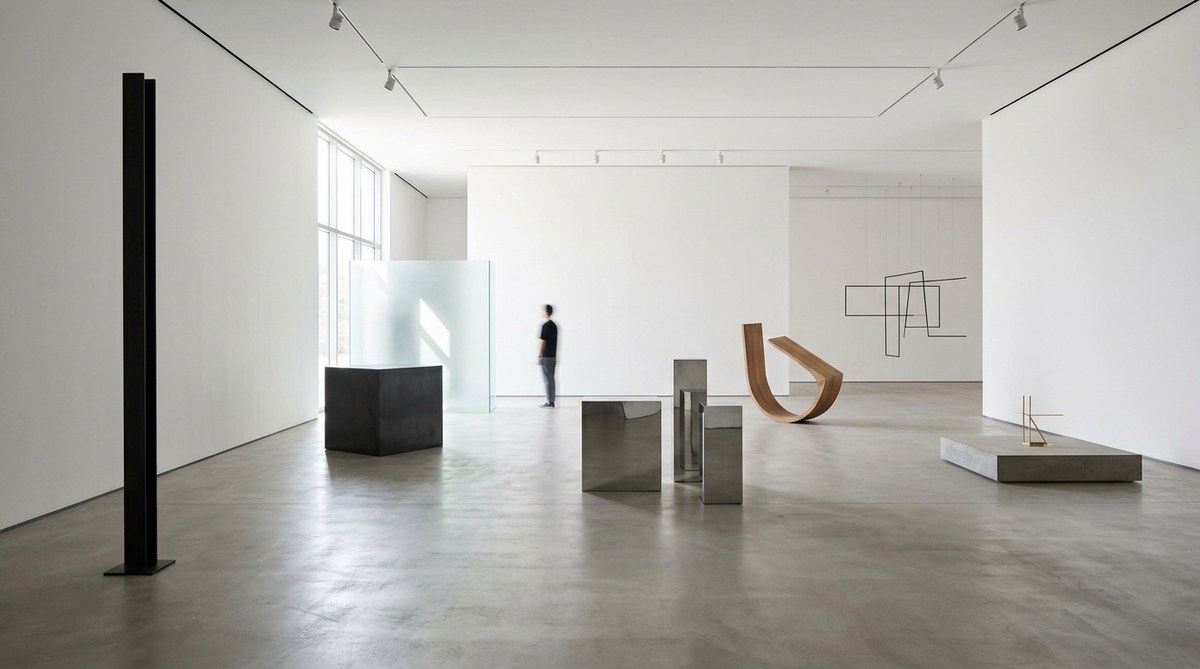
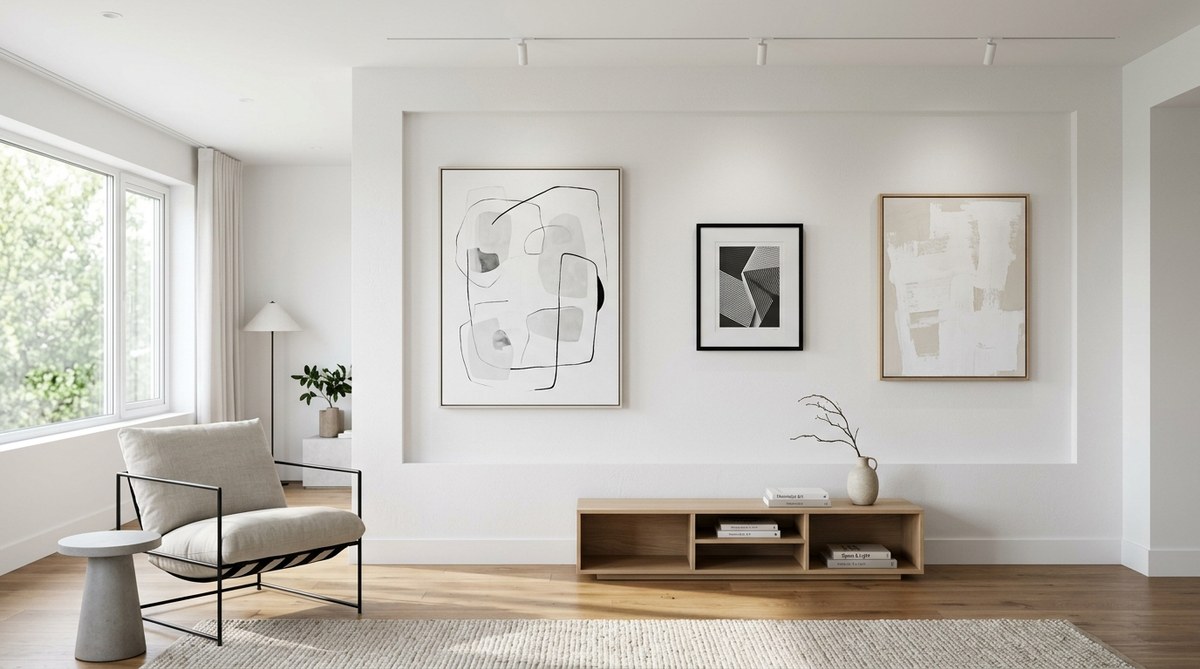
- Consider track lighting wisely. Modern track systems are sleek and adjustable. They let you direct individual heads at specific pieces. This works great for a hallway or a gallery wall. Just keep the track itself minimal.
- Dimmers are your best friend. Install dimmer switches everywhere. They let you adjust the mood from bright and energetic to soft and serene. This one change makes a room feel ten times more luxurious.
- Match your color temperature. Color temperature is measured in Kelvin (K). Aim for 2700K to 3000K. That is warm white. It flatters skin tones and makes art feel cozy. Avoid 4000K or higher in living spaces. That is hospital light.
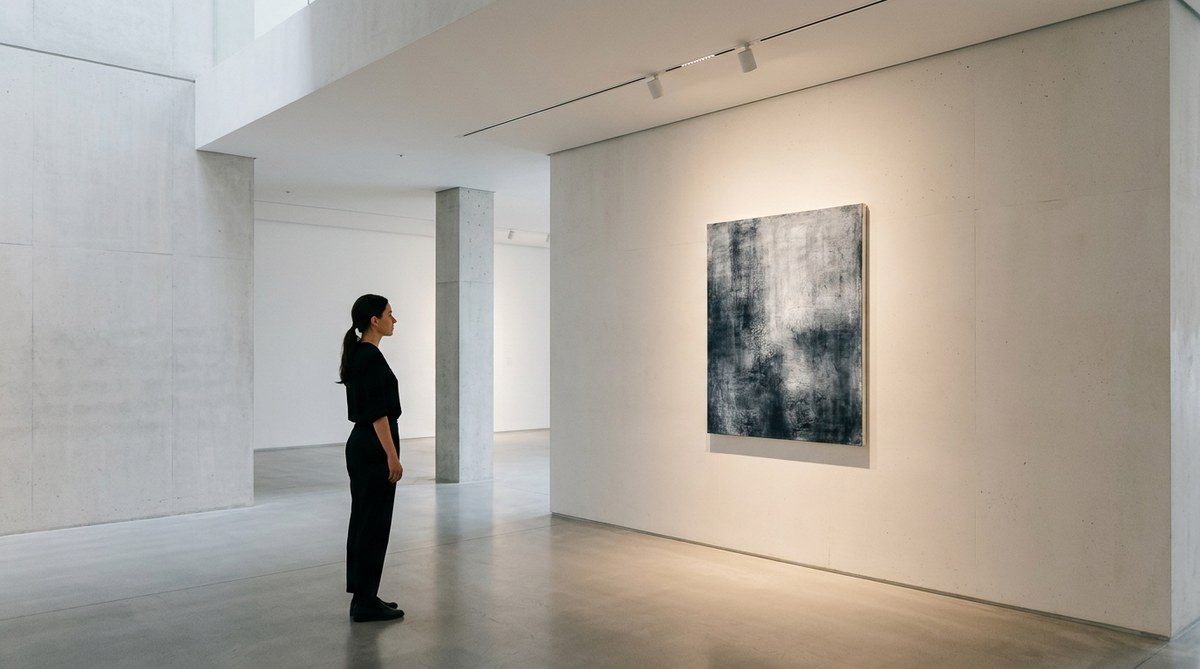
- Consider the beam angle. A narrow beam angle (25 degrees) highlights a specific painting. A wide beam angle (60 degrees) washes the wall. Use both. A narrow beam on the art, a wide beam for general room light.
For a full breakdown of fixture types and placement heights, check out our guide on minimalist light design techniques.
Common Minimalist Art and Light Mistakes
Even the best intentions can lead to design errors. Here is a table of the most common mistakes and how to fix them.
| Mistake | Why It Happens | The Fix |
|---|---|---|
| Clashing light temperatures | Mixing cool daylight bulbs with warm ambient light. | Standardize all bulbs to 2700K warm white. |
| Hanging art too high | Hanging it at eye level while standing. | Center the art at 57 to 60 inches from the floor. |
| Over-lighting the room | Using one bright overhead light. | Use multiple soft, low-level sources instead. |
| Cluttering the wall | Adding shelves or decor right next to the art. | Give the art breathing room. Let the wall be empty. |
| Ignoring light direction | Placing art directly in harsh sunlight. | Protect art with UV glass or hang on a shaded wall. |
| Wrong beam spread | Using a wide flood light on a small frame. | Match the beam angle to the size of the artwork. |
The goal is harmony. The art should not fight the light, and the light should not overpower the art. For more on creating that balance, read about mastering spatial harmony through minimalist art and design.
Expert Advice on Balancing Space
Sometimes the best advice comes from stepping back and looking at the whole picture.
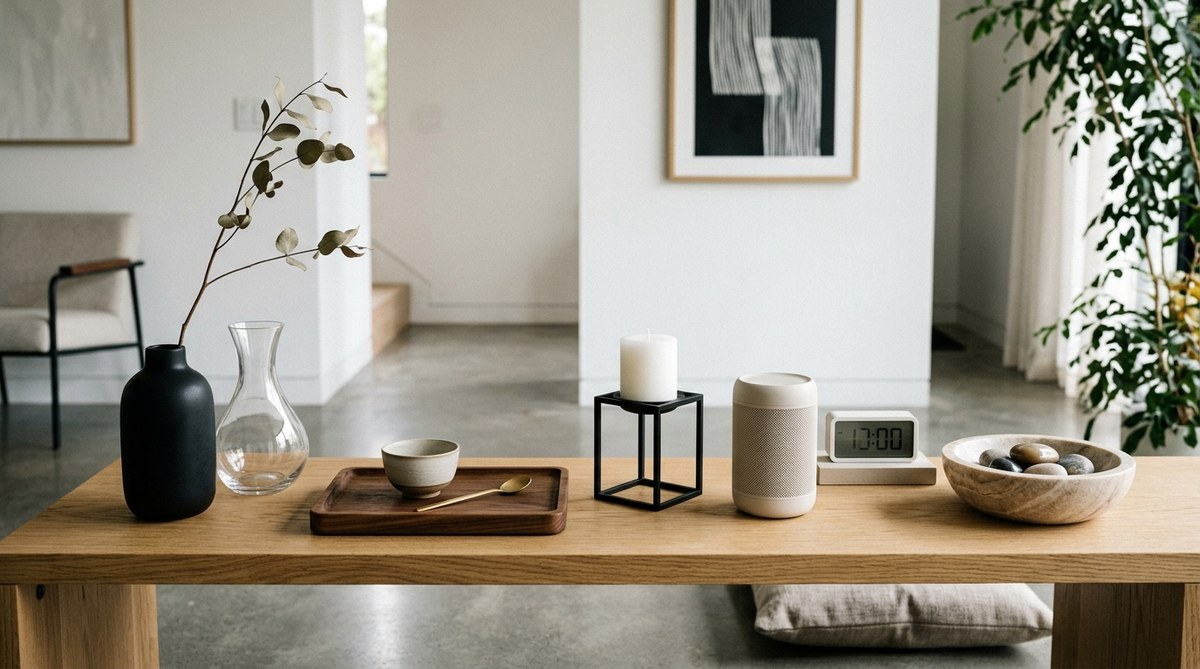
“The biggest mistake I see is people buying art that ‘fills the space’ instead of ‘creates space.’ A minimalist room isn’t a storage box. It is a stage. A single ceramic vase on a console table, lit by a warm cone of light from a pendant above, can be more powerful than a room full of furniture. Give your eye a place to rest.”
– Sarah Chen, Interior Architect
Sarah’s advice touches on a key point: negative space is a feature, not a flaw. When you arrange your room, leave empty zones. Do not line every wall with furniture. Let the floor breathe. Let the walls breathe. When you add a piece of art, treat it like a punctuation mark. It ends the sentence. The space around it is the grammar that makes it readable.
Think about the relationship between the art and the light source. A floor lamp placed next to a sofa can throw light up onto a painting above the sofa. That creates a unified vignette. You do not need a separate light for the art and a separate light for the sofa. One can serve both. That is the heart of minimalism: one object doing multiple jobs without looking busy.
If you want to learn more about combining fixtures and furniture, read about the art of light and space in minimalist interior design.
Simple Ways to Try These Ideas Today
You do not need a full renovation to see results. Try this three step process in one room this weekend.
-
Audit a single room. Take a photo with your phone. Look at the light. Where does the light fall at 7pm? That is where your art should go. If that spot is currently occupied by a bookshelf, try moving the bookshelf.
-
Remove one thing. Before buying new decor, remove a lamp or a frame. See if the room breathes better with less. Often, the best design move is subtraction, not addition.
-
Swap your bulb. Change a 5000K bright white bulb to a 2700K warm bulb. Watch the room instantly soften. This costs less than ten dollars and has an immediate effect.
These small steps build momentum. You will start to see your home differently. You will notice the quality of light, the weight of objects, and the power of empty space.
Your Home Tells a Story in 2026
This year, the trend is moving toward authenticity and calm. People want homes that feel like a retreat from the noise. By pairing intentional art with thoughtful light, you are not just decorating. You are designing a feeling. Start with one wall. Hang one piece. Light it well. Let the rest of the room follow its lead.
Walk through your home tonight at dusk. Notice which corners feel dark and which feel cozy. That darkness is an opportunity. Put a small piece of art there, light it softly, and see how a forgotten corner becomes your favorite spot. Minimalism is not a strict set of rules. It is a tool for making space for what matters. Use it to make your home tell your story.
For a broader look at how these principles are shaping modern homes, read about the 7 essential principles of minimalist art spaces in 2026.

Leave a Reply